
Bacon-wrapped Jumbo Shrimp at Beachfront Restaurant , Nuevo Vallarta, Mexico. Note Size relative to Grapefruit Decoration!
The objective of the Dirac Portfolio is to outperform the S&P 500 stocks, as represented by the SPY ETF, by rotating between sectors that make up the S&P 500 Index.
Current analysis of the component sectors looks like this:
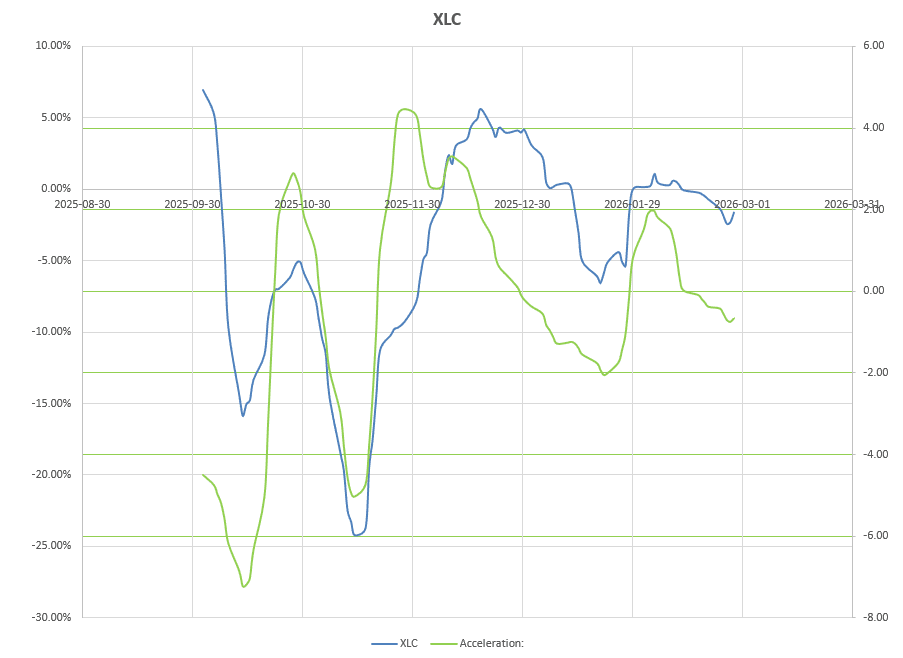
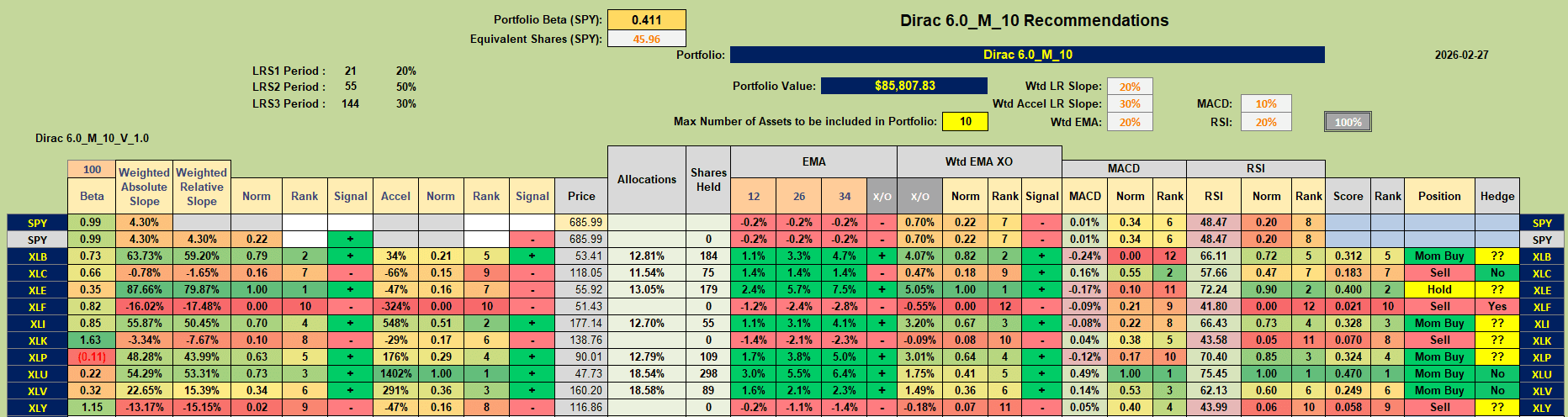 with Buy or Hold recommendations for all but XLC (Communications), XLF (Financials), XLK (Technology) and XLY (Consumer Discretionary). Of these, the only ETF that I am currently holding is XLC, since, despite the recommended Sell recommendation over the past ~2 weeks, XLC has not dropped below the previous day’s lows and is now looking like both momentum and acceleration may be increasing:
 However, since my strategy is to remain close to being fully invested and am presently under-allocated in most sectors, I want to try to bring this back into balance without over-trading. Based on the recommendations to hold 6 ETFs this would mean a ~$14,300 investment in each ETF. As a step in the direction to achieve this balance I have therefore added additional shares in XLU (Utilities) and XLV (Healthcare) based on more favorable looking momentum/acceleration graphs:
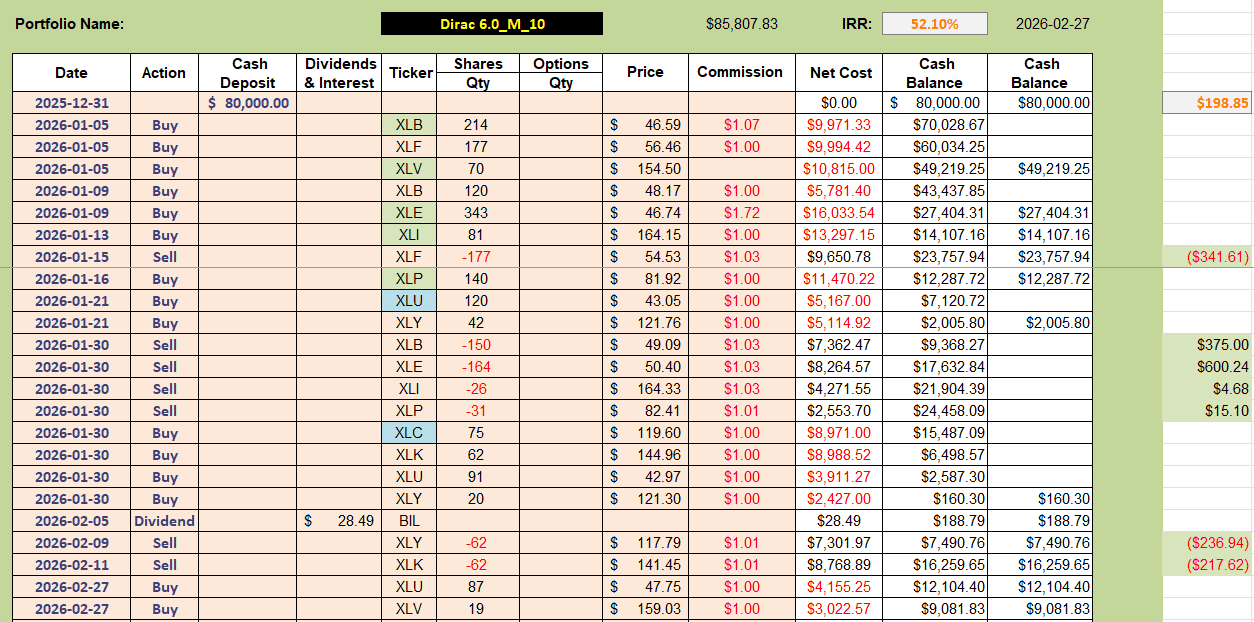 This leaves the portfolio now looking like this:
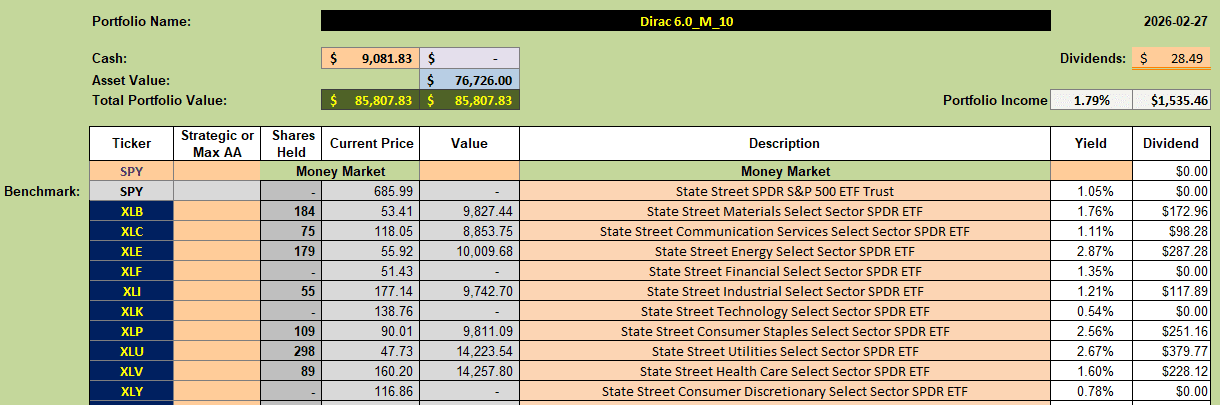 with ~$9,000 in BIL (proxy for Cash) and continuing to hold XLC.
Recommended allocations look like this:
 so there is still a little adjustment required to meet all recommendations. However, performance to date, after 2 months, looks like this:
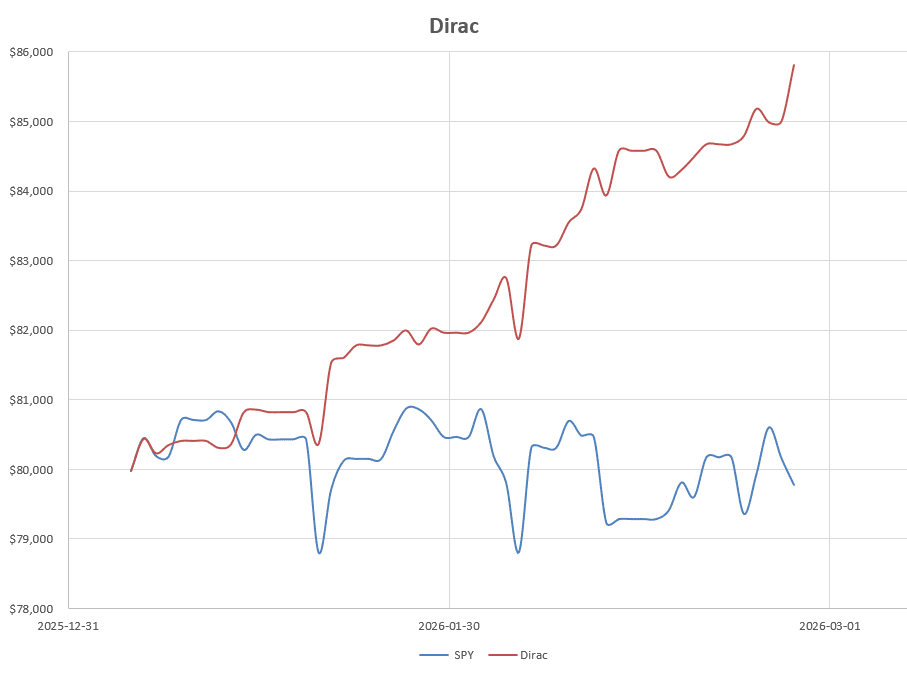 clearly (and a little surprisingly – to me, at least) outperforming the benchmark SPY fund that is, in fact, showing a small negative return over this period. The out-performance is significantly greater than I had anticipated – 52% Internal Rate of Return (IRR) over this period with a very comfortable 7.9% volatility. My only explanation of why we are seeing this performance may be due to the equal weighting allocation that I am using to populate the portfolio. These sectors in the S&P 500 are not equally weighted with Technology being the dominant sector in terms of weighting and, consequentially, performance.
Discover more from ITA Wealth Management
Subscribe to get the latest posts sent to your email.
Leave a Comment or Question