
First Cutsforth Cruise In of 2026
Since the last review the computers at Schwab rebalanced the Schrodinger by adding shares to large cap equities and bonds. Considering this overbought market both additions are somewhat puzzling. However, I’m not going to quibble as the performance since 12/31/2021 has been excellent. The portfolio is taking a major hit this morning as the market is down as I write this blog.
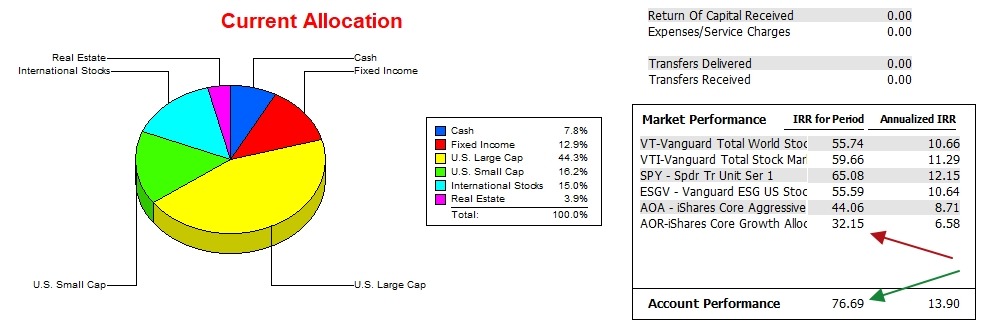
The asset allocation ratio for the Schrodinger is set up to be 80% in stocks and 20% in fixed income and cash. Cash tends to run between 7.0% and 8.0% at all times. Schwab invests this money at a higher interest rate than they pay in interest and that is how they fund these Intelligent Portfolios for zero cost to investors.
Since the Schrodinger value exceeds $50,000 Schwab will tax manage this portfolio.
Schrodinger Asset Allocation Model
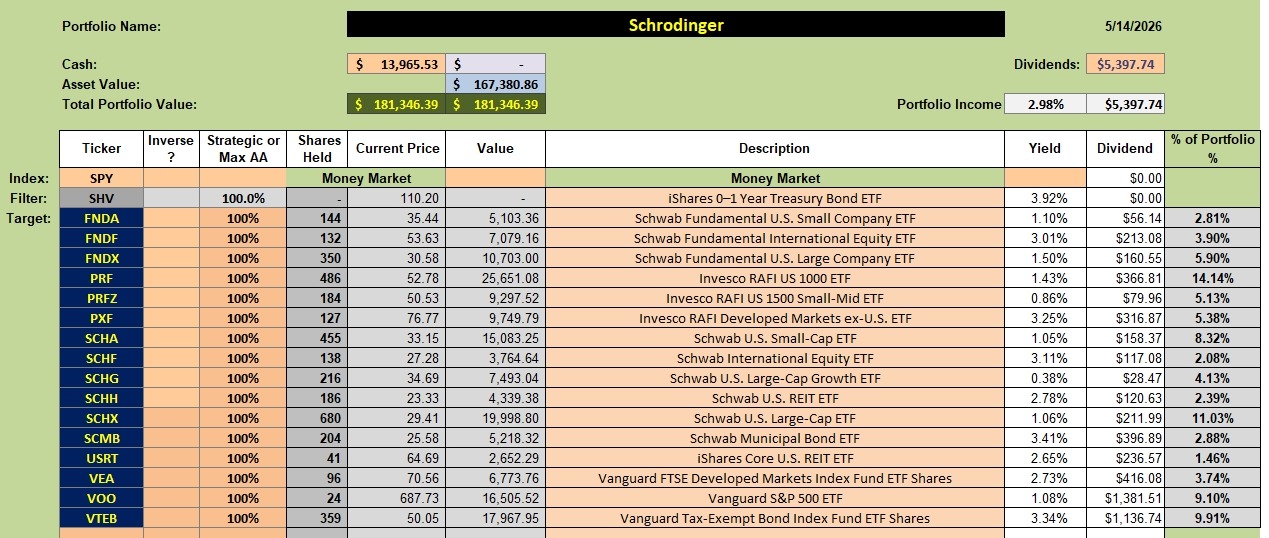
Below are the current holdings within the Schrodinger portfolio. The portfolio throws of a reasonable 3.0% per year.
Schrodinger Performance Data
Since 12/31/2021 the Schrodinger has outperformed all tracked benchmarks by a significant margin. This is accomplished with few trades and no management skills required. Schrodinger is truly a passive portfolio. All that is “required” of the owner is to add new money when possible. With next to no trading the owner saves approximately an additional 2.0% in taxes each year.
The data and following screenshot comes out of the commercial software, Investment Account Manager. I have been using this software since the days of DOS.
Schrodinger Risk Ratios
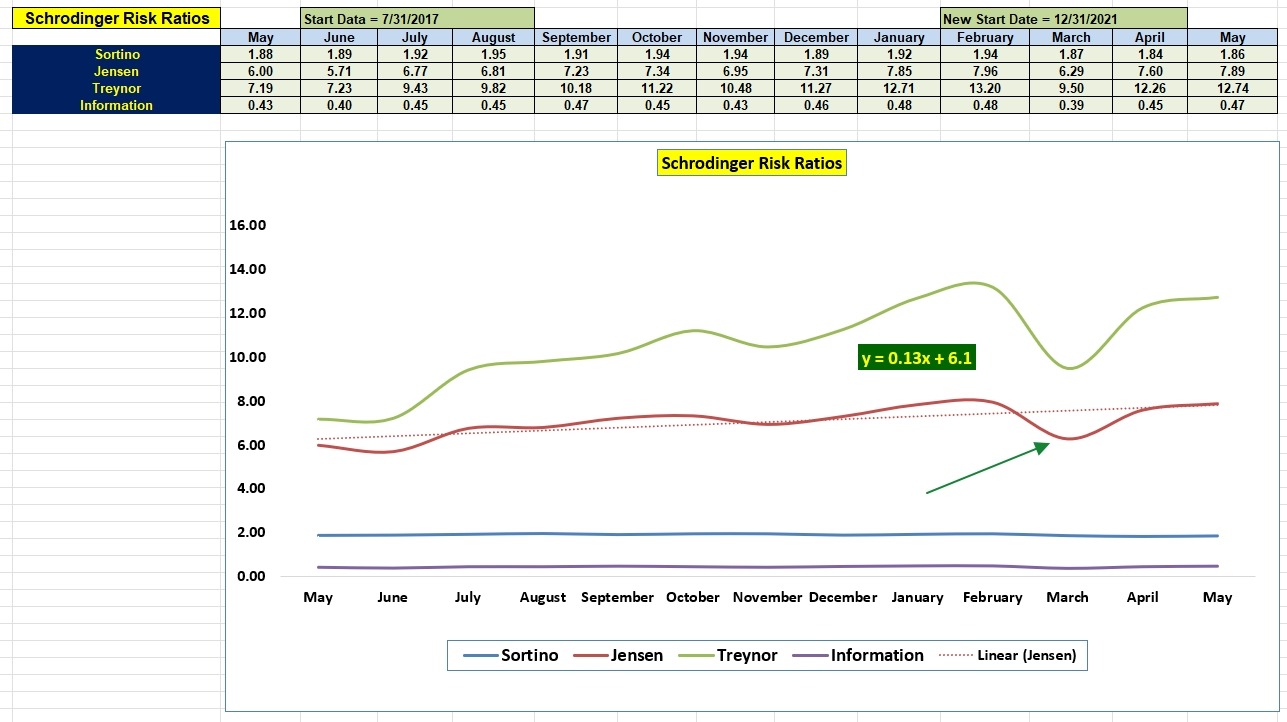
With an 80/20 stock to bond ratio many would say this is an aggressive portfolio. Perhaps too aggressive. Jensen Alpha or Jensen Performance Index is the primary ratio I use to see if the portfolio is too risky. Based on the history of the Schrodinger risk has not been a negative factor. Keep in mind we have experienced a strong market over the measured period. How the portfolio performs over the next two years may tell an entirely different story, particularly if we experience a recession or stagflation. This portfolio survived the 2022 dip. The next question is – will it do as well during the next market retreat?
Discover more from ITA Wealth Management
Subscribe to get the latest posts sent to your email.
Leave a Comment or Question