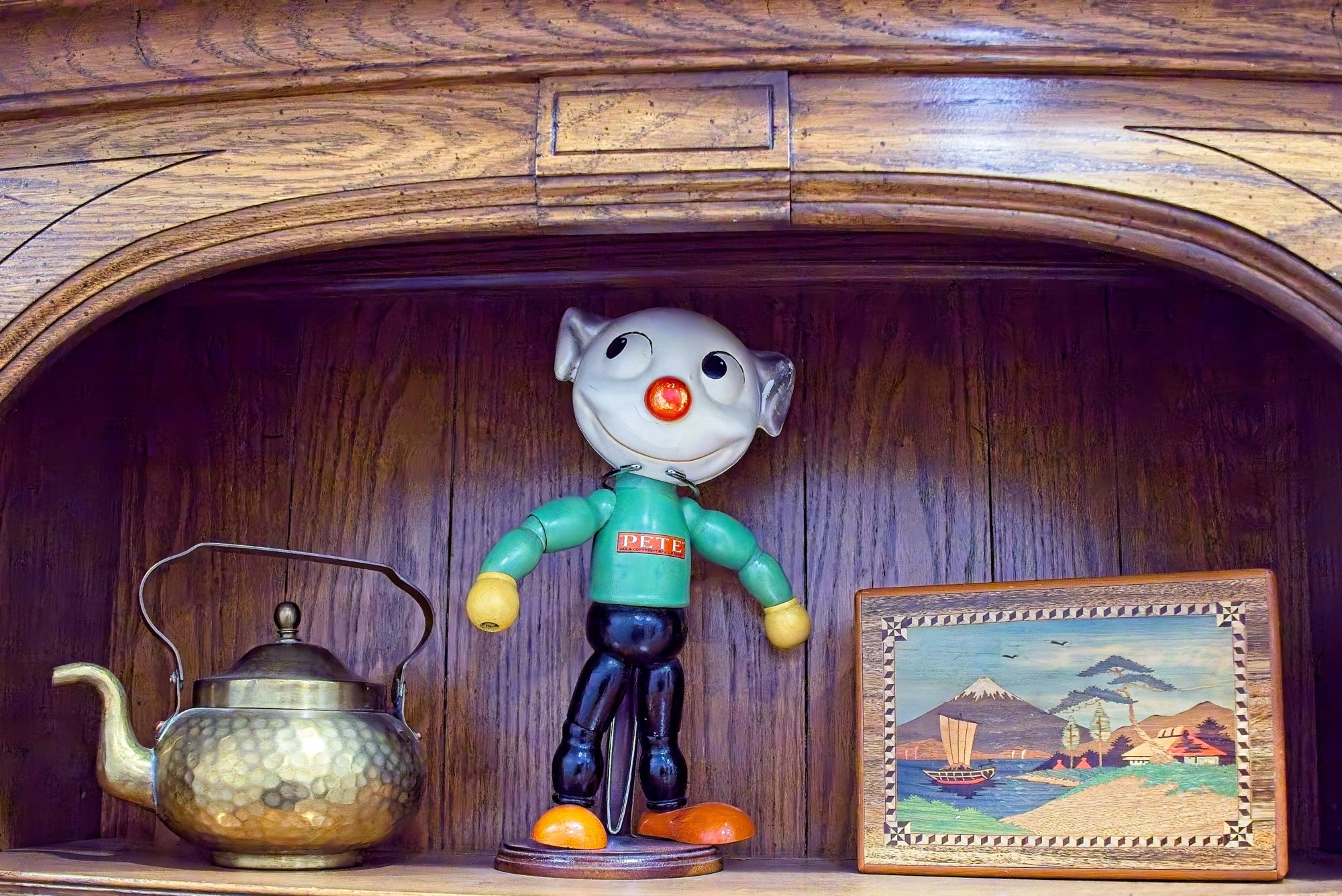
Pete is a doll from the 1930s.
What is beta and how is it measured? In the context of an investment portfolio, beta refers to a measure of a stock’s volatility in relation to the overall market. A beta value greater than one indicates that the stock is more volatile than the market, while a value less than one suggests it is less volatile. Understanding beta helps investors assess the risk associated with a particular investment, allowing for more informed decisions in portfolio management.
When the word “market” is used think S&P 500. If a stock or portfolio has a beta of 1.25 the stock or portfolio will rise or fall 25% faster than the market (S&P 500). Such a beta is considered to be quite high.
Beta is calculated for each ITA portfolio I report on when they come up for review. If you have been following any of the ITA portfolios you will note that I am shifting portfolios to have a lower beta. In other words, I am reducing the volatility by populating portfolios with lower volatile Exchange Traded Funds (ETFs). Instead of calculating beta for individual stocks the Kipling spreadsheet calculates the beta for the entire portfolio. Three years of data are used for the calculation.
Here are a few beta calculations for ITA portfolios:
- Copernicus: 0.575 This value was close to 1.0 before I moved away from VOO and began adding dividend oriented ETFs.
- Schrodinger: 0.732
- Kepler: 0.185 or very low.
- Millikan: 0.596
- Carson: 0.339
- Gauss: 0.260
Portfolio beta’s will change by a very small amount from month to month due to price changes. In a bull market expect portfolios with a low beta to lose ground to benchmarks such as the S&P 500. In a bear market low beta portfolios are expected to outperform the overall stock market.
If seeking more information on beta, check out this link.
Lowell
Discover more from ITA Wealth Management
Subscribe to get the latest posts sent to your email.
I should add that I pay more attention to the beta of the entire portfolio vs. the beta of an individual security. It is the portfolio that is of concern. I don’t worry about the performance or volatility of individual securities.
Since we use ETFs to populate portfolios, the volatility is reduced and that in turn reduces portfolio volatility.
Lowell