
Japanese Garden – Portland, Oregon
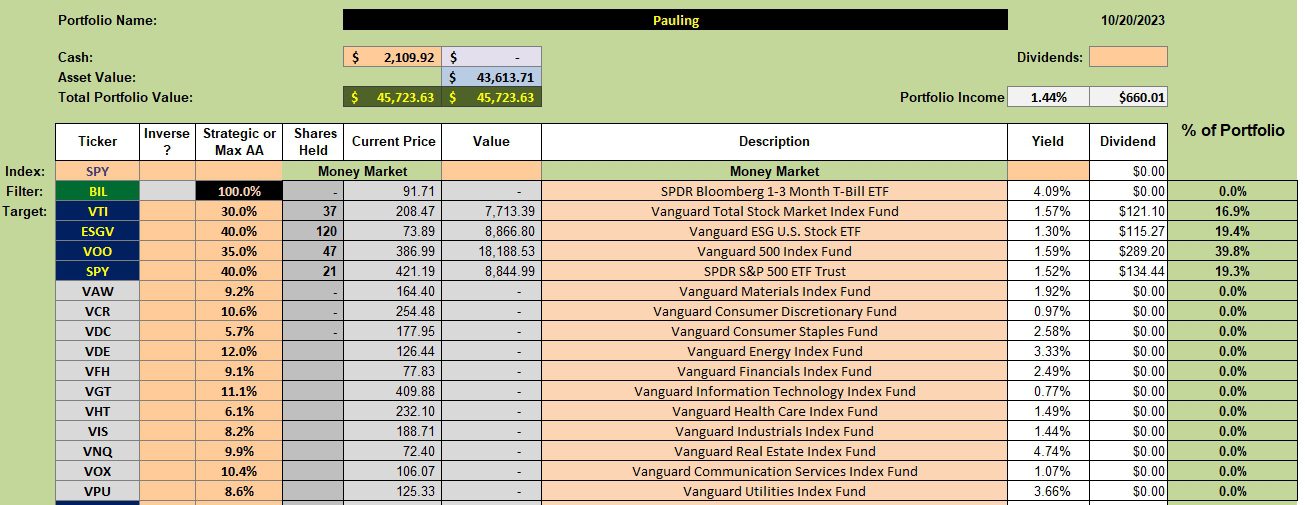
The Pauling portfolio will be joining the Sector BPI Plus investing model group by the end of this month. This review will explain the transition process which is nothing more than adding eleven sector ETFs to the four existing U.S. Equity securities. To provide data for a Portfolio Report I want to begin the holdings with at least one share in every available security. More on this later in this review.
Pauling BPI Investment Quiver
The Pauling currently holds shares in four U.S. Equities. Shares from these four ETFs will need to be sold in order to raise sufficient cash to purchase shares in the five oversold sectors. In addition, I want to initially hold at least one share in the other six sectors so I have a beginning record when a portfolio report is included in the review.
The Strategic or Max AA column for the eleven sectors is controlled by using the volatility over the past three years. The percentages for VAW down through VPU will add up to close to 100%. This percentage is the minimum I want to hold in each sectors. It is rare for all eleven sectors to be oversold so there is some uncertainty within the recommended percentages.
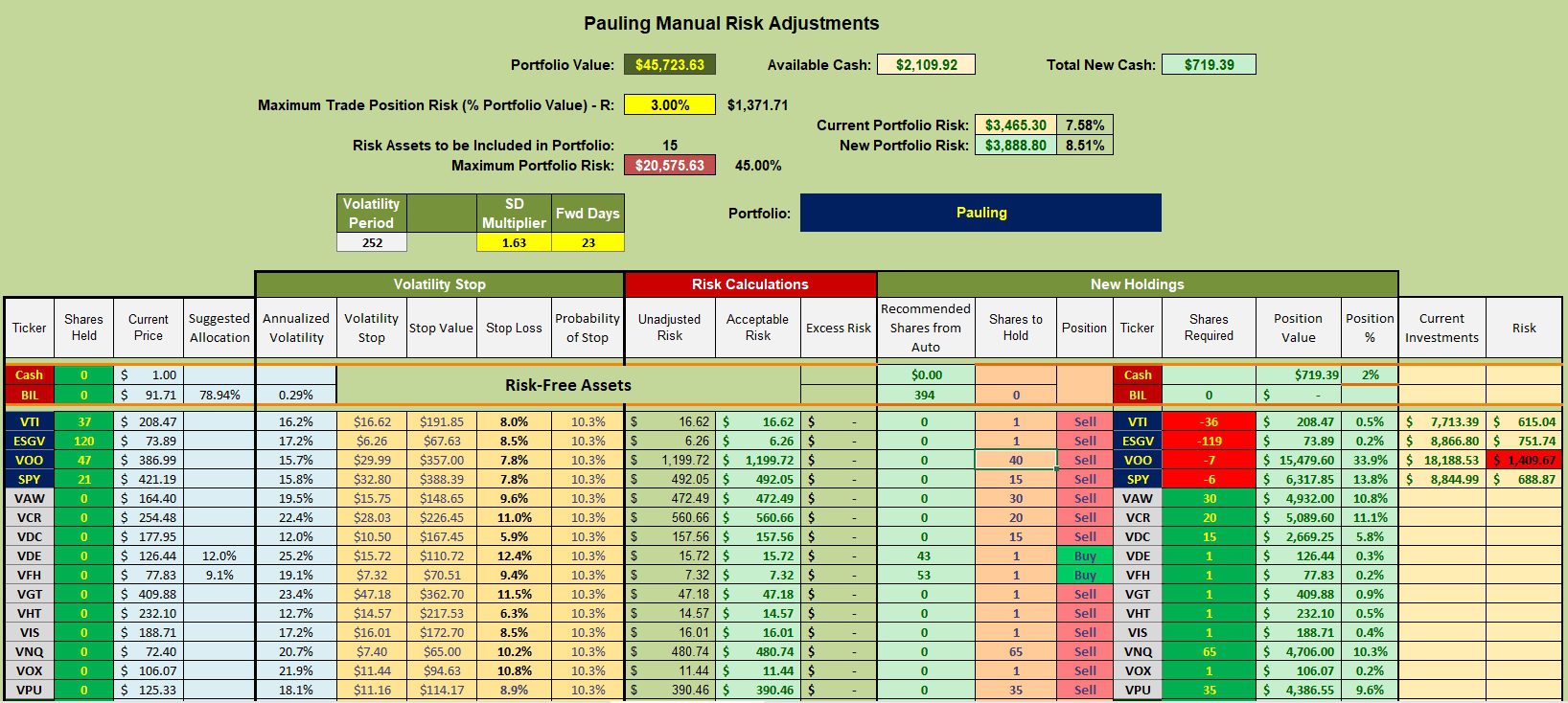
Pauling Manual Recommendations
The first move was to adjust the SD Multiplier to 1.63 so the Stop Loss for VTI registers 8.0%. When the market opens this morning I will sell shares out of VTI, ESGV, VOO, and SPY so cash is available to populate the five oversold sectors.
In addition, I will be purchasing one share in each of the “neutral” sector ETFs in order to build a historical record of performance. The goal is to have the Pauling populated as shown below by November 1st if not sooner. The launch date for this new Sector BPI Plus portfolio is 11/1/2023.
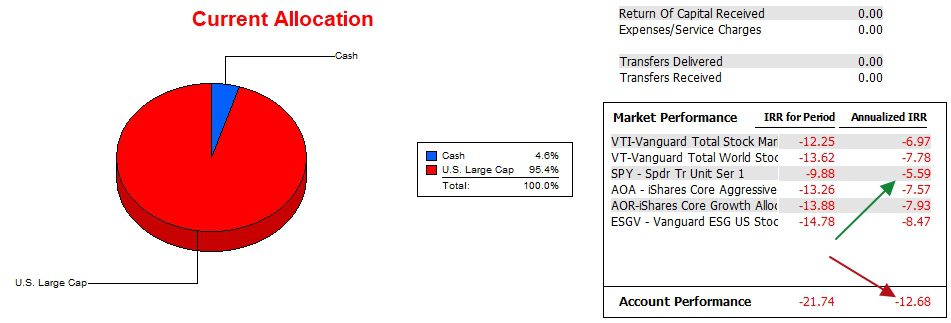
Pauling Performance Data
Over the past 22 months the Pauling has fallen far behind the SPY benchmark. As with the Kepler, this delta difference is the motivation for converting to the Sector BPI model. The Risk Ratio data will provide more clues as to whether this move is successful.
When reporting the IRR data I will still use 12/31/2021 as the starting point as that is close to the date when the youngest ITA portfolio was launched.
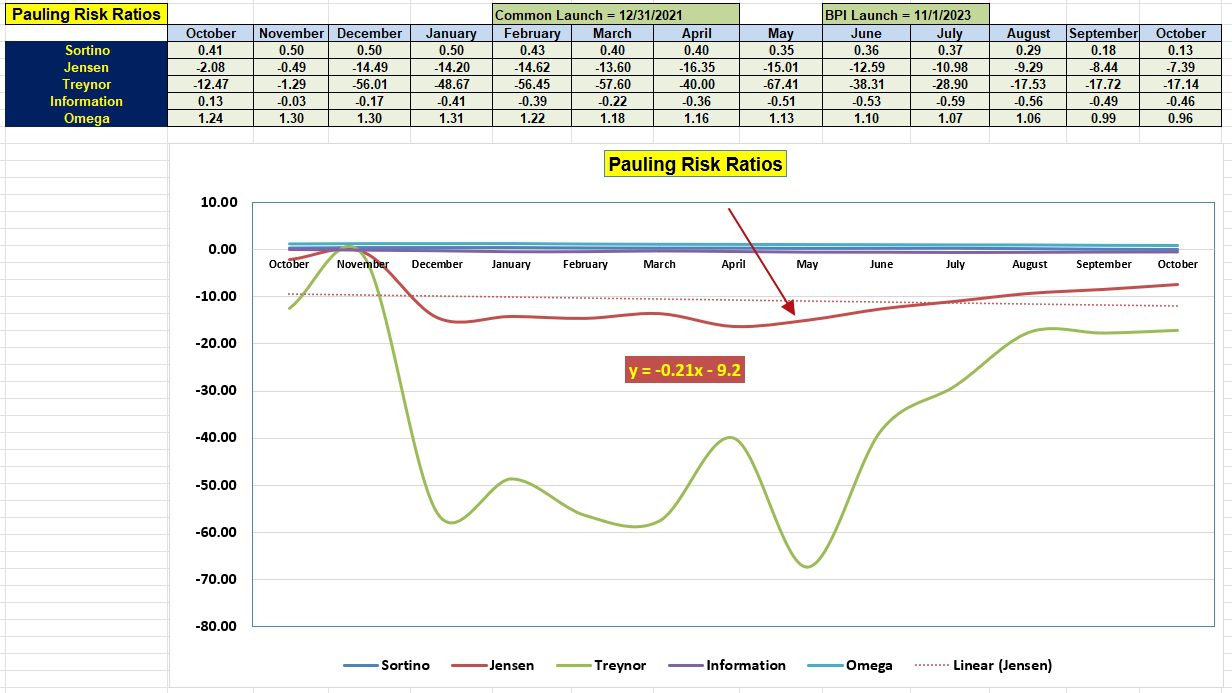
Pauling Risk Ratios
The low point (Jensen) for the Pauling was last April. Since that time the Pauling has slowly shown improvement and this move to the Sector BPI model should hasten improvement. By early next year the slope of the Jensen Alpha should flip from negative to positive.
The other metric to monitor closely is the Information Ratio as that value tells readers how well the portfolio is performing with respect to the SPY benchmark.
Questions and Comments are always welcome.
Discover more from ITA Wealth Management
Subscribe to get the latest posts sent to your email.
You must be logged in to post a comment.