
Small fishing boat entering Depoe Bay.
Today is not the regular scheduled day to review the Schrodinger. However, I’m gearing up to post the performance spreadsheet of all ITA portfolios I track on this blog and I use the Schrodinger as a reference since it is a Robo Advisor portfolio and is managed by computers at Schwab. The Schrodinger acts as a benchmark for both passive and actively managed portfolios. The Schrodinger is definitely classified as a passive portfolio as I do nothing except track the performance using the Investment Account Manager software to record all transactions.
Schrodinger Tranche Recommendations
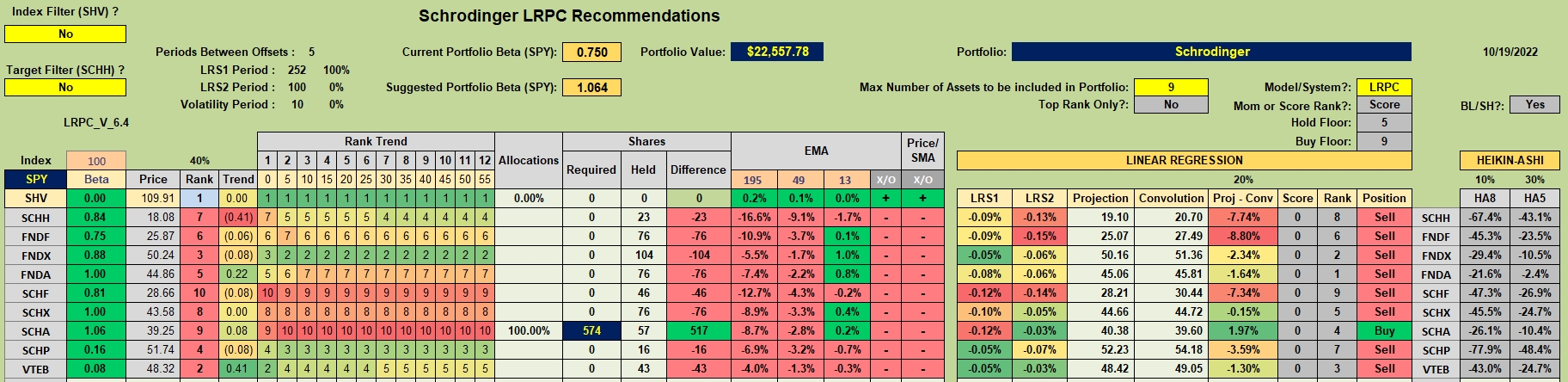
Below is what the Schrodinger looks like if one were using the LRPC model and a look-back period of one year (252 trading days). Currently, only SCHA is a Buy. No ETFs were purchased over the last month. I thought there might be sufficient 3rd quarter dividends to pick up a share or two, but so far that has not been the case.
Schrodinger Performance Data
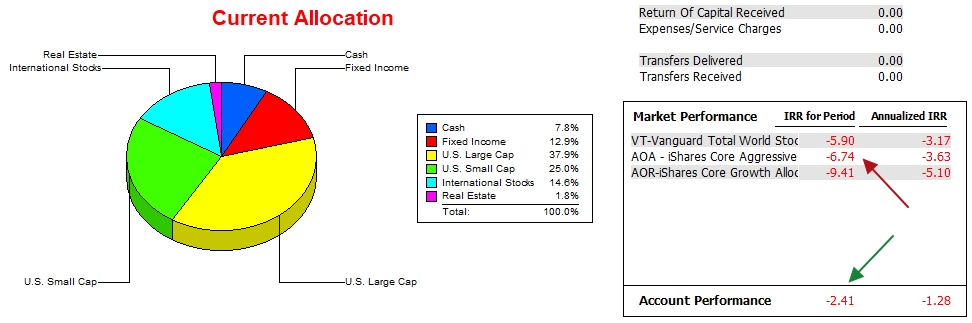
Since 11/30/2020 the Schrodinger lost 2.4% while the AOA benchmark lost 6.7%. The AOR ETF is down even more.
Schrodinger Risk Ratios
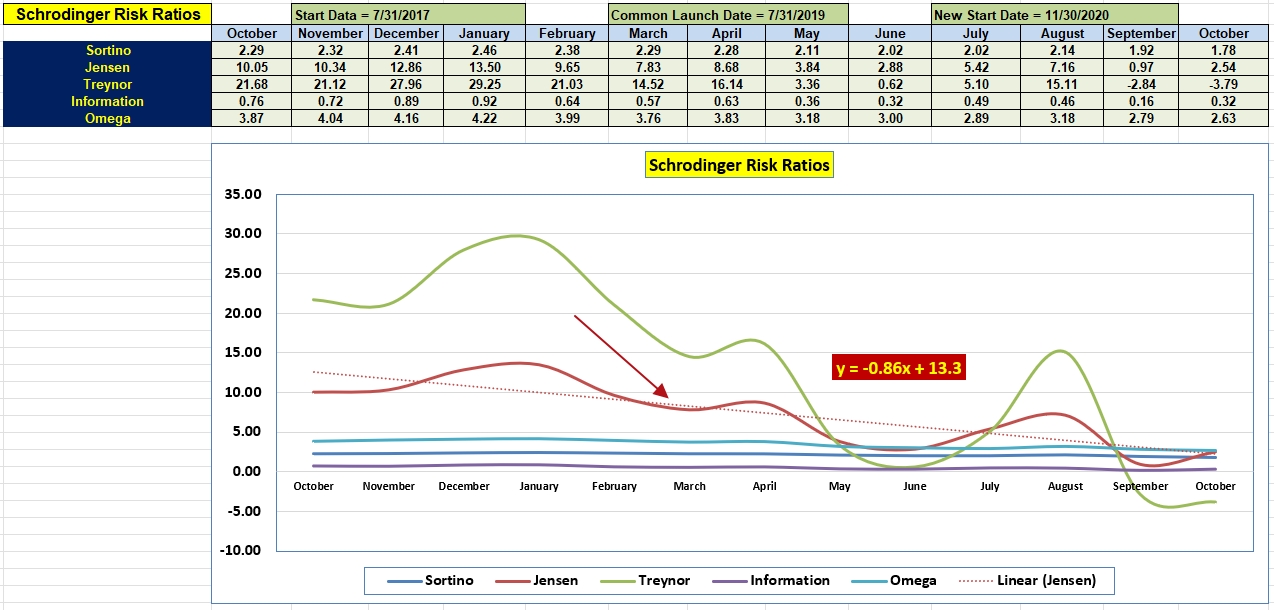
The following data places the Schrodinger 9th in Internal Rate of Return (IRR) among the 18 portfolios I track here at ITA so it is right in the middle of the pack. As for risk, the Schrodinger ranks #11 or in the bottom half. These numbers may change before I post the final comparisons this weekend.
Notification: Readers still paying dues are recommended to cancel their Paypal membership as this blog is now free to all who sign up as a Guest.
Discover more from ITA Wealth Management
Subscribe to get the latest posts sent to your email.
I did not include a notification with this blog post as this is not a regularly schedule review for the Schrodinger.
Lowell
Lowell,
I’ve been away from ITA for a couple of years and have forgotten the characteristics of the various portfolios. Is there a place that describes all of the portfolios on the site, their differences, and in particular their risk? I am unable to find such a discussion after some poking around. Thanks!
Ernie
Ernie,
I removed that Tab from the site as I found I was not keeping it fresh and updated. This link may help.
https://itawealth.com/constructing-the-family-portfolio/
Lowell
Ernie,
If you have been away for a few years a major change is the development of income portfolios. The Huygens is such an example where the portfolio is constructed of Closed-End-Funds. The minimum income is 8%.
The Bohr and Bethe portfolios also have a significant income component. They are blend portfolios where growth is also part of the portfolio.
Lowell
Thanks, Lowell! Ernie
am appreciating the immense value of your blog compared to SA authors who are persuasive but sweeping in their conclusions and reinforce their own models subtly rather than present a variety objectively here. hope to enter the market in due course. have learnt that passive may be best from you. will continue reading 2012 posts on SA to learn your process as they educate me on your evolutionary approach. thank you.
Ken,
I’m a fan of diversification. ETFs provide diversification for securities and the different style portfolios provide another level of diversification. Many investors don’t want to go this far with diversification. As you know, I prefer no-load mutual funds and ETFs over selecting individual stocks. There are a few investors who are good at selecting individual stocks. One needs to keep accurate records in order not to deceive oneself.
The Schrodinger takes zero time unless one tracks performance as I do. This is the Robo Advisor portfolio and one I use as an additional reference or benchmark.
Next easy on the list is the Copernicus as all one does is save and invest in U.S. Equities. This is the portfolio I recommend for grandchildren. Save and never sell. Just let the market do its work.
Next easy is to use the Dual Momentum model. There are four tracked here at ITA.
This weekend I plan to post an updated performance table and you will be able to make some choices there. Keep in mind there is the factor of Luck-of-Review-Day as there are Dual Momentum portfolios doing well and others poorly. It is not always the investing model that determines performance, but the day one reviews the portfolio and makes the transactions. Monday is frequently a good day to buy.
Recently I summed all the portfolios into one lump to see how they compared with the AOA benchmark. The portfolios were victorious.
Thanks for your reading discipline.
Lowell
“Am appreciating the immense value of your blog”
Ken,
Let your friends and relatives know about the ITA blog.
Lowell