
Oregon Coast
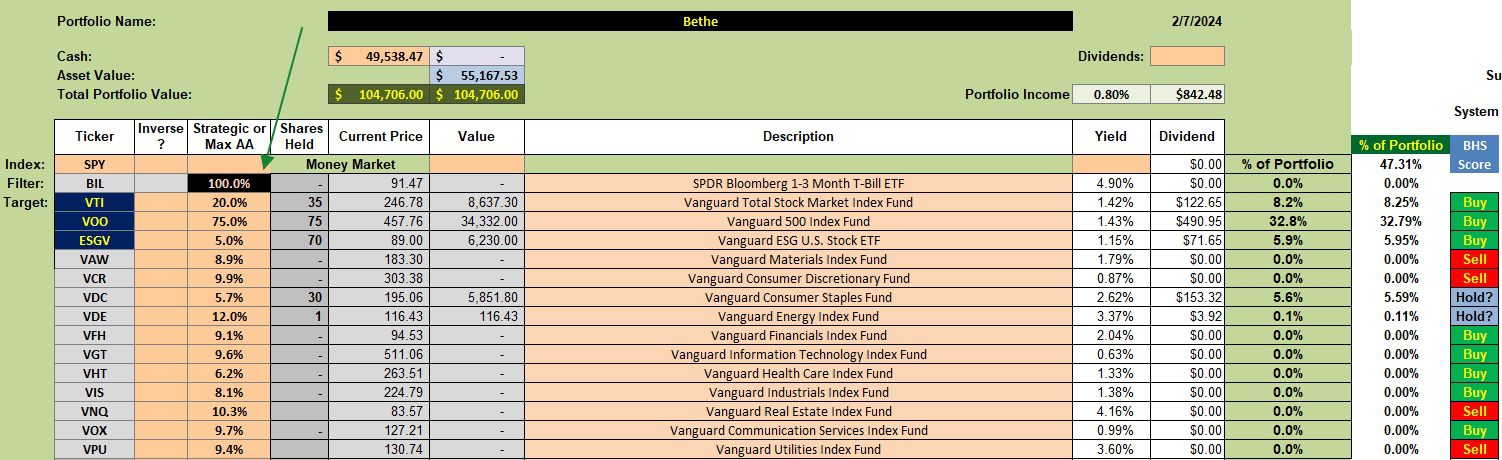
Bethe is the portfolio scheduled for review today and a few changes were made in the investment quiver. The Maximum Asset Allocation percentages (green arrow) were adjusted in order to emphasize or tilt the portfolio toward the S&P 500 (VOO) as that is the benchmark. Rather than eliminate VTI and ESGV, I just lowered the maximum percentage for each. This does not mean I will not exceed the Max AA as ESGV is currently holding over 5% of the portfolio.
Bethe Investment Quiver and Holdings
While the three U.S. Equity ETFs (VTI, VOO, and ESGV) add up to 100%, so do the eleven sector ETFs. The Max AA percentage for the eleven sectors is calculated by using a three-year volatility calculation and then applying a “coefficient value” that is set up in the Main Menu worksheet of the Kipling spreadsheet. The idea behind this logic is to invest more in sectors with higher volatility. Energy is currently the most volatile of the eleven sectors.
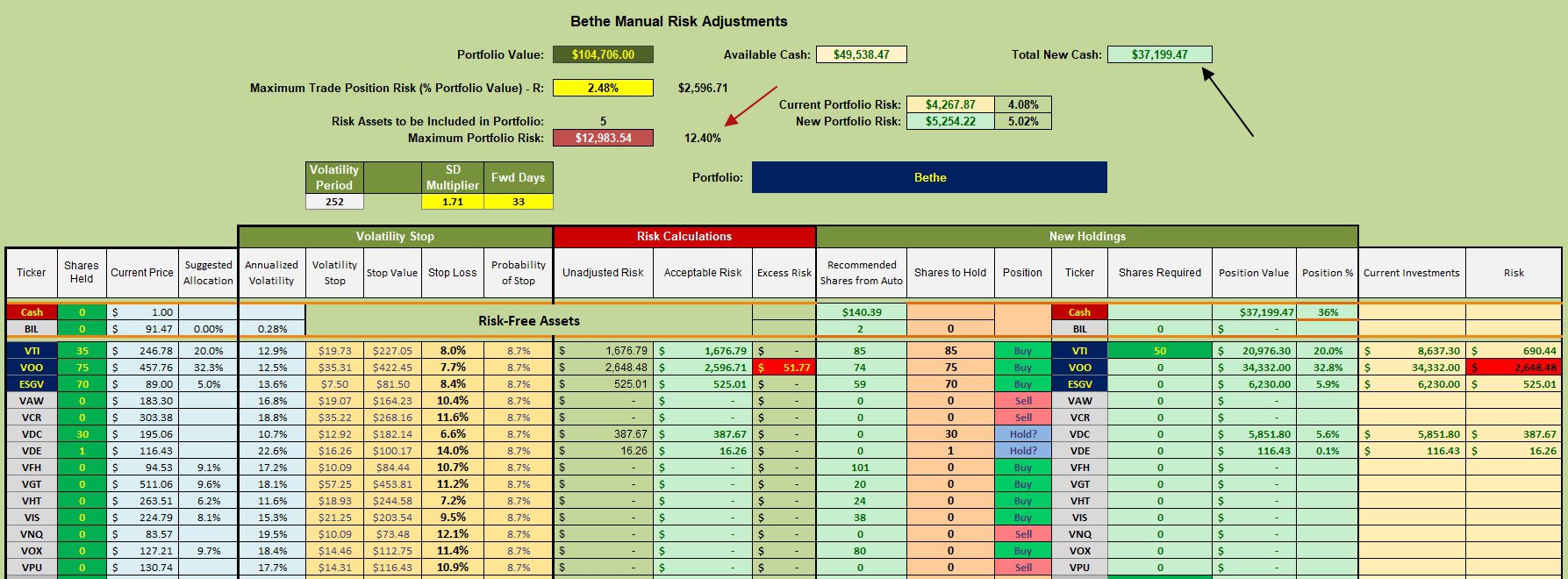
Bethe Manual Risk Adjustments
The only anticipated change is to purchase 50 more shares of VTI. Limit orders are in place to fill the VTI recommendation. With the market at an all-time high I am cautiously adding shares on market dips.
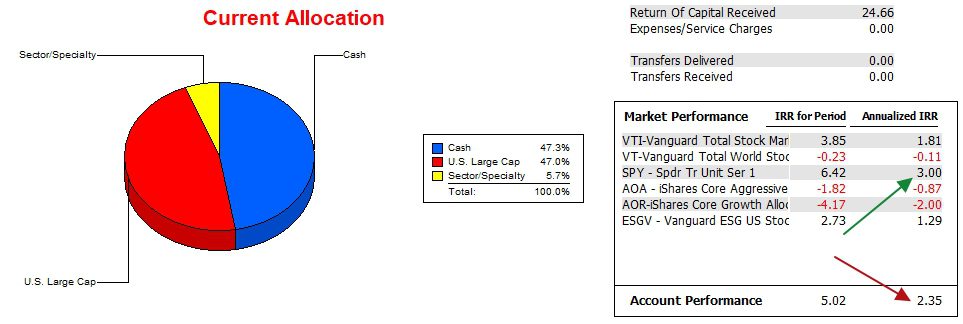
Bethe Performance Data
After a great run the Bethe is now producing an IRR that is below the SPY benchmark. Bethe will not outperform the S&P 500 so long as the cash is at this high percentage and the market continues to climb.
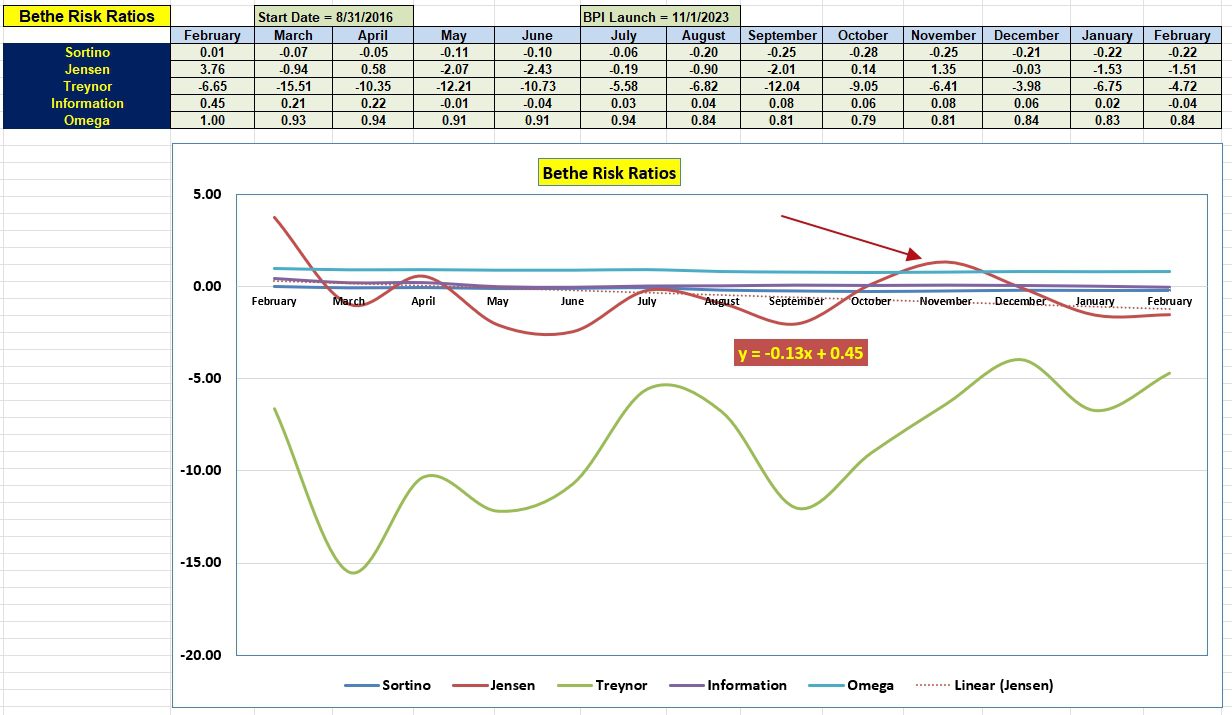
Bethe Risk Ratios
The Information Ratio is back to where it was last June. The Jensen Performance Index is also bouncing around in negative territory. One change not noticeable to readers without going back to prior Bethe reviews is the improvement in the slope of the Jensen. Once February of 2023 is cleared we should see additional improvement in the Jensen slope.
Comments are always welcome.
Send this link ( https://itawealth.com ) on to your friends and family members.
Discover more from ITA Wealth Management
Subscribe to get the latest posts sent to your email.
You must be logged in to post a comment.