
Sunrise over the Sierra Madre Mountains, Nuevo Vallarta, Mexico
It was another relatively uneventful week in the US Equity markets with the SPX (S&P 500 Index) remaining in the 6800-7000 consolidation range that it has now been in for ~3 months but with Fridays’s weakness resulting in a ~0.4% drop from last week’s close:
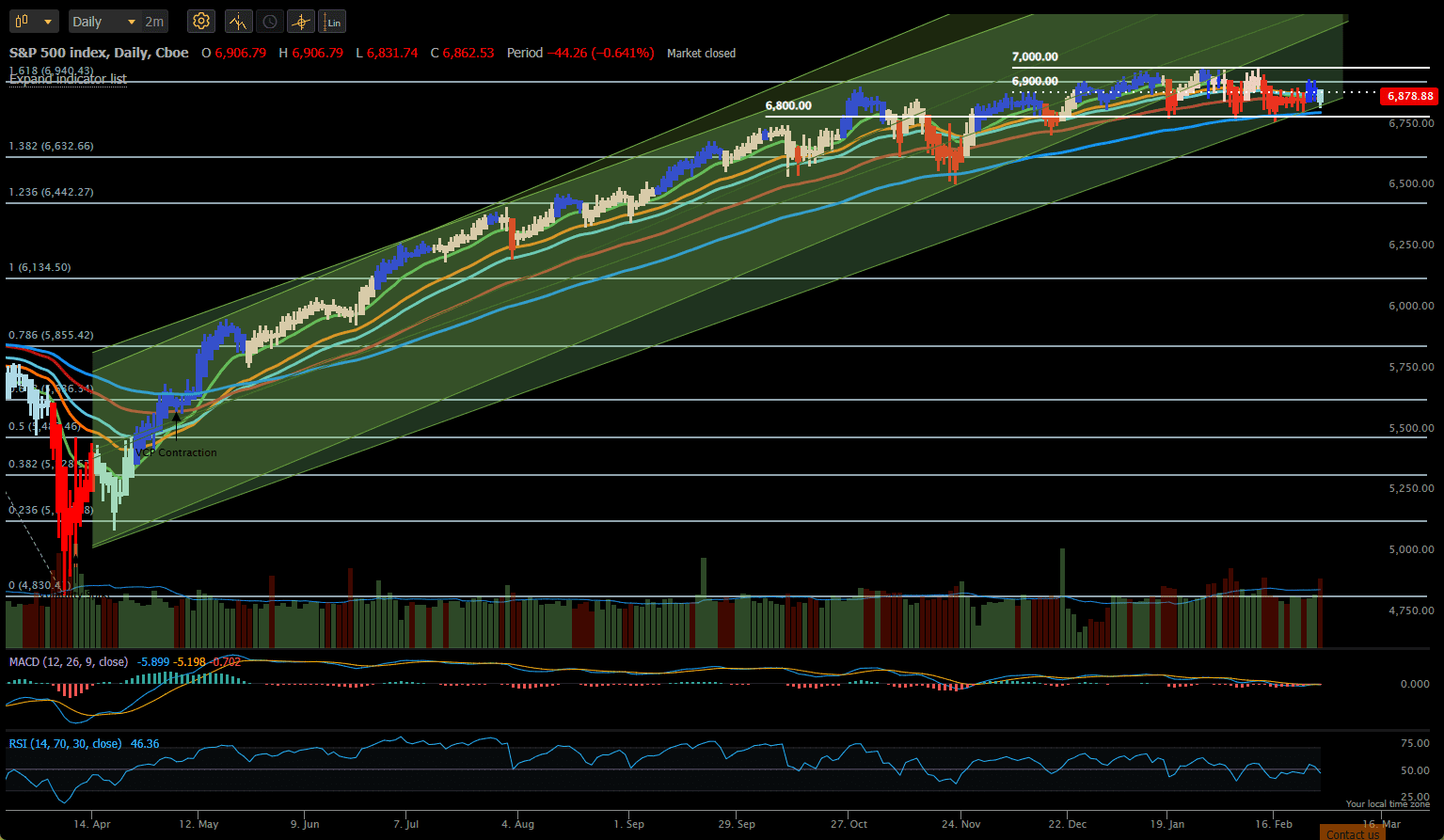 Prices have now traded sideways and outside of the bullish trend channel that I have been showing for the past ~2 months (lighter green shaded channel in the above screenshot) and I could tentatively re-adjust this channel to the wider (darker green shaded channel) should prices breakout above the 7000 resistance level. Conversely, should prices break below the 6800 support level then this might be the signal for a possible pullback and (at least a short to mid-term) change in trend.
Rleative to other major asset classes
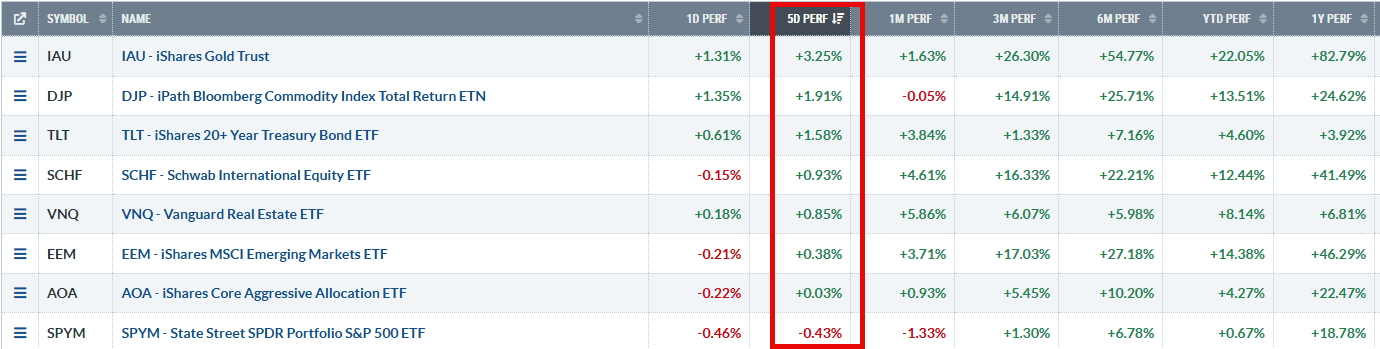 US Equities fell to the bottom of the list with Gold continuing to show strength with a 3% gain on the week and ~83% gain over the past 12 months – albeit with significant volatility through this period. International Equities, in both Developed (SCHF) and Emerging (EEM) Markets also continued their strong performance.
Checking on the analysis of ETFs within the Darwin quiver:
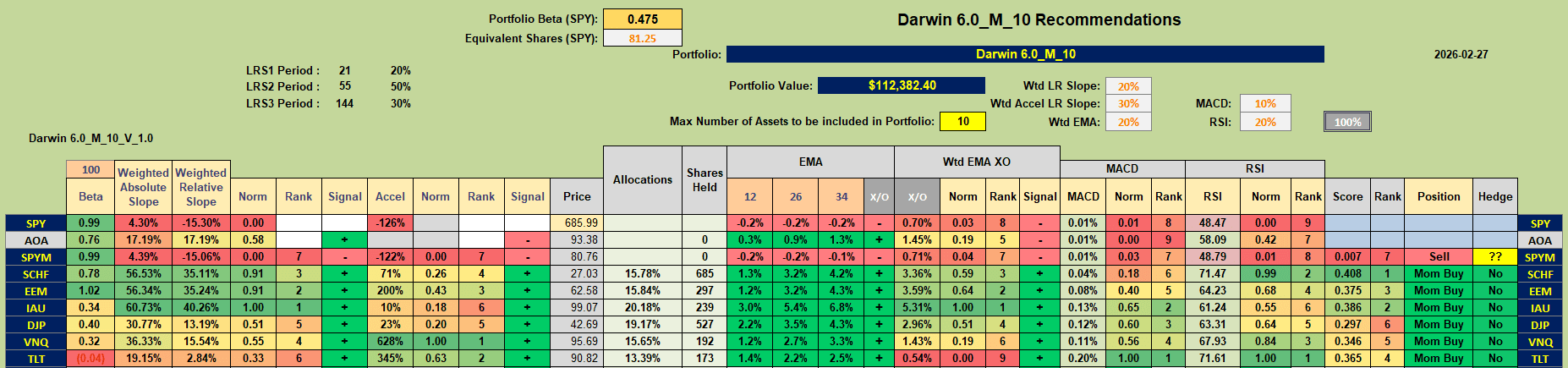 we now see strong Momentum Buy ssuggestions for all but US Equities (SPYM).
From the above analysis screenshot it can be seen that the diversified portfolio has a Beta of only 0.47 compared to SPY (US Equities).
Since the portfolio is presently holding positions in all the recommended Buy assets, no adjustments to the portfolio are currently called for, and performance to date looks like this:
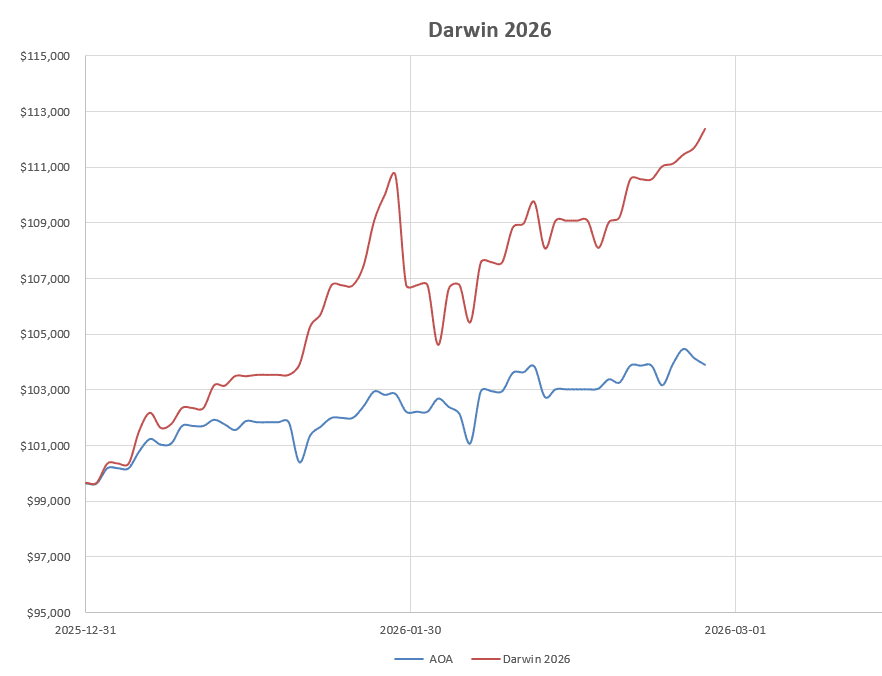 with a very encouraging (but likely not sustainable) 103% Internal Rate of Return (IRR) over the past 2 months, and an acceptable 16% Portfolio volatility despite the high (36%) volatility in Gold. The Darwin Portfolio is now outperforming the benchmark AOA Fund by ~8% over this short period. AOA has traded at about 8.5% volatility (compared with 16% for the Portfolio) – confirming that, when we are investing/trading we are paid for taking more risk – but, of course we need to manage this risk – and this is why I may seem to trade more often than most investors.
Discover more from ITA Wealth Management
Subscribe to get the latest posts sent to your email.
Leave a Comment or Question