
Orchids, Botanic Gardens, Singapore
Last week I did not write a review of the Dirac Portfolio as a lot of confusing rotation between sectors seemed to be occurring. This has not changed a lot but I will update my adjustments over the past 2 weeks with some explanation of my actions.
The analysis sheet for this portfolio currently looks like this:
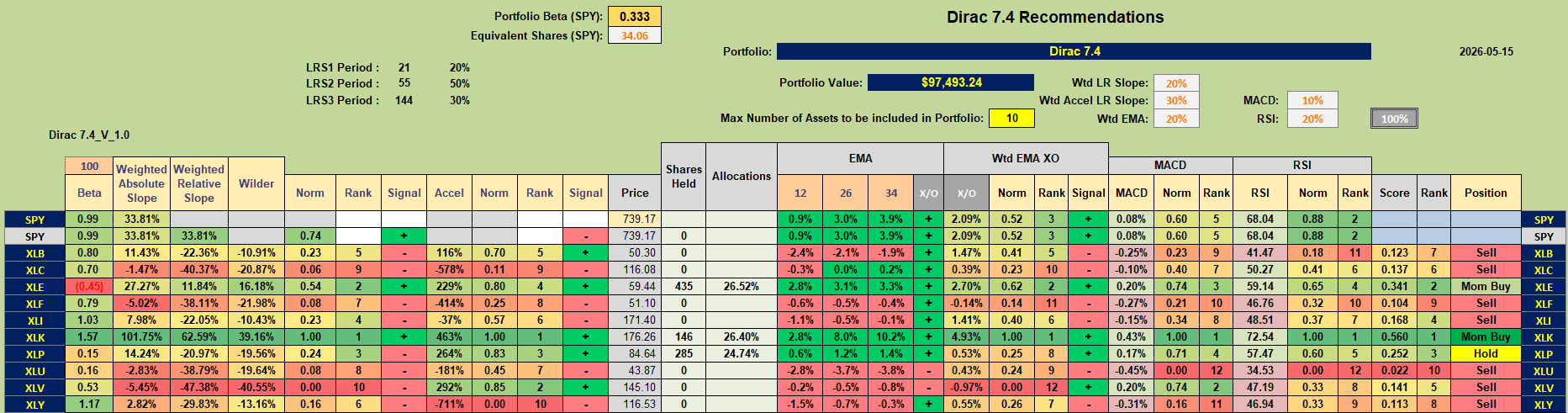 with only XLE (Energy) and XLK (Technology) showing Buy recommendations and XLP (Consumer Staples) showing as a “Hold”.
This situation is supported when we look at the relative performance of the sectors over the past month:
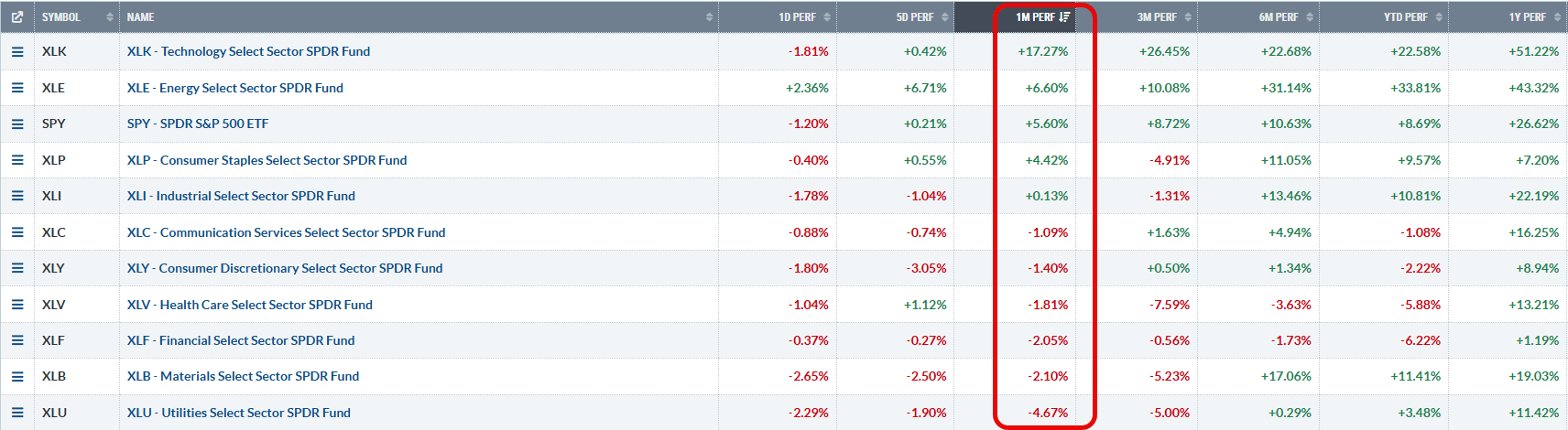 where only XLK (Technology) and XLE (Energy) have out-performed the broader market (as represented by SPY). XLP (“repression-proof” Consumer Staples) is the next best performing sector, although, whilst showing positive performance, this sector has not quite managed to keep up with the broader market. Since the objective of this portfolio is to outperform the broader market the suggested recommendations make a lot of sense.
XLK (Technology) is obviously leading the broader market:
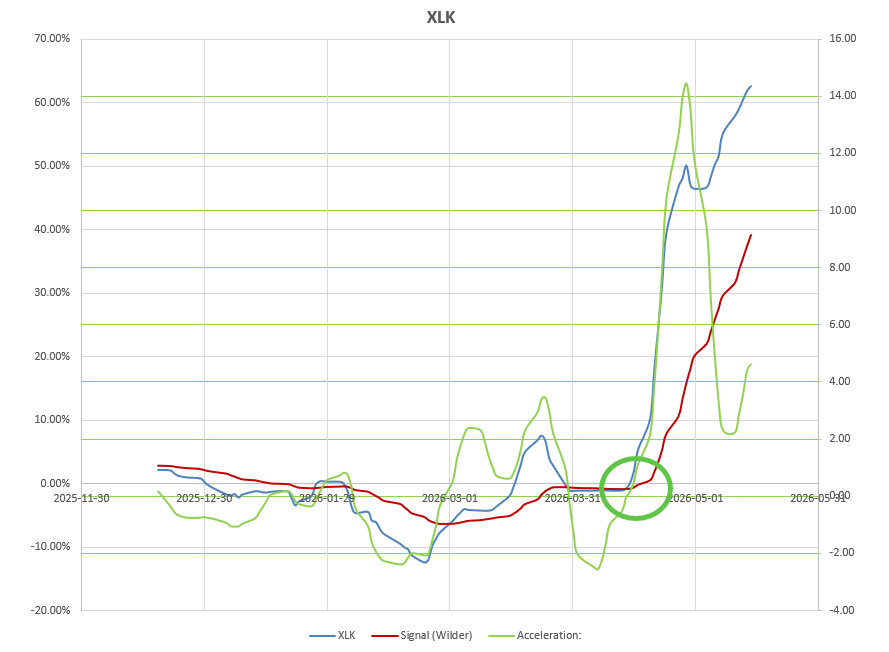 with strong signals everywhere since mid-March.
Let’s take a look at the adjustments (red box) that I have made to this portfolio over the past 2 weeks:
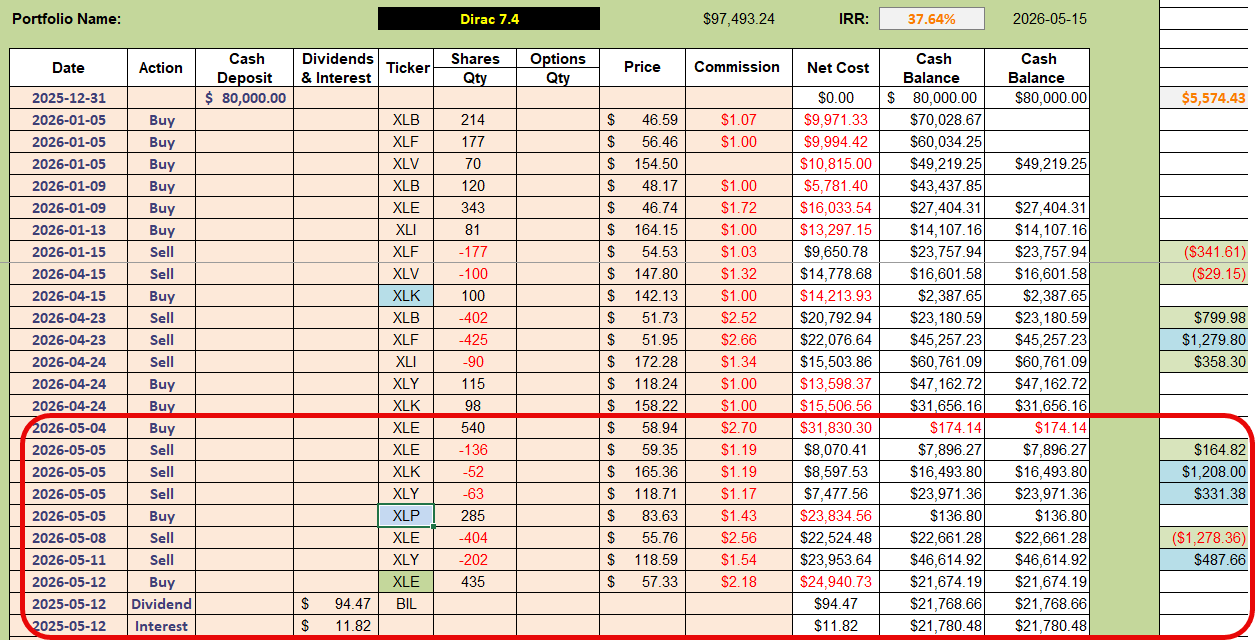 On 4 May, holding positions only in XLK and XLY (Consumer Discretionary) and with Energy (XLE) looking strong I opened a ~33% allocation position in this ETF:
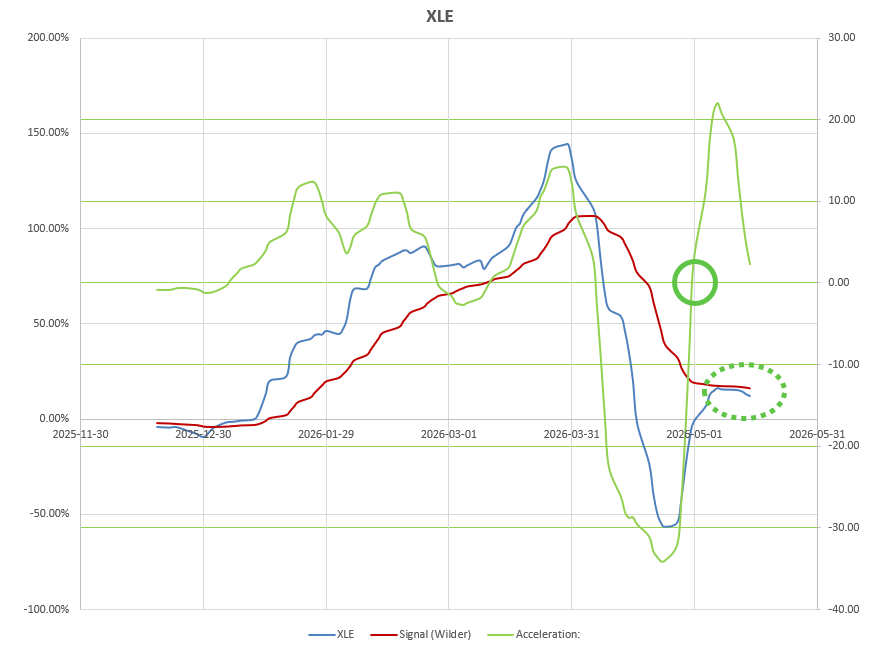 At this time momentum and acceleration were both positive and momentum was heading strongly upwards and looking likely to cross above it’s 14-period Wilder Moving Average (since failed).
On 5 May I got a Buy recommendation to add XLP to the portfolio:
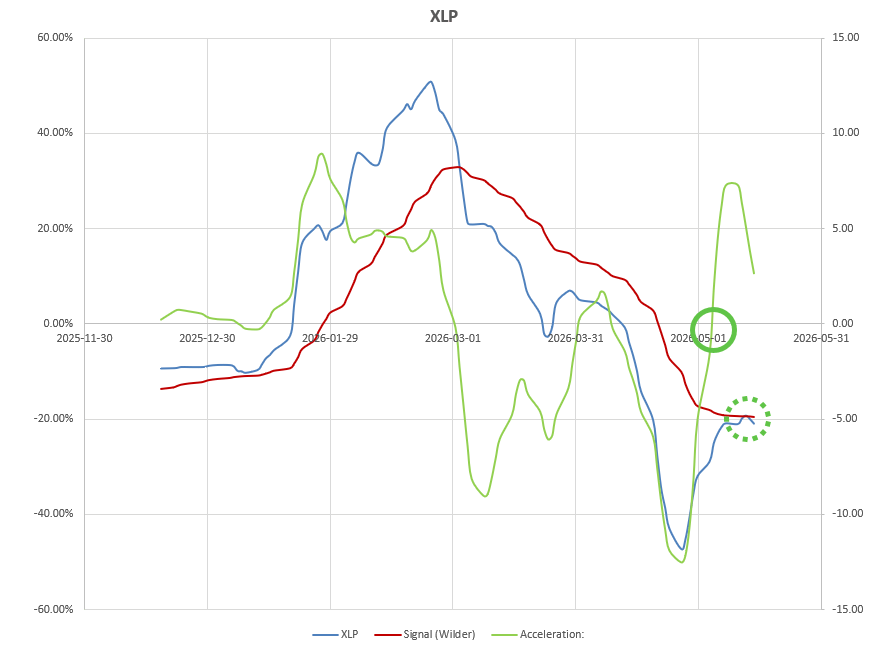
…but, being 100% invested, I had to sell shares in XLE, XLK and XLY (locking in nice profits) so as to hold 25% allocation positions in XLE, XLK, XLP and XLY.
On 8 May, XLE (Energy) took a nose dive so I took the decision to exit my remaining position with a loss. Like Commodities (in the Darwin Portfolio), it is difficult to figure out what is likely to happen in these asset classes in the current geopolitical environment – but it is obviously very volatile.
On 11 May I sold my position (a little late) in XLY:
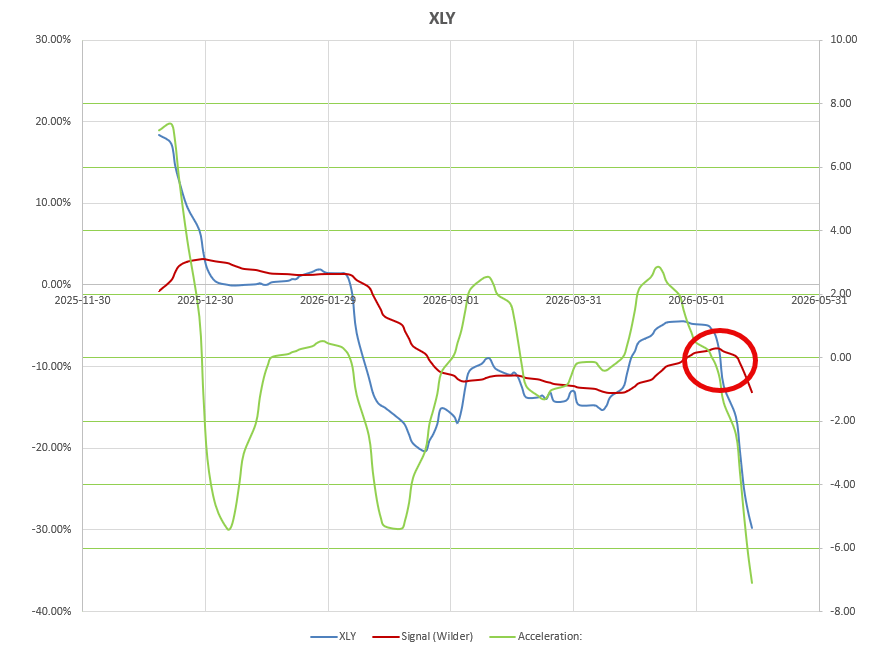 and replaced it with a new position in XLE (Energy) on 12 May.
This leaves me with the positions shown in the analysis sheet at the top of this post and 25% in Cash (BIL).
Portfolio performance to date looks like this:
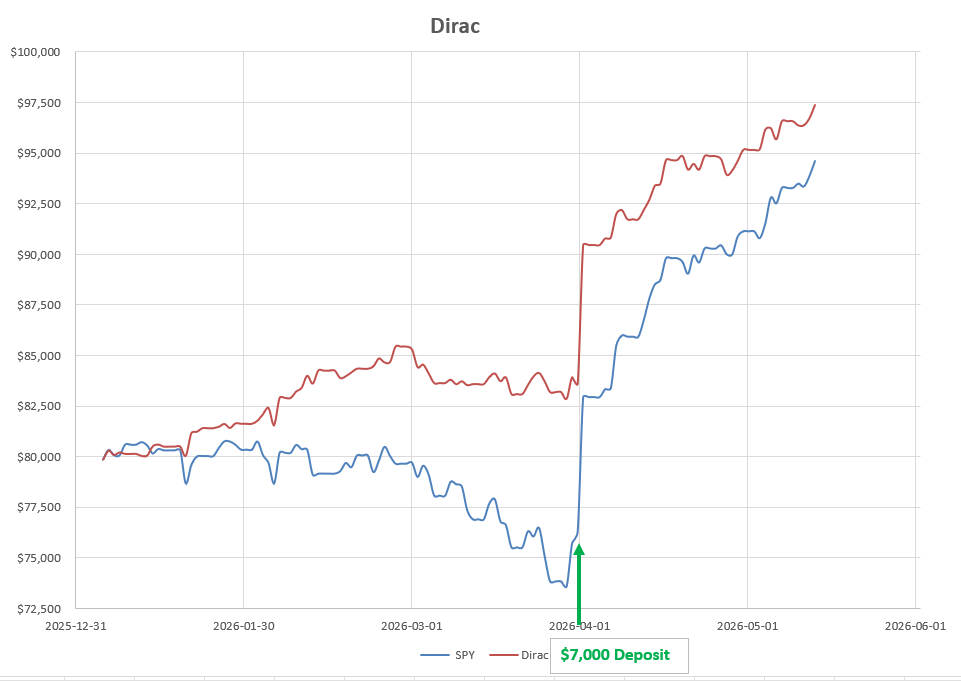 … with a 37% IRR at 16% volatility over the period and still ahead of the benchmark SPY fund.
Discover more from ITA Wealth Management
Subscribe to get the latest posts sent to your email.
Leave a Comment or Question