
Wood Duck
We begin the month of March with an update of the Huygens. The asset allocation model is a combination of equities for growth and income ETFs to provide some resistance should we see a major market draw-down. Below I will explain how I am using Trailing Stop Loss Orders (TSLOs) to reduce major losses.
Huygens Asset Allocation Model
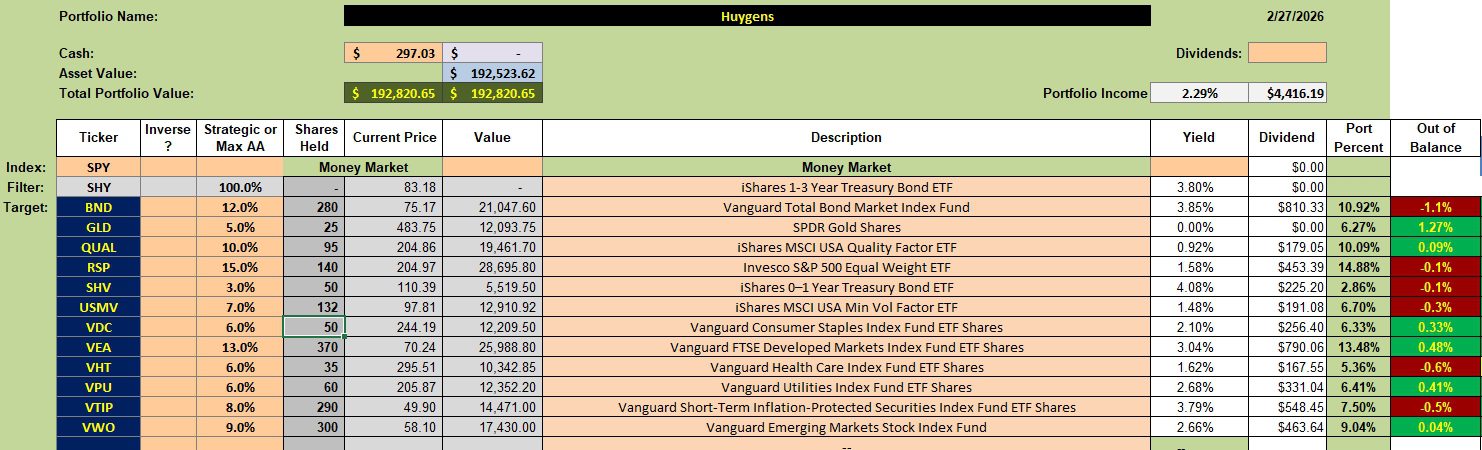
Below is the current asset allocation model for the Huygens. The owner has some years before retirement so the portfolio holds growth ETFs such as RSP, QUAL, USMV, VEA, and VWO. I have TSLO set under all five of these equity ETFs.
Huygens Rebalancing Recommendations
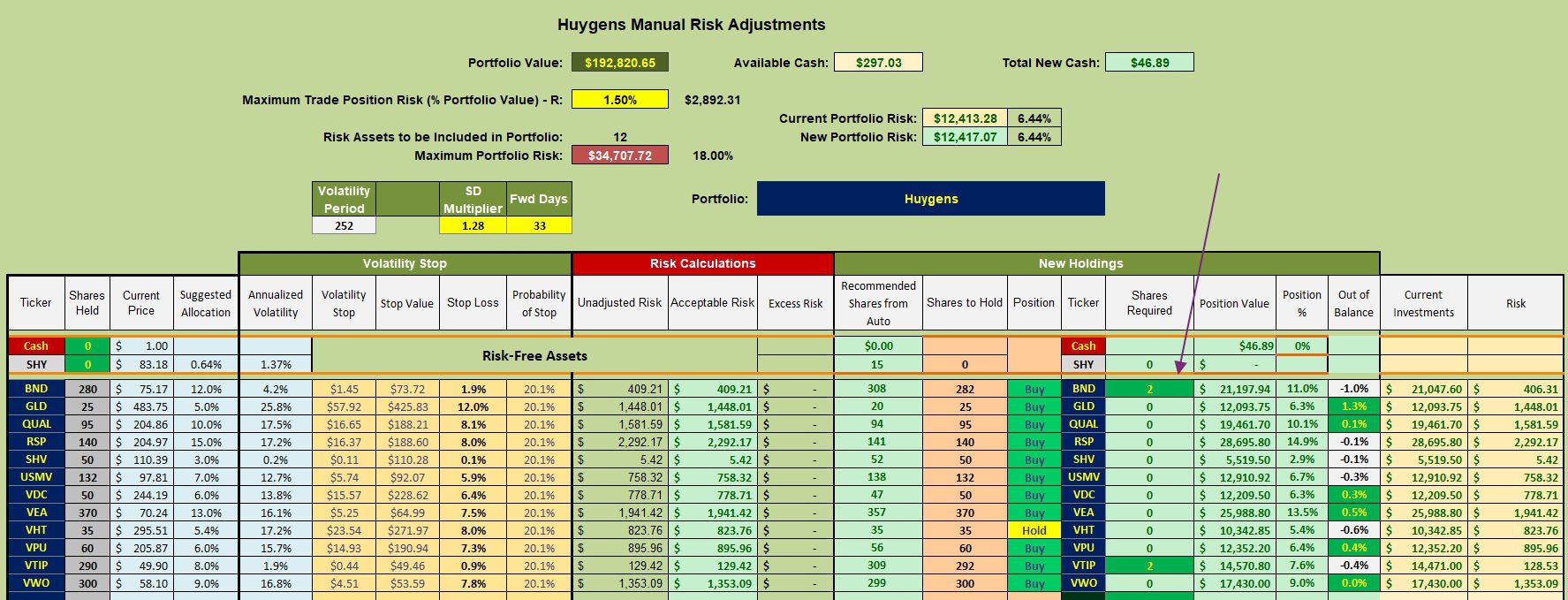
The various asset classes are in balance. I have two limit orders in place to add a shares of BND and VTIP. As dividends are generated I will use those proceeds to keep the various asset classes in balance or as close to the target percentages as possible.
As mentioned above, TSLOs are in place for the five equity holdings. I set the TSLOs around 7% to 10% below the current price. One guideline is to set a TSLO around 1/2 the three-year average of the ETF volatility. Most equities have an annualized volatility around 14% to 20%. Sixteen or seventeen percent is a very common volatility percentage for an equity ETF.
Huygens Performance Data
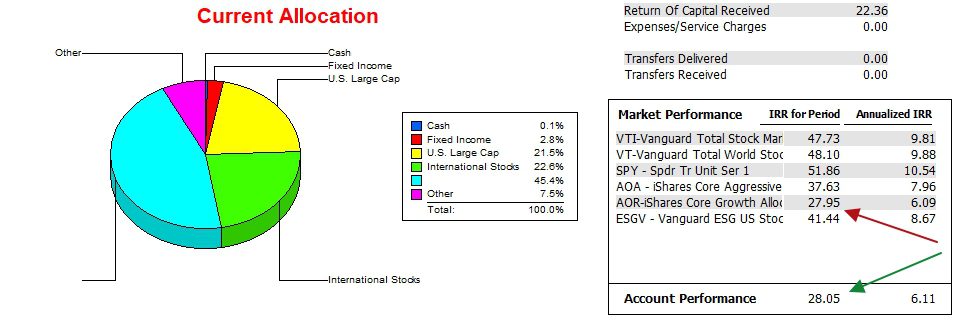
Since 12/31/2021 the Huygens managed to edge out the AOR return, but fell significantly behind the S&P 500 (SPY) as the Huygens is more diversified than SPY.
The IAM software is not picking up the sector ETFs and a few other securities. Not sure why this is happening as all ETFs are classified within the software.
Huygens Risk Ratios
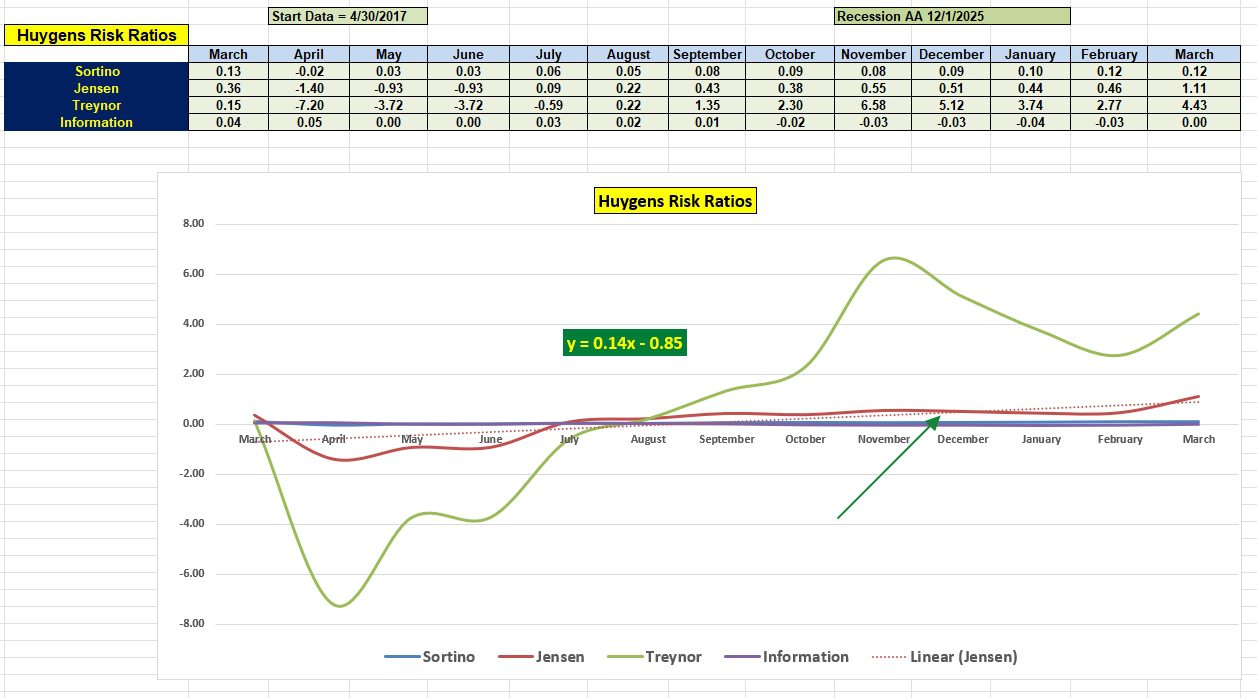
While it is much too early in March to pay much attention to the March values, it is nice to see the Jensen Alpha at a high point for the year. The slope of the Jensen is also quite strong.
Discover more from ITA Wealth Management
Subscribe to get the latest posts sent to your email.
Leave a Comment or Question