
Aurora Depot in Aurora, OR – Village of <1000 population.
Kepler is a typical portfolio in that the investing model is based on the classic asset allocation model. The Schrodinger is another asset allocation portfolio, although the securities used to populate the portfolio are different. In addition, the percentages in the different asset classes also vary widely. The asset allocation model is one promoted by William J. Bernstein and many other investment authors.
Kepler Asset Allocation Model
Below are the asset classes and target percentages (third column from the left) for each asset. With a portfolio this small the percentage goal is to keep the holdings within one percentage point of the target. Checking the far right-hand column we see BNDX, BND, and VEA are significantly out of balance on the low side while QQQ is too far above target. I plan to let QQQ ride.
New infusions of cash and dividends are used to keep this portfolio within the stated target ranges.
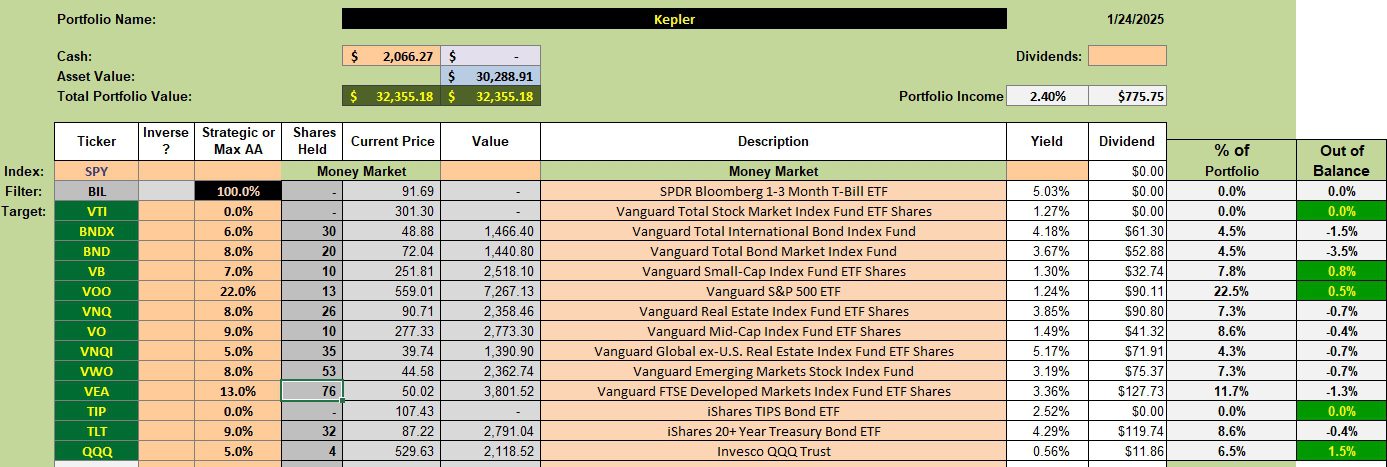
Kepler Rebalancing Recommendations
With over $2,000 in cash we will be able to bring all asset classes back into the stated target ranges. Limit orders are in place and the number of shares for each ETF can be found in the 6th column from the right.
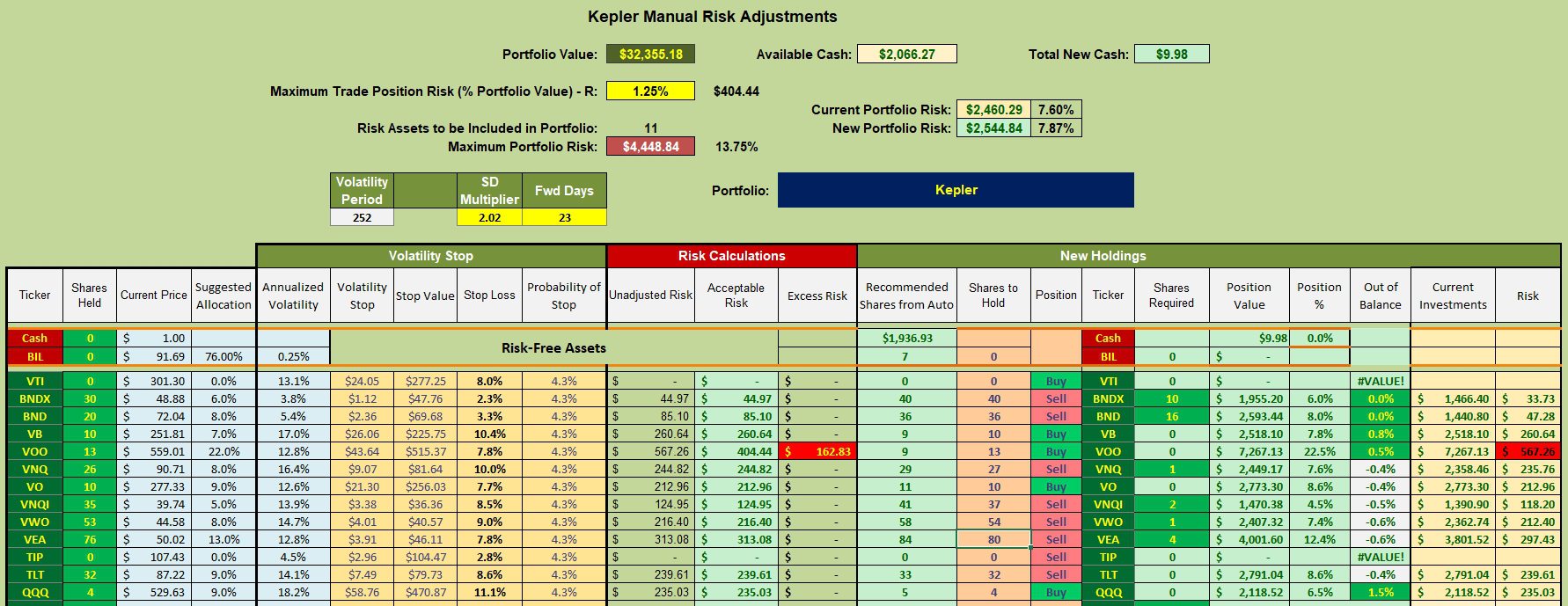
Kepler Performance Data
Since 12/31/2021 or a little over three years the Kepler lags all benchmarks. While it will be difficult to catch up to AOR, that is the goal.

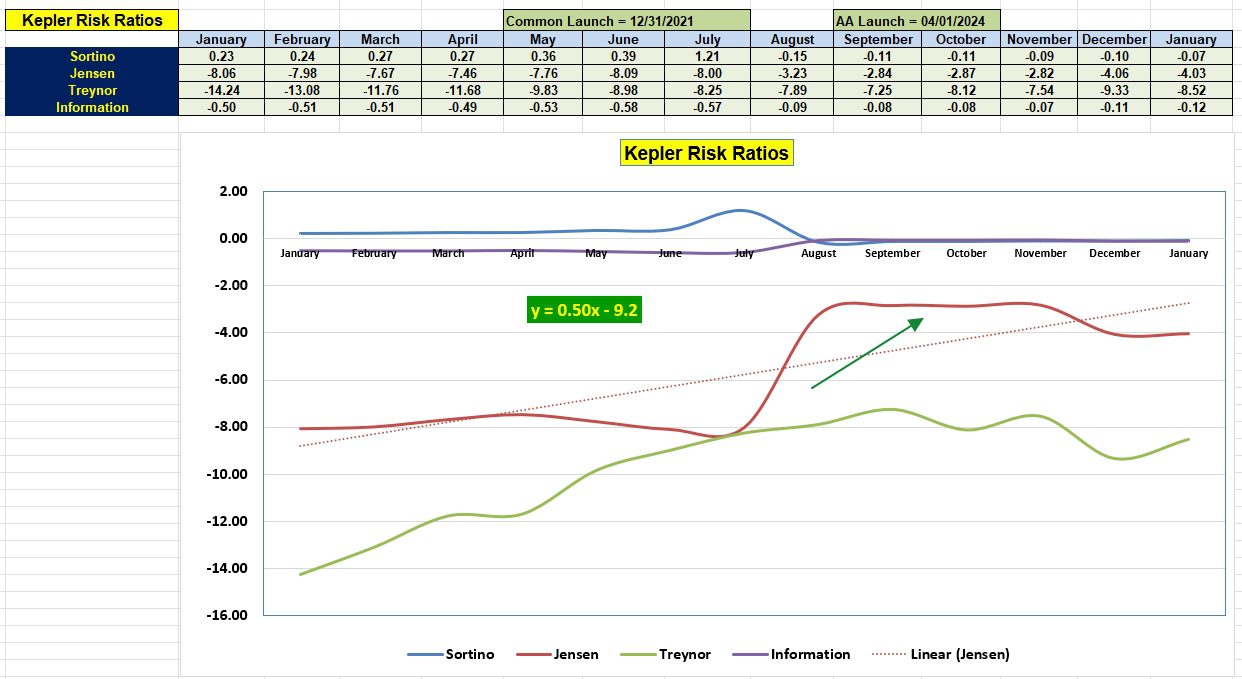
Kepler Risk Ratios
Over the past year the Kepler gained ground on the benchmark, but the improvement is quite slow. One temptation is to invest only in VOO rather than diversify across multiple asset classes. In other words, follow a similar model to the Copernicus portfolio. I’m not quite ready to make such a move as we don’t know how the current administration is going to handle the economy. Holding international assets may be an advantage over the next few years.
Discover more from ITA Wealth Management
Subscribe to get the latest posts sent to your email.
You must be logged in to post a comment.