Willamette Falls at Sunset
Kepler is the portfolio scheduled for review this morning. “Recession Proof” is a misnomer as I am not sure there is any such thing unless one is an option expert, has some luck shorting bear markets, or someone who has access to financial vehicles available only to the very wealthy. The revised asset allocation for the Kepler is an effort to minimize exposure to over-valued mega-cap stocks in the AI arena.
There are overlapping ETFs in the revised asset allocation as I will point out below. I may make further asset class adjustments sometime in 2026, but for now I will stick with the following model.
Kepler Asset Allocation Model
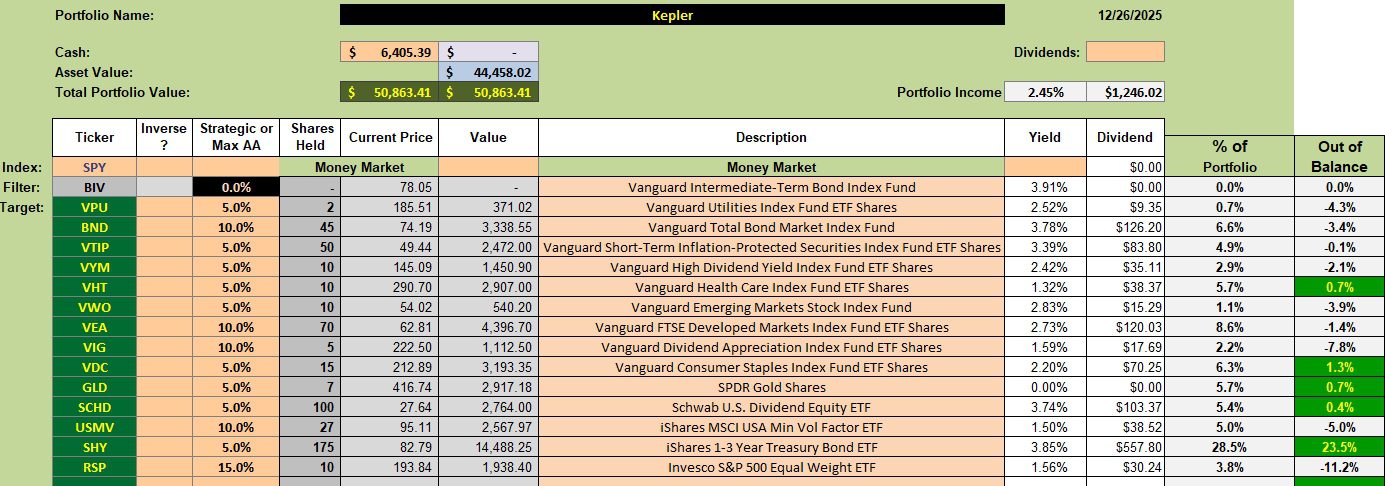
As mention above, there are a few overlapping ETFs. They are: VYM, VIG, and SCHD. All three Exchange Traded Funds (ETFs) are value dividend securities. Even RSP will hold some of the same stocks.
The portfolio contains three sector ETFs. They are: VPU, VHT, and VDC. All contain stocks that we need for survival. ETFs such as BND, VTIP, and GLD are included to put some brakes on major market declines.
VEA and VWO provide exposure to developed international equities and emerging markets respectively. There is some thought that international equities will do better than the U.S. Equities market over the next decade. Vanguard is projecting modest gains over the next decade.
Kepler Rebalancing Recommendations
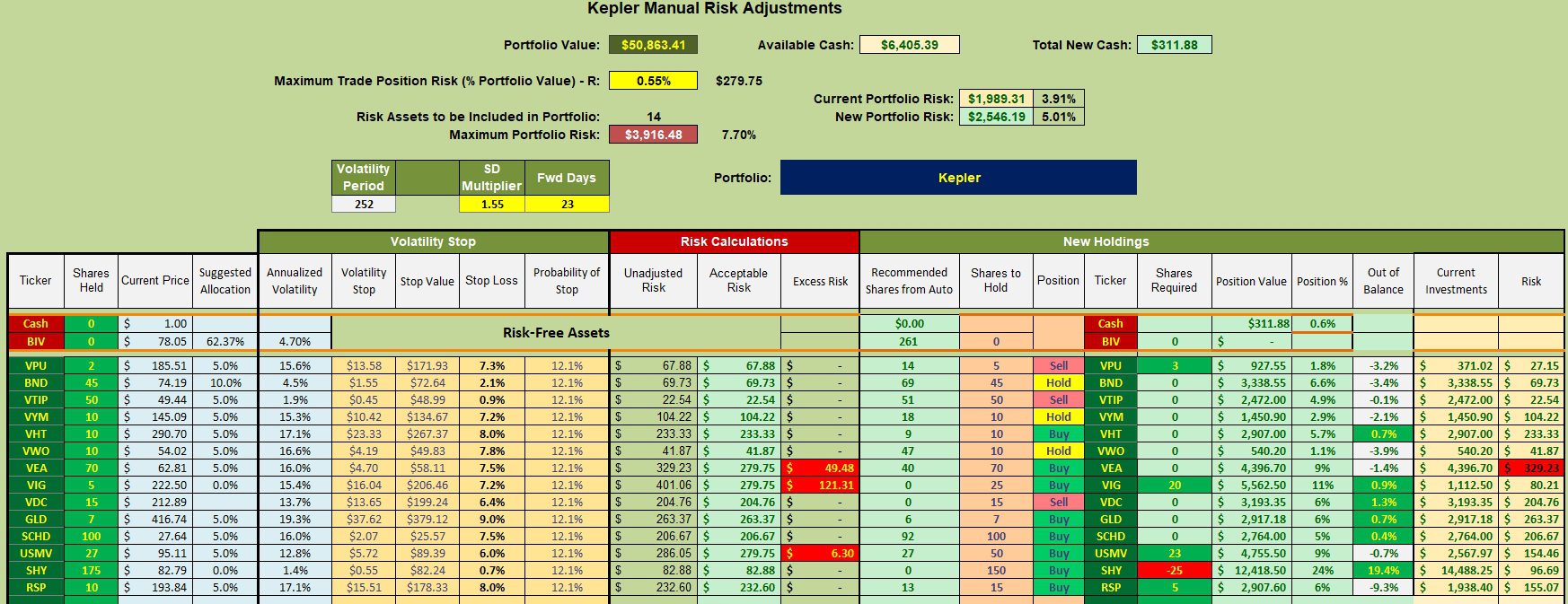
The following worksheet comes right out of the Kipling spreadsheet. Limit orders are in place to make use of available cash. The sixth (6th) column from the right shows the number of shares that are on order.
As cash becomes available I will work to bring each asset class into balance. The goal is to keep each asset class within one percentage point of the target percentage. The “Out of Balance” column indicates the direction for each ETF held in the Kepler.
We expect the owner of this portfolio will add cash each month and this will further facilitate bringing the various asset classes into balance.
Kepler Performance Data
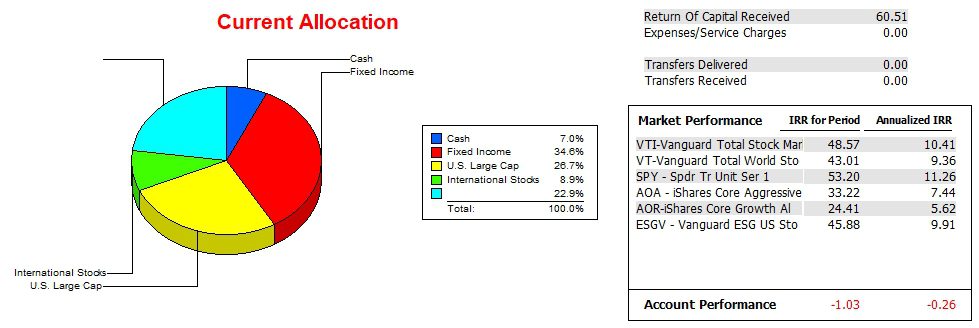
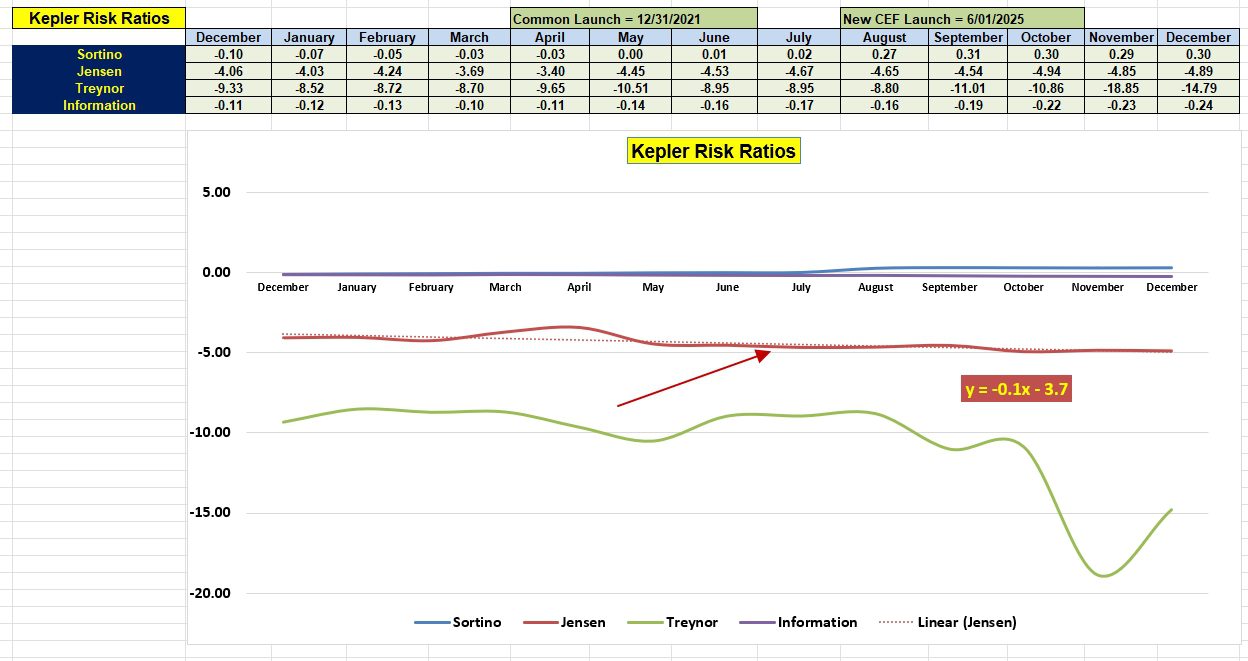
Kepler has been an under-performer since 12/31/2021. It will take a market upheaval to close the gap. In the meantime the Risk Ratio data will be used to monitor progress.
Kepler Risk Ratios
Of the four risk ratios, the most important metric is the Jensen Alpha or Jensen Performance Index.
Overall, the Kepler lost ground since December of 2024. Now we need to see how the revised asset allocation plan works going forward.
Kepler Portfolio Update: 19 December 2025
The above link will permit readers to see what changes took place in the asset allocation model since the last review.
Comments and Questions are always welcome.
Discover more from ITA Wealth Management
Subscribe to get the latest posts sent to your email.
Leave a Comment or Question