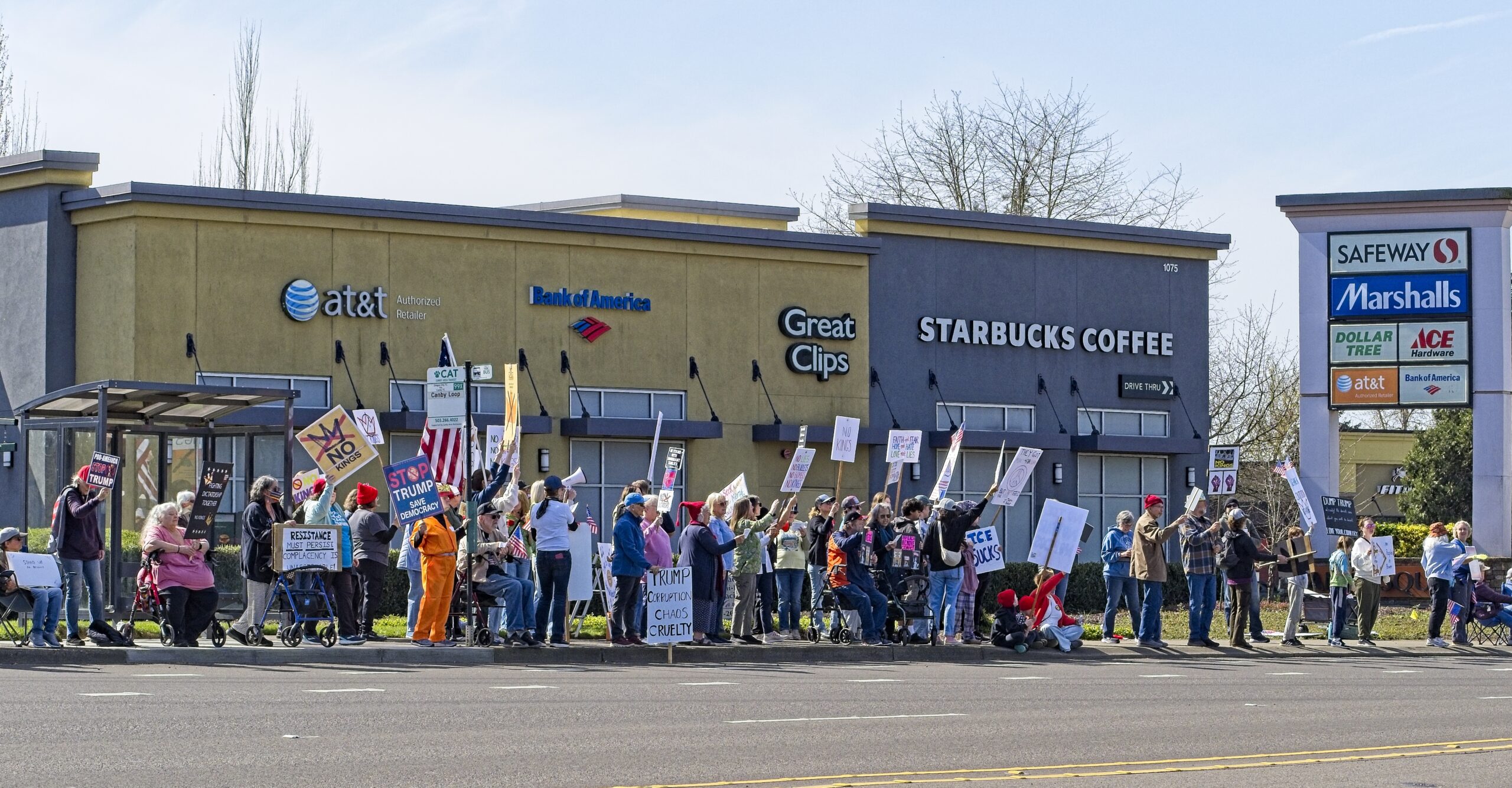
NO KINGS gathering in Canby, OR
Kepler is in the throws of a major revision in the asset allocation and as a result holds a large percentage of the portfolio in cash. How I plan to reinvest this cash is explained below. Past withdrawals penalized the overall performance. Rebuilding the portfolio will take time, but so I can compare performance with the newest ITA portfolio I still will use 12/31/2021 as the launch date.
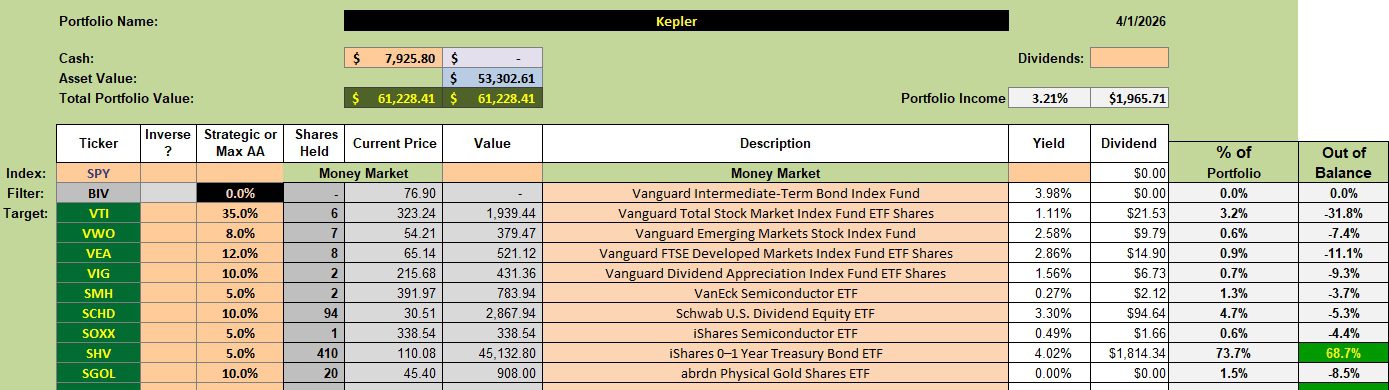
Kepler Asset Allocation Mix
Readers will note the new asset allocation mix for the Kepler. VTI is the anchor ETF as it covers the entire U.S. Equities market. VEA and VWO cover developed international and emerging markets respectively. VIG and SCHD are the income generators as both are dividend oriented ETFs. SGOL is the gold holding. SMH and SOXX are the ultimate growth ETFs and both provide holdings in AI type stocks. SHV is essentially the ETF used to pick up higher interest rather than leaving much cash in a money market.
Kepler Rebalancing Recommendations
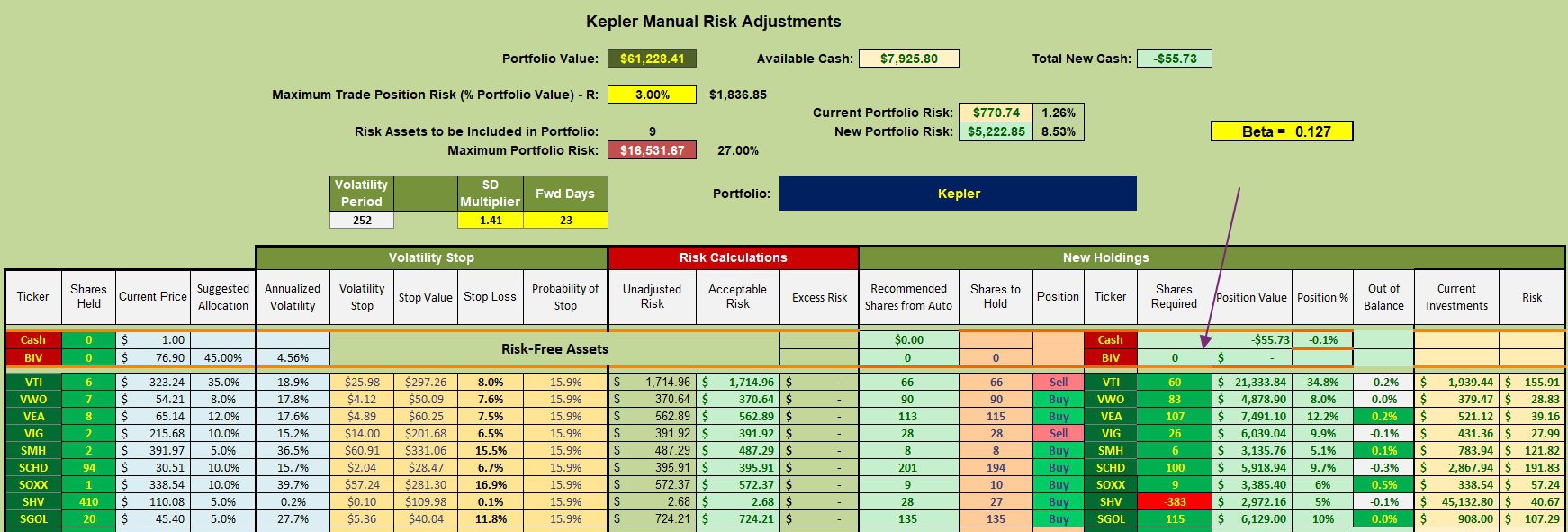
I will continue to hold a large percentage of Kepler in SHV until the April dividends are paid. Once that happens I will be selling shares of SHV so cash is available to place limit orders for the other ETFs that are significantly below their target percentages.
How do I determine limit order prices? Take VTI as an example. Sixty (60) shares are recommended to bring this broad asset class up to the recommended target of 35% of the total portfolio. Note that the three-year volatility average is currently 18.9%. Here is the plan.
- Place a limit order for 30 shares priced 18% below the current price. Sometime over the next year the price of VTI is expected to drop this low.
- Place a limit order for 30 shares priced 9% below the current price.
Normally I would not push the limit orders this far below the current price, but the U.S. Stock Market is over-priced at this point based on the Shiller CAPE Index and Buffett Indicator.
Another option is to break the limit orders into three separate orders and place the third limit order somewhere around three (3%) to five (5%) percent below the current price.
Kepler Performance Data
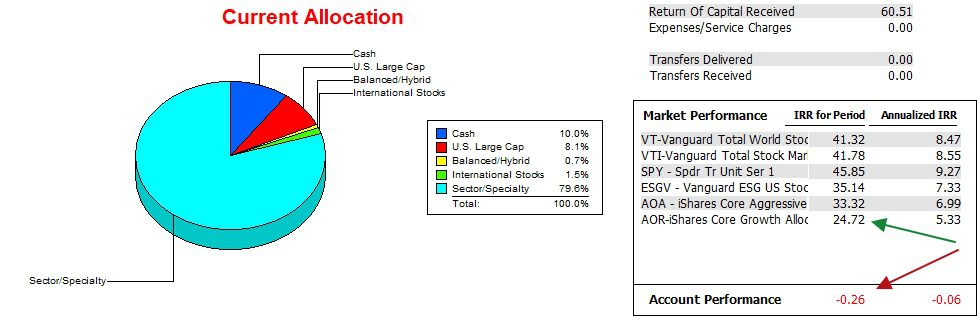
As mentioned above, the Kepler is a performance disappointment. The need to withdraw money at critical bullish times definitely hurt performance.
The pie chart is calling SHV a Sector/Specialty investment when it should be classified as a short-term treasury.
Kepler Risk Ratios
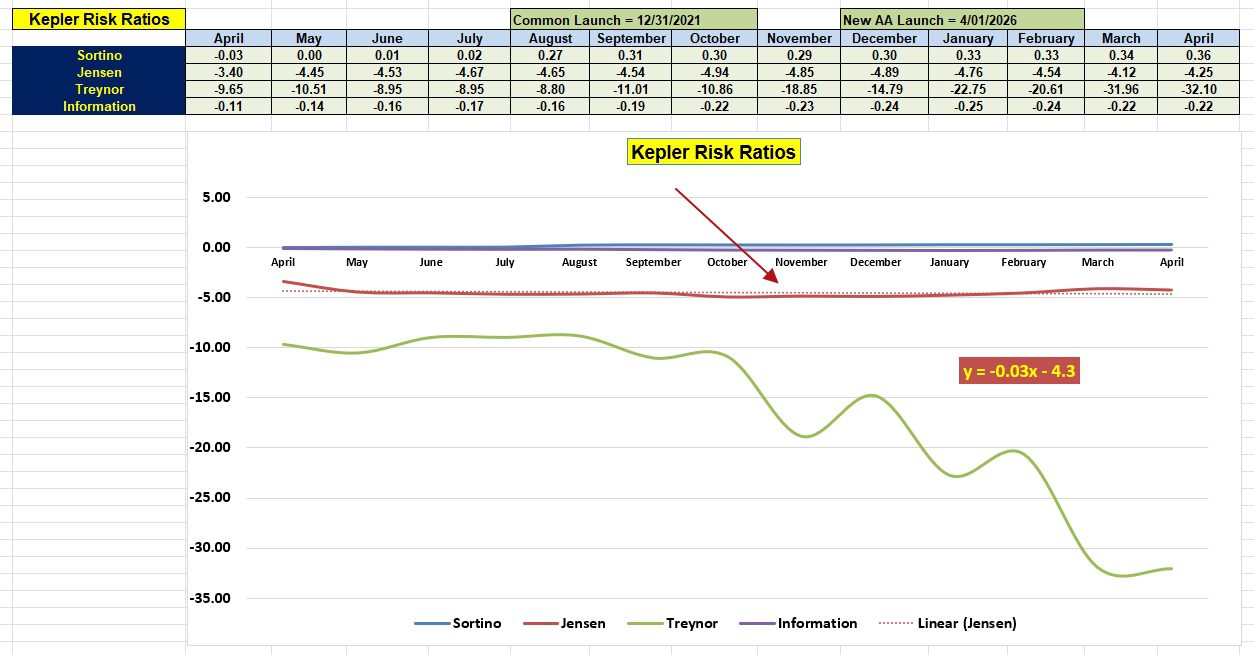
Based on the four risk factors, the Kepler has not had a good year. Yes, the portfolio is more valuable than it was last April based on the Sortino Ratio, but the Jensen Alpha is telling us the portfolio did not keep pace with the AOR benchmark on a risk adjusted basis.
When a portfolio is holding this much cash the beta is very low. Treynor is heavily dependent on the portfolio beta and that factor is what is driving the Treynor to these low levels. Once the portfolio is fully populated the Treynor will be less volatile.
Discover more from ITA Wealth Management
Subscribe to get the latest posts sent to your email.
Leave a Comment or Question