
Machine used to harvest iris flowers. Likely mis-named.
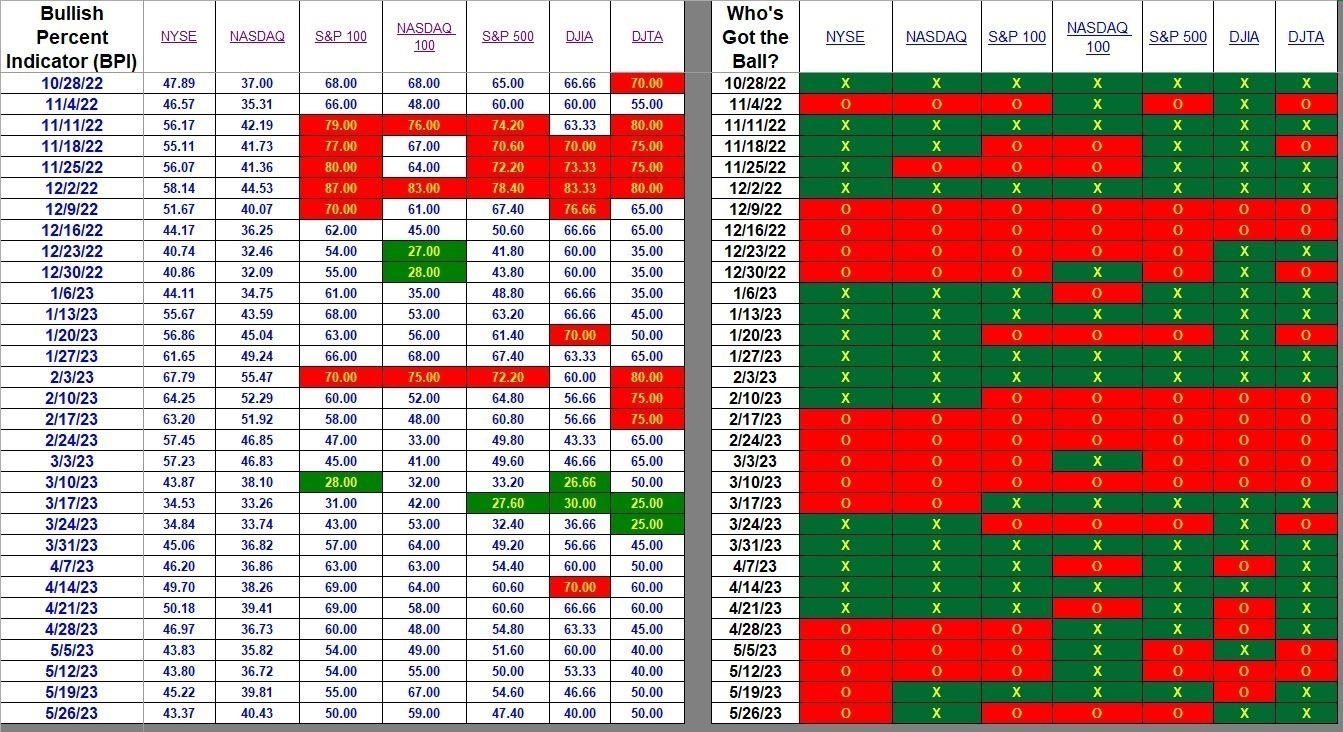
Readers testing the Sector BPI Plus model will want to pay attention to the following Bullish Percent Indicator data as changes are recommended. Despite ending the week on an up note, the majority of the index and sector BPI recommendations are bearish.
Index BPI
Artificial Intelligence is aiding technology and we see this lifting the NASDAQ. What is surprising is that AI is not aiding the larger tech companies if the bearish trend for the NASDAQ 100 is any indicator.
As most of the indexes are hanging around the 50% bullish area, this is neither a bear or bull market. I think of it as a quiet market with a slight down trend. The lack of direction is likely related to the uncertainty of the debt limit.
Sector BPI
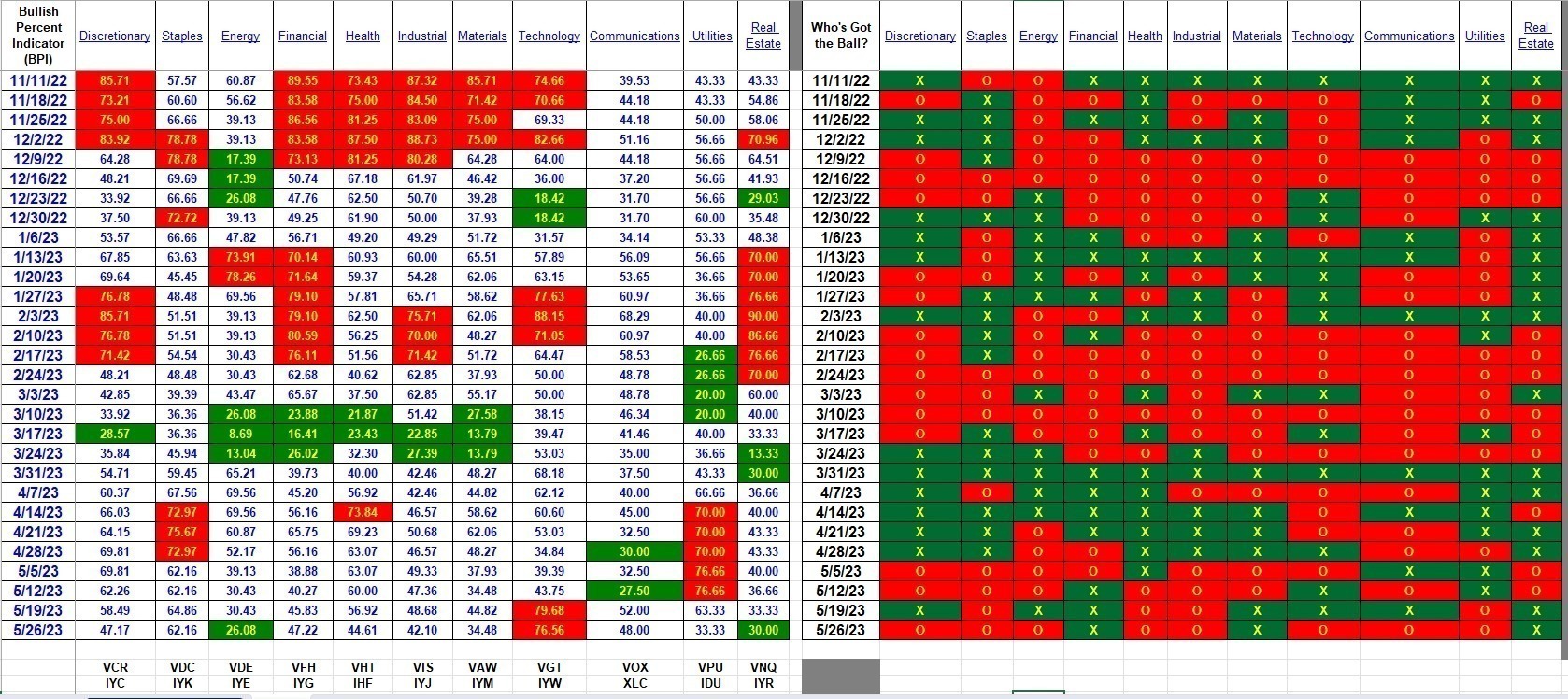
Now we come to the serious section where we are using this information to manage four portfolios. Three indicators are flashing signals this week.
- Portfolios holding Technology see a sell order so Trailing Stop Loss Orders are in place to remove VGT, IYW, or a similar tech ETF. This sell recommendation is a repeat from last weeks notification.
- The buy recommendation for Energy is a repeat of the buy order from last March. When the market opens next Tuesday, set purchase orders for VDE or revisit the buy orders from last March.
- Real Estate is similar to the March buy order.
Explaining the Hypothesis of the Sector BPI Model
Discover more from ITA Wealth Management
Subscribe to get the latest posts sent to your email.
Trailing Stop Loss Orders: How does one set the steps in a TSLO ladder?
Currently, I am searching TSA historic articles on the topic of setting the percentages for steps in a TSLO ladder. I recall some months ago reading a TSA discussion of how many steps, what percentages, and where to set each step. Do you recall that article, or was it several?
Given the observation that equity prices take the steps up and the express elevator down, it seems a decision-making rule of thumb for setting Buy Order and Sell Orders, would have similar patterns, but very different scales for Bullish vs. Bearish environments.
All the best,
– Lee
.
Lee,
Here is how I am doing it and this is my own thinking. I am not following any specific research.
If the account is with a broker (TD Ameritrade) that does not permit fractional percentages I use this approach.
1. If the bullish BPI value is in the 70% level I set TSLOs at 3%. This is usually the case.
2. If the BPI value rises to the 80% level I set the TSLO at 2%.
3. Should the BPI value rise to the 90% level I will set the TSLO at 1%. This is rare.
Schwab permits setting TSLO using decimals. Assume the BPI for a sector is 73% bullish. I will then set the TSLO at 2.7%. If the BPI comes in at 78% I’ll set the TSLO at 2.2%. If the BPI is 85% I will use a TSLO of 1.5%.
I don’t know if this is exactly what you are after. If not, ask again.
I should add this comment. If I happened to hold 1000 shares in a particular sector I would likely set several TSLOs at slightly different or laddered sell points. This may be what you are asking.
Lowell