
Student College, Cambridge, England
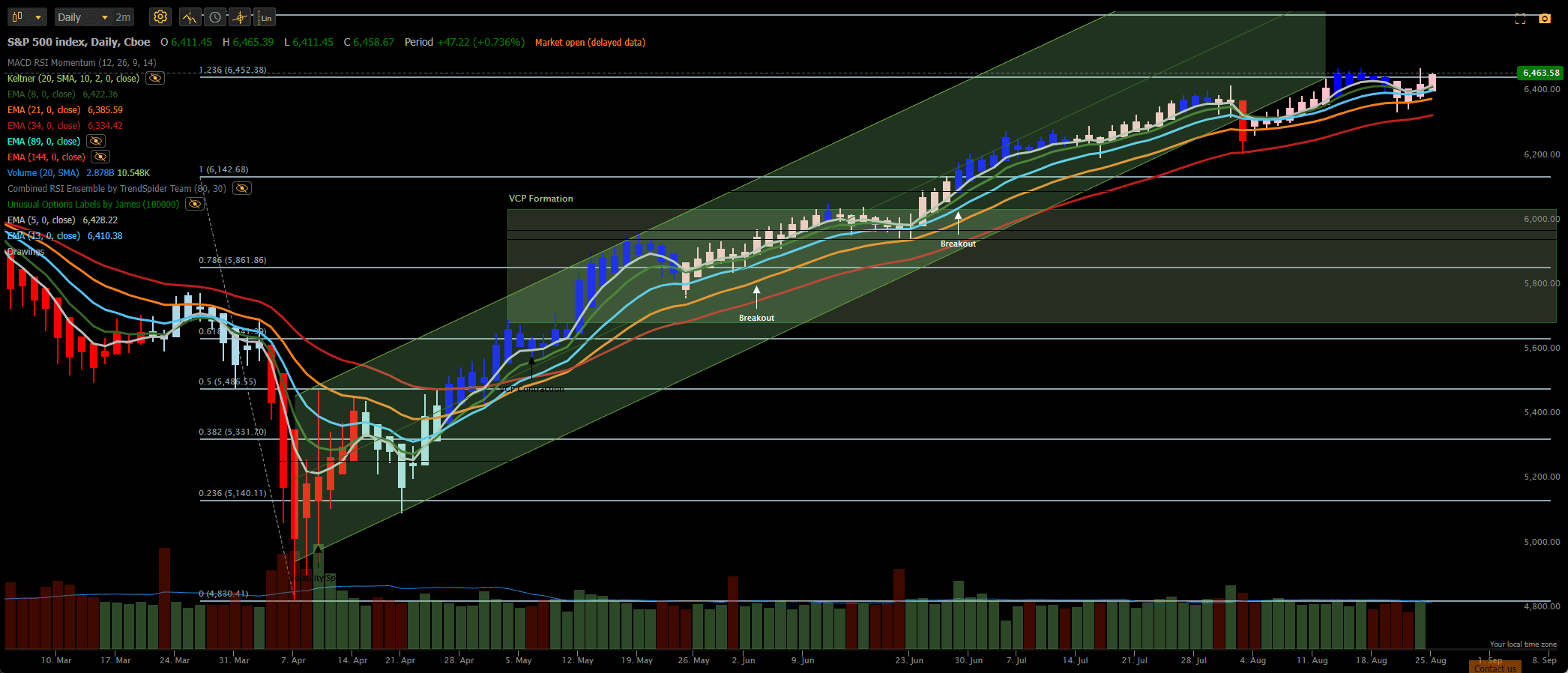
In reaction to the Fed’s indication of probable interest rate cuts in September, investors pushed the markets higher on Friday, but the SPX (S&P 500 Index) closed only slightly (~0.25%) higher than last week’s close and was not able to penetrate the ~6450 resistance level and/or reach new highs, and we remain in a sideways consolidation range:
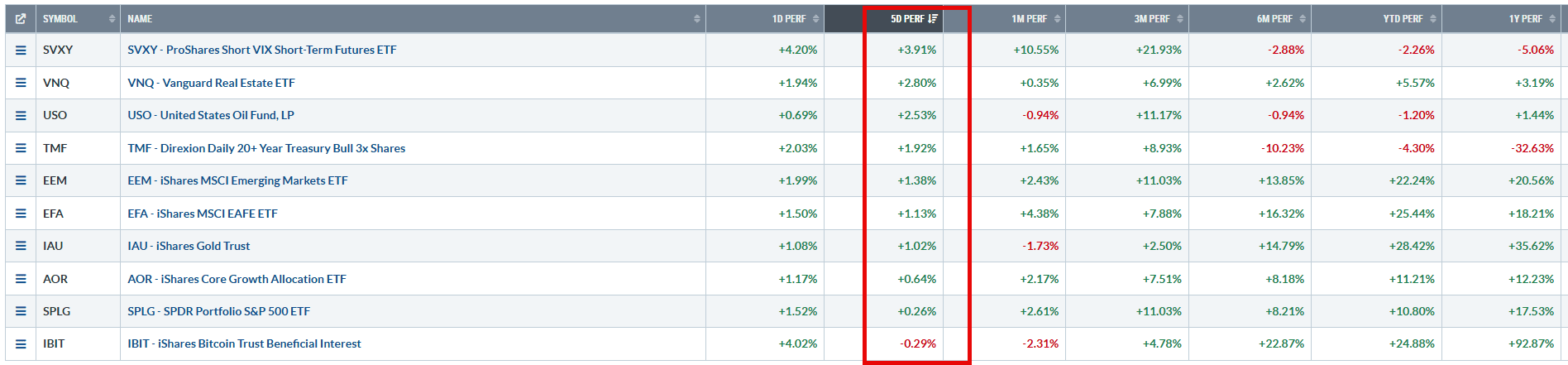
Apart from Crypto, all other major asset classes performed better than US equity markets with 1-3% gains on the week:
 The Rutherford-Darwin Portfolio held Options expiring on Friday and so a few adjustments were made. As a result of Crypto’s weakness, the Calls in IBIT, that were sold, expired worthless (so we kept the premium received) and were replaced by selling another Call Option, expiring in a week, to bring in an additional $110 credit:
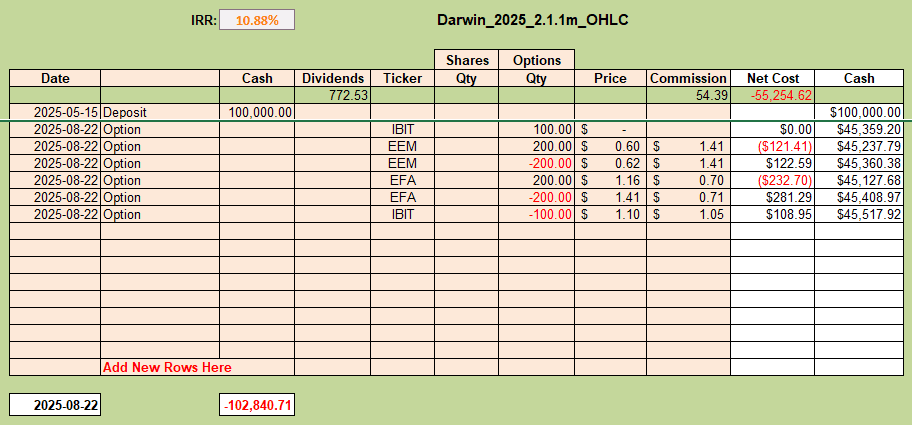 Since the Calls sold against holdings in EFA (Developed Market Equities) and EEM (Emerging Market Equities) were trading In-The-Money (ITM) and I wanted to hold on to the shares held in the portfolio I rolled the Call Options up (in price) and out (in time) to the 19 September expiration (~3 weeks). This was done for a small $54 credit and provides a little downside protection.
Checking on current rankings and recommendation from the Kipling workbook we see the following suggestions:
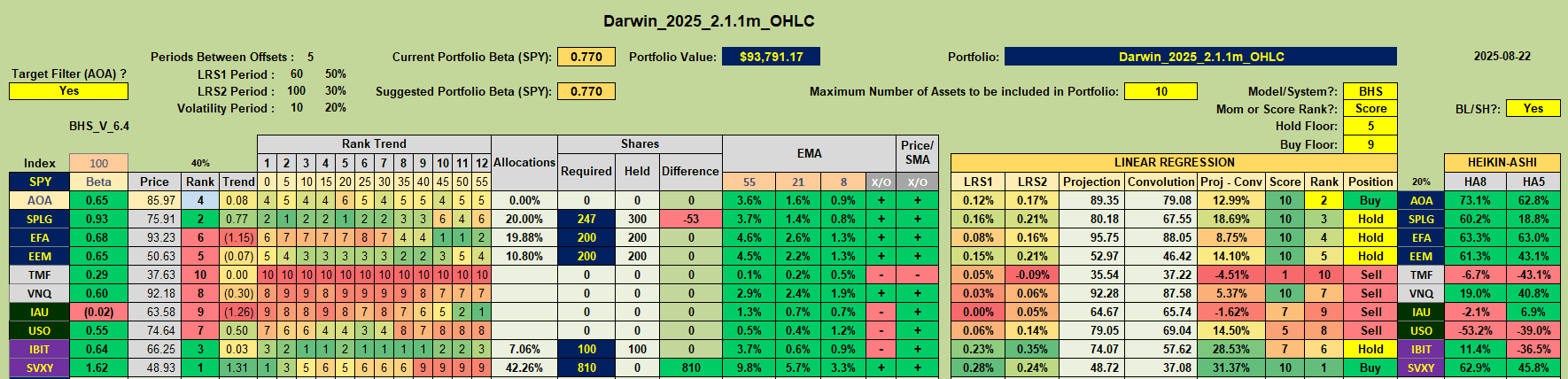 where (apart from SVXY – the inverse Volatility ETF) all the remaining ETFs currently held in the portfolio (SPLG, EFA, EEM and IBIT) remain with Hold recommendations and are hedged through sale of Call Options against them. Hence, no further adjustments are called for at this point.
The hedged positions look like this:
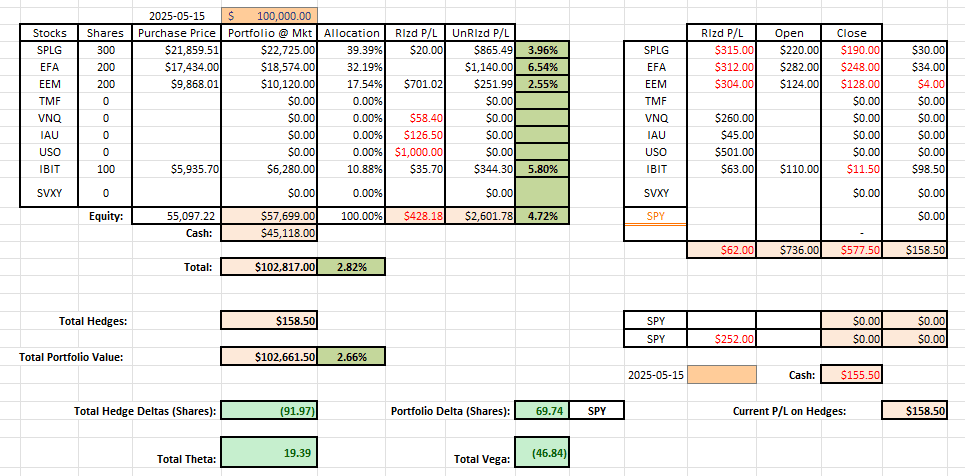 where we can see that the portfolio is still slightly overhedged but is picking up ~$19 per day in time decay of Option premiums. At the present time the Core Darwin portfolio is showing a ~2.8% gain since inception (14 weeks since 15 May) with the hedges just about at break even. Since these hedges provide “insurance” this is perfectly acceptable.
Overall, performance of the portfolio to date (corrected to account for inconsistencies generated through the earlier use of adjusted close prices rather than actual close prices) looks like this:
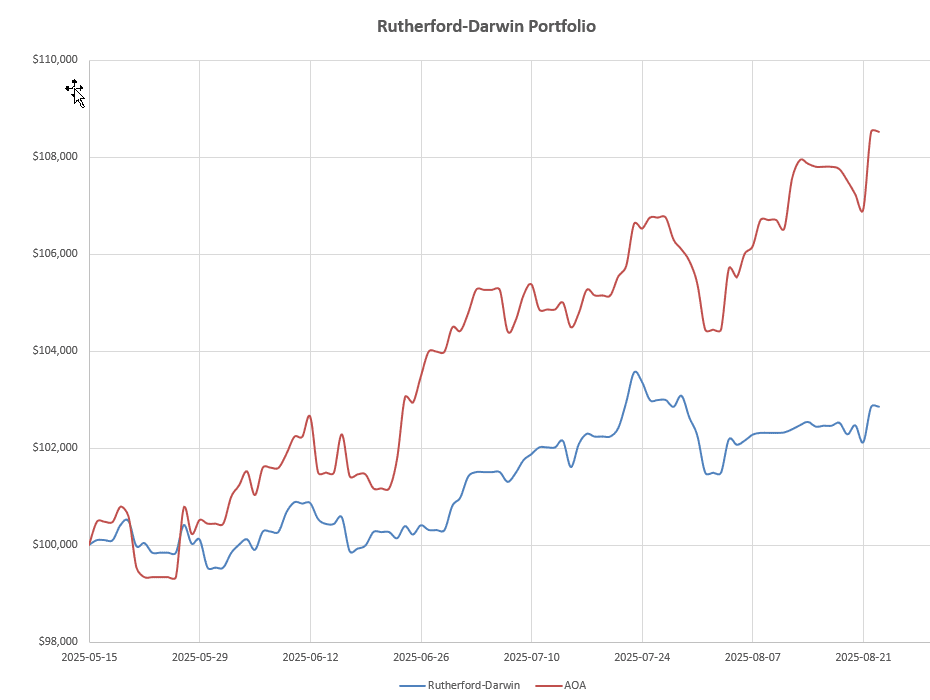 with ~10.7% Internal Rate of Return (IRR) and low (4.8%) volatility. Returns of the benchmark AOA (Equity/Bond Fund), 100% invested, is higher but with ~8.6% volatility.
Discover more from ITA Wealth Management
Subscribe to get the latest posts sent to your email.
Leave a Comment or Question