
Sign in Highway 99 Restaurant
Gauss and Millikan are two portfolios I’m shifting over to the Sector BPI Model as neither is performing at a level expected. The following analysis explains the process I’m using for this migration. Both portfolios were considered Relative Strength portfolios where I was using the Buy-Hold-Sell (BHS) system.
Gauss Investment Quiver
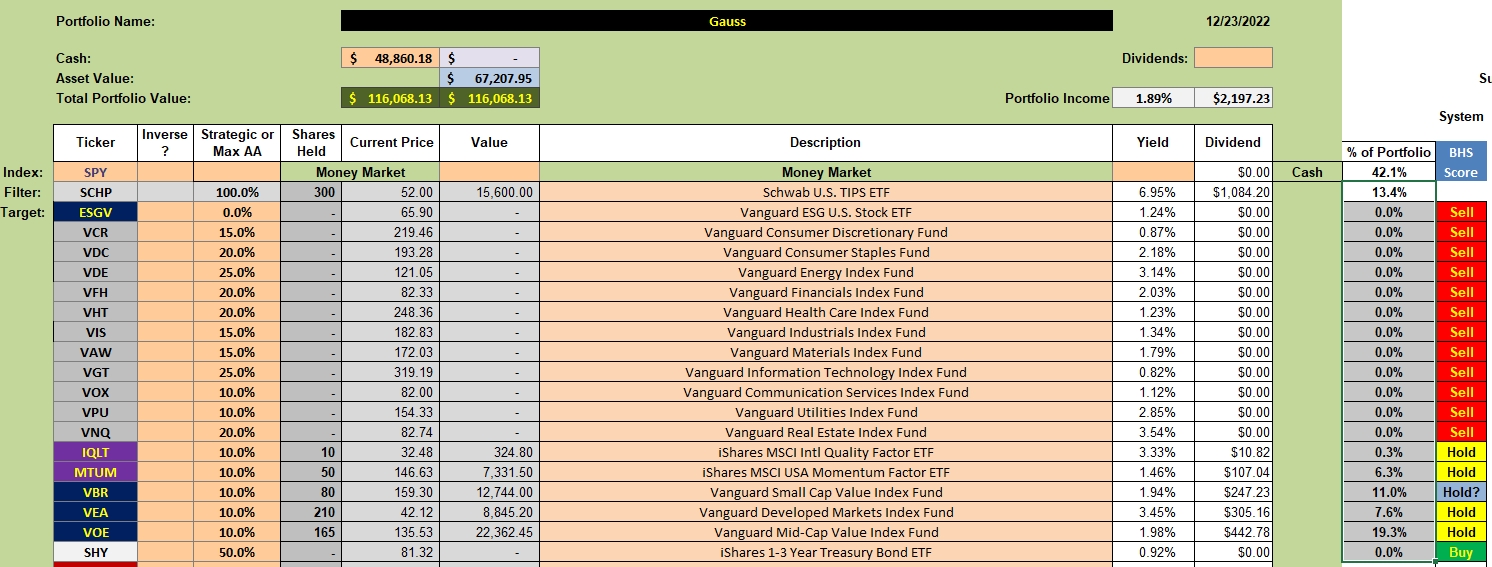
Below is the current investment quiver and holdings for the Gauss portfolio. Listed in the quiver are the eleven sector ETFs, awaiting for shares when the sector calls for a Buy. Right now, Energy, Technology, and Real Estate are the recommended sectors with Communication Services (VOX) very close to a Buy.
Gauss Sector BPI Adjustment
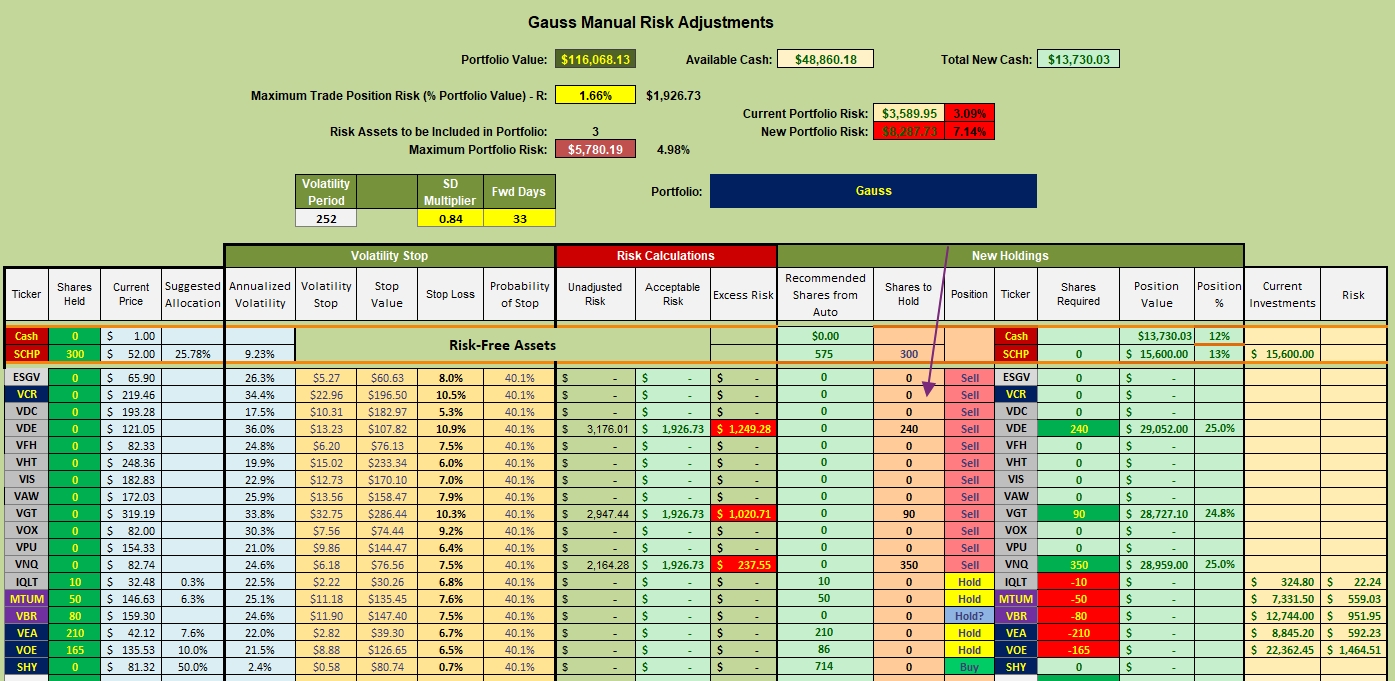
I’ve placed 3% to 4% TSLOs on the equity holdings. Using available cash and new cash when ETFs are sold, I’ll begin to populate VDE, VGT, and VNQ. If I find it necessary to raise more cash, I can sell some shares of SCHP.
To know how many shares to purchase, I use the Position % (third column from the right) as a percentage guideline.
Gauss Performance Data
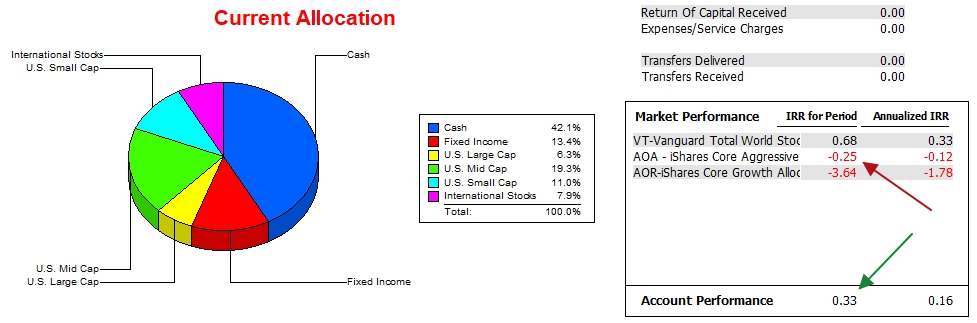
The following data runs from 11/30/2020 through 12/23/2022 or over two years. The IRR for this period is 0.33% while the AOA benchmark is negative 0.25%. Think of the two measurements as close to even. In another six months we should have a good idea whether or not the Sector BPI Model is gaining or losing ground on the various benchmarks. Another benchmark is the performance of the Gauss vs. the Schrodinger.
Gauss Risk Ratios
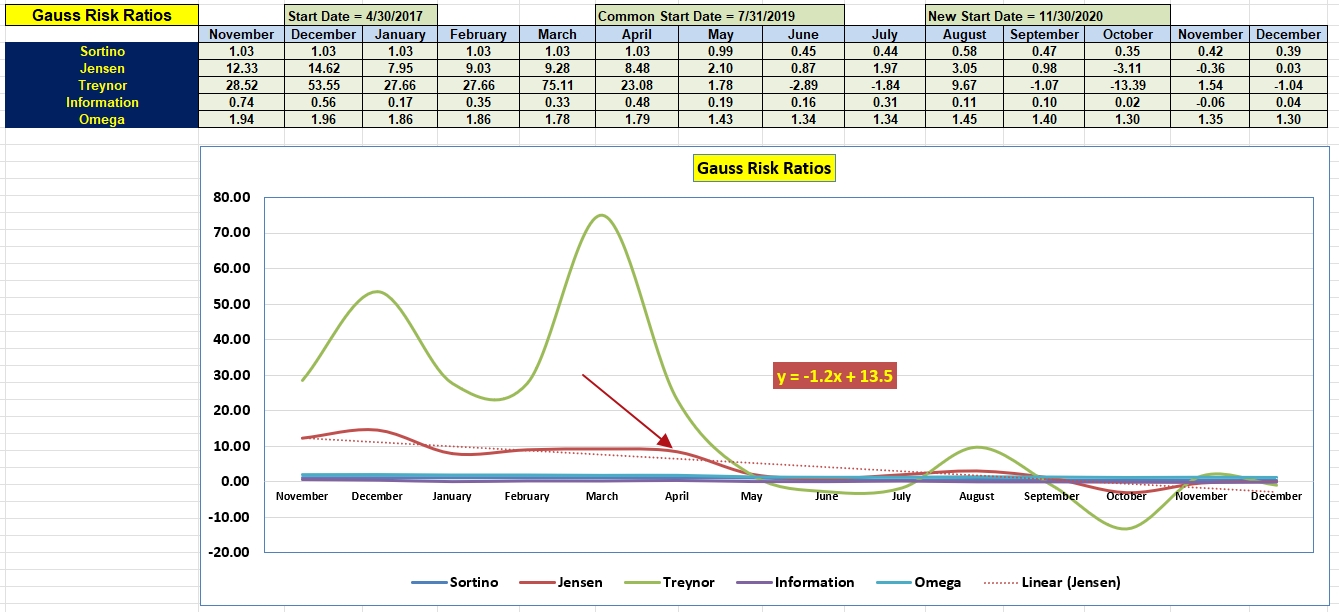
Checking the Jensen Alpha values and the Jensen slope (-1.2) over the past year, we see the impact of the U.S. Stock Market impact on the Gauss. It has been a rough year for stocks and with all the talk about a coming recession, 2023 does not look all that bright. For the long-term investor, we might see some excellent buying opportunities this coming year – if cash is available.
While I want to secure some positions in Energy, Technology, and Real Estate, I’ll also set limit orders well below current prices. Well below is defined as 5% to 20% below current prices. This assumes we are going to see a recession in 2023. The press might talk us into a recession.
Discover more from ITA Wealth Management
Subscribe to get the latest posts sent to your email.
You must be logged in to post a comment.