
Capistrano Mission Ruins
As mentioned in the Bullish Percent Indicator data update this morning, I discussed the possibility of “tweaking” one or more of the Sector BPI Plus portfolios. This blog post walks readers through such a “tweak.” While the change is minor, limiting the percentage that is to be invested in any one sector will open up the possibility of moving into the second level of portfolio population or the Dual Momentum™ option.
I selected Gauss as the “lab rat” as it currently is showing the lowest Internal Rate of Return (IRR). Rather then tamper with the better performers I decided to experiment with the poorest performer, the Gauss.
Gauss Main Menu
We begin with the Main Menu worksheet from the Kipling portfolio. What is new in the Main Menu is the addition of what I call the Volatility Coefficient (see red arrow). The value is 0.38 and I’ll explain exactly how this value is used. The value of the Volatility Coefficient is multiplied by the three-year volatility of each sector and we want all eleven sector products to add up to 100% or very close to that percentage.

Gauss Investment Quiver
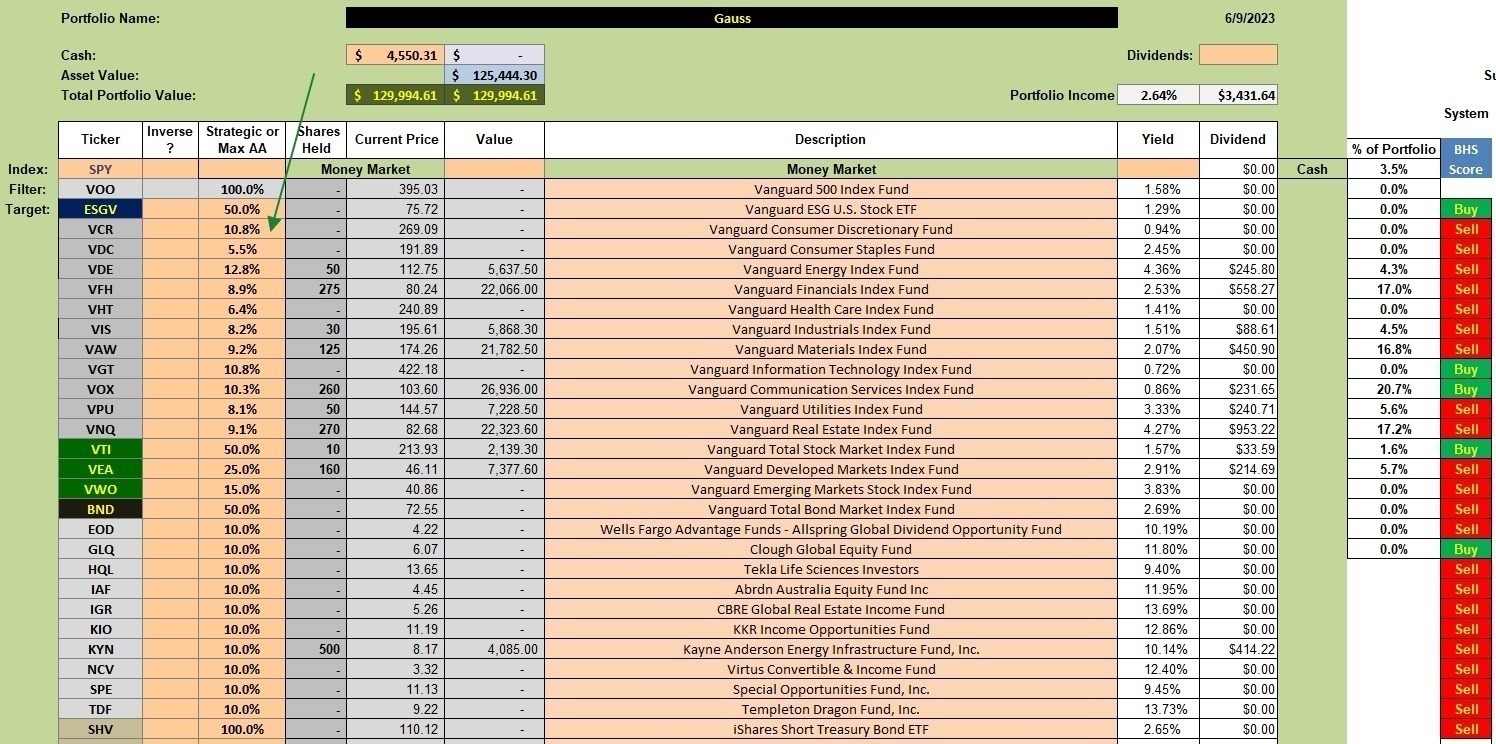
Below is the current investment quiver for the Gauss. In the fourth screenshot readers will see that the three-year volatility of Vanguard Discretionary (VCR) is 28.5%. Multiply 0.38 x 28.5% = 10.8%. That 10.8% becomes the maximum percentage we want to invest in VCR should it be a recommended Buy. The green arrow points to the maximum percentage to hold in each of the sectors should they be recommended for purchase. Since I am working with an existing portfolio (Gauss) those percentages are generally too high. For example, the Gauss holds 17.0% in Financials (VFH) whereas under this new plan the maximum would be 8.9%.
The sum of the percentages from VCR down through VNQ comes very close to 100%. The Volatility Coefficient is selected so the volatility values sum to something close to 100%. Note that VDC comes in at 5.5%. Anything above 5.0%, if part of the portfolio, is sufficient to contribute to the overall performance. Percentages can be too low so as to make little difference. Energy (VDE) is the most volatile sector and the new maximum to invest in this sector is now 12.8%. This is down from the 25% I’ve been using.
With the change in the Volatility Coefficient we now have money to invest in all sectors should they all be recommended at any given time. This was not the case under the old system. This is the primary reason for making this change.
Gauss Security Recommendations
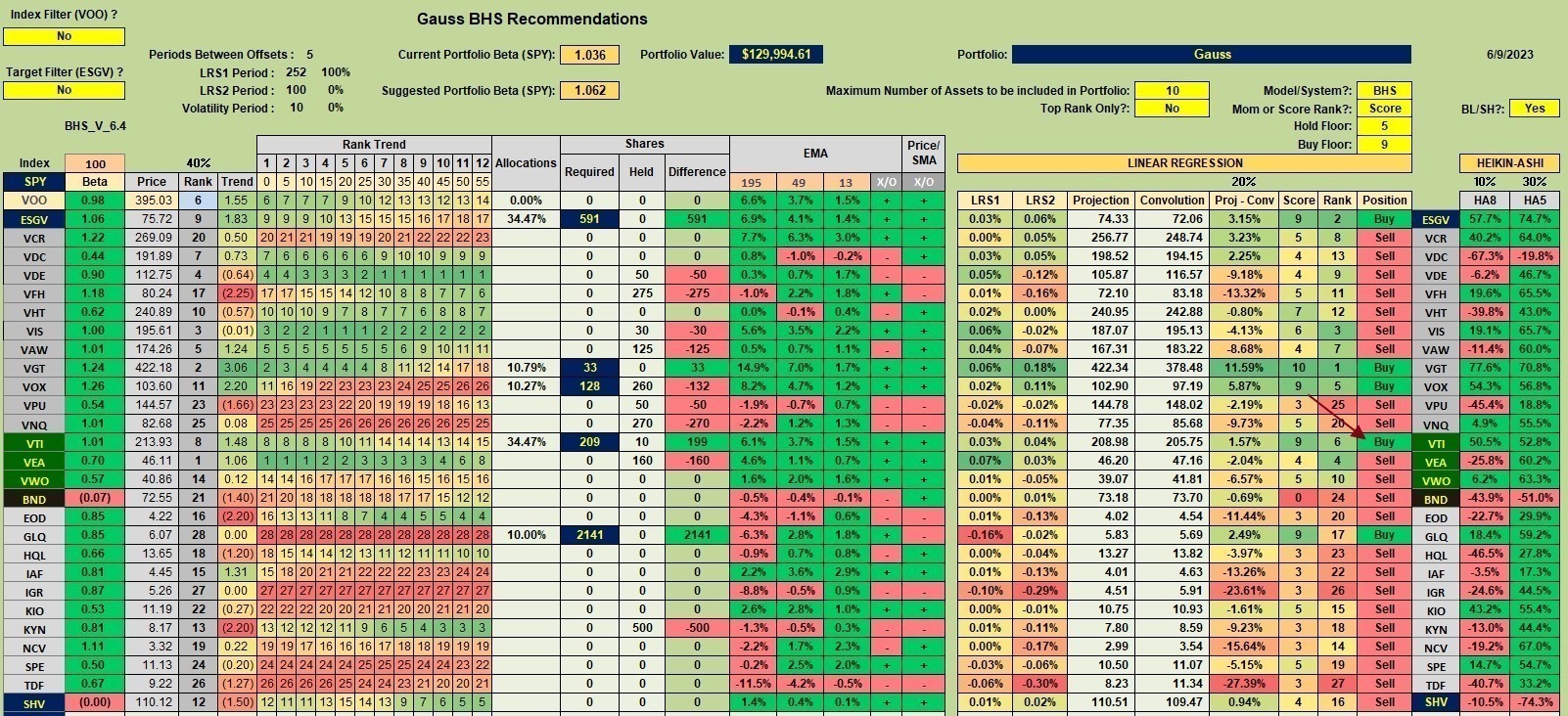
The following worksheet is the Gauss BHS Recommendation. With a Sector BPI Plus portfolio we use this worksheet to provide guidance after the recommended sectors have been populated. This week only Utilities is the recommended sector for purchase. After filling any Utilities recommendations we dip into the secondary pool or the Dual Momentum™ recommendation. Note that VTI is recommended. While VTI is ranked below VEA, VTI comes in with the highest score (9) so we use available cash to fill this recommendation.
Gauss Manual Risk Adjustments
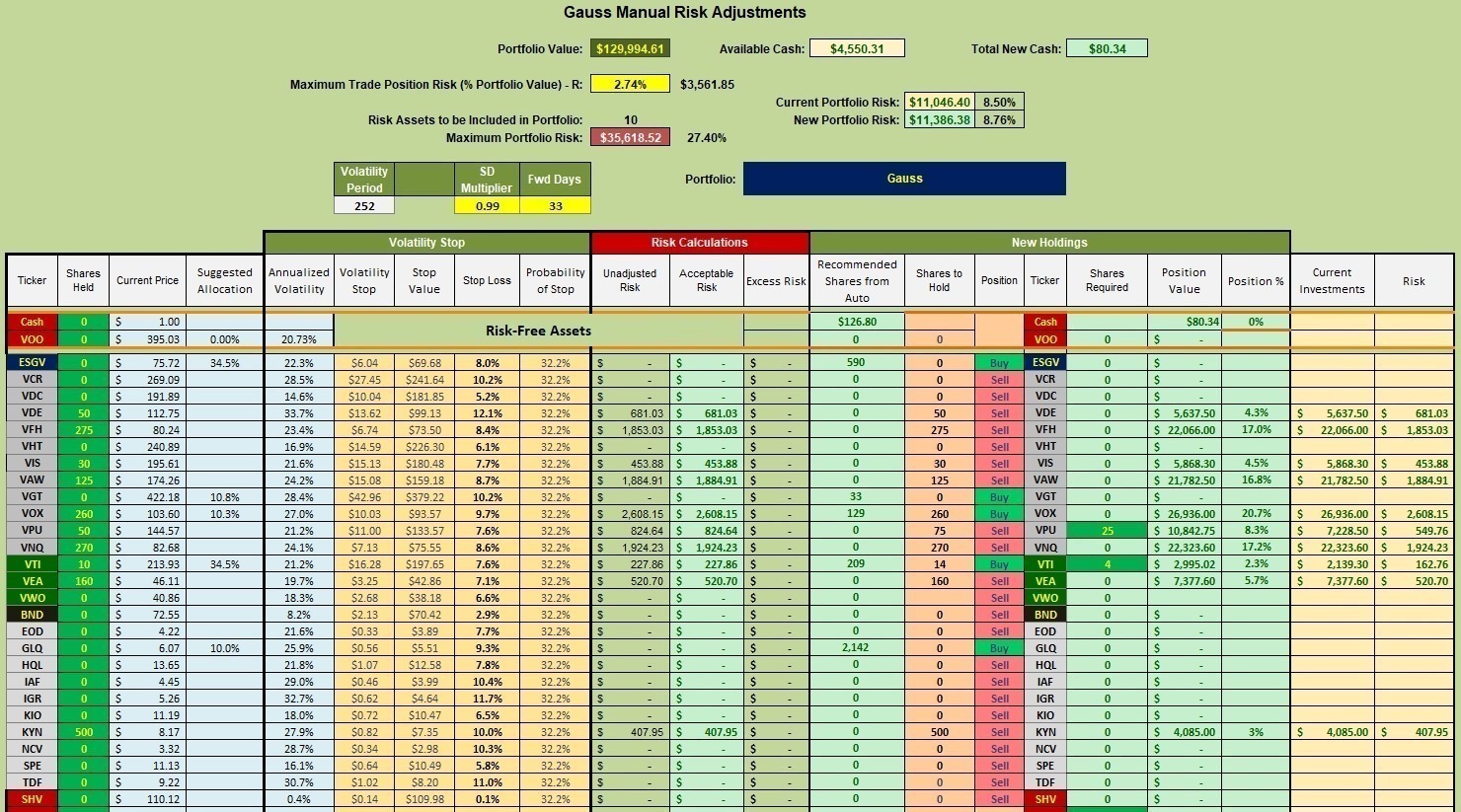
Now we come to where we make specific recommendations. If you move back up to the second screenshot you will see that Energy (VPU) is set to hold 8.1% of the total portfolio. The Gauss currently holds 50 shares and if we purchase 25 more shares the Energy percentage or VPU will move up to 8.3% of the total portfolio. This is close to 8.1%. This still leaves some cash so we move to VTI to use the remaining cash. Buying another 4 shares of VTI will use up the remaining cash. Of course this will vary on Monday as new prices will changes everything.
If you have questions or comments related to this change or another other subject, drop a note in the Comment section provided.
Just another followup to long-time members. The ITA blog is now free to all who register as a Guest.
Tweaking Sector BPI Plus Model: 20 May 2023
Portfolio Summary: 16 January 2023
Gauss Portfolio Update: 19 March 2023
Discover more from ITA Wealth Management
Subscribe to get the latest posts sent to your email.
You must be logged in to post a comment.