
Oh, Nuts!
We are all conscious of the fact that US Equity markets have been in a strong bullish trend since the financial crisis of 2008. With the exception of the 2020 Covid-19 correction – a ~20% pullback in prices from which we recovered very quickly – we have not seen a draw-down of greater than 18% since March 2009.
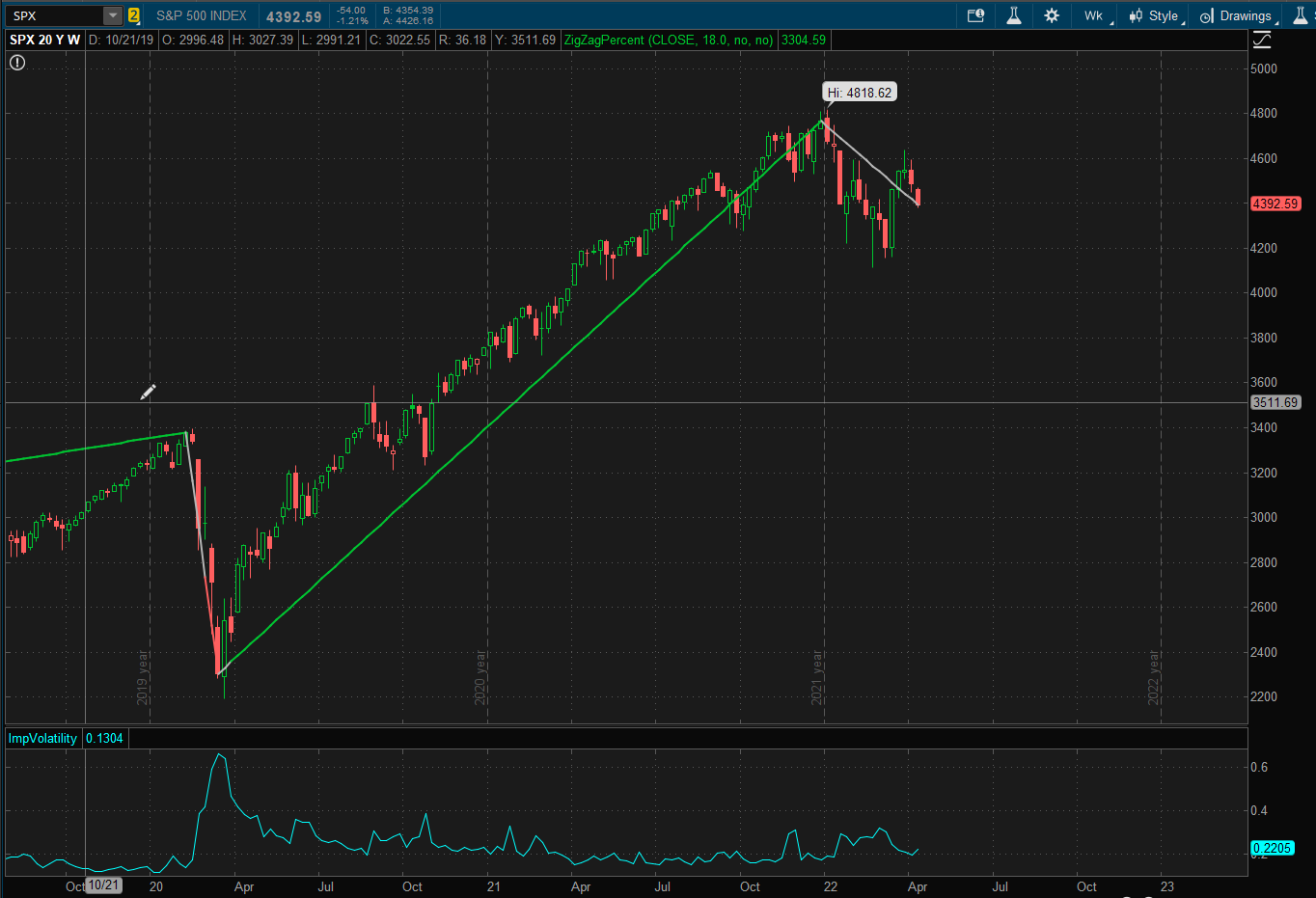
Since we hit all-time highs at the beginning of 2022 we still haven’t experienced an 18% pullback but markets are presently ~9% from the highs (~15% maximum following Russia’s attack on Ukraine in February) and not looking too strong – especially with inflation running higher and uncertainty over geopolitical conditions in Europe. We should all be a little concerned about our ability to generate acceptable returns from our portfolios going forward and, in particular, in protecting our investments from significant drawdowns/losses.
Protecting our portfolios is not as easy as it sounds. Professional financial advisers are not likely to recommend that we go to Cash since they normally earn their money when they encourage us to keep our money invested. If we are managing our own accounts we have a little more flexibility in that we can choose to sell shares or place Stop-Loss Orders (SLOs) in order to move to Cash. Although the use of SLOs becomes more attractive as we get older and have less time to recover from significant draw-downs it is well documented that this strategy hurts performance over the longer term. It worked well for me in 2020 (Covid crisis) but hurt performance in 2021. Diversification also serves to reduce volatility and to compensate for weak performance in some asset classes (see recent Rutherford Portfolio reviews where Commodities and Gold have helped provide stability).
I (personally) therefore prefer to use Options to protect my portfolios – but this isn’t an “investment” strategy since efficient use of Options requires a significant amount of attention and active trading. Buying Put Options will protect portfolios without too much attention – but is expensive and not particularly efficient.
The following screenshot shows the performance of my Options “hedging” account this year to date:
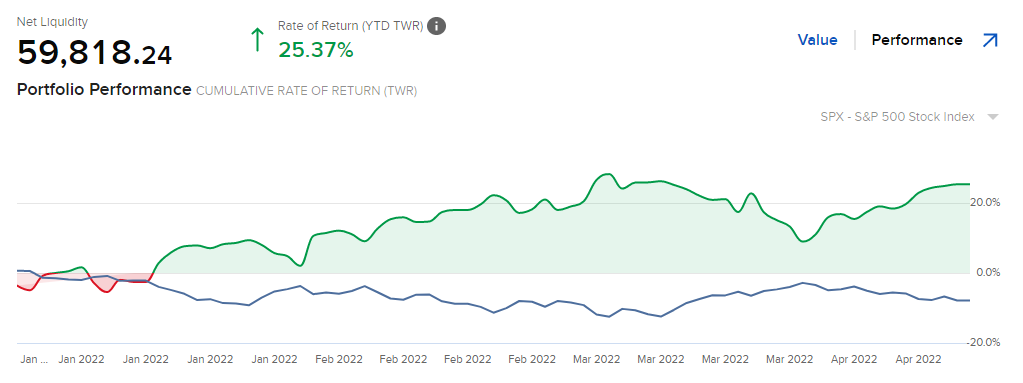 As can be seen, with the S&P 500 down 9% YTD the hedge portfolio is up 25% – a net 16% difference. Of course, this does not protect all my portfolios – the size of the portfolios needs to be balanced – but it is easy to see that the portfolio makes money when US equities lose value and loses money when equities increase in value. The objective is to reduce volatility and to maintain a positive net income.
This post won’t help you solve the problem but, hopefully, will give you a reason to give some thought as to how you might protect your portfolios.
David
Discover more from ITA Wealth Management
Subscribe to get the latest posts sent to your email.
Hi David, Thanks, A few questions: 1) Is this a stand alone portfolio return of only puts? 2) What Index was used, and Duration till expiry, and distance of strike from market price, Delta, volatility or Vix value at the time of purchase? 3) Was it a trade with any exit/loss criteria.. Appreciate your response. Regards, Jay R
Jay,
Thanks for the questions – all good ones – but not simple to answer.
1) It is not a stand alone portfolio of only Puts, although Puts are used extensively in some of the major positions – both long and short Puts (I like selling premium to finance the sale of purchased Options). Some positions were also built from Calls (Unbalanced Butterfly Spreads) with a credit and upside protection and others were bullish Put Spreads (high probability, low risk, credit spreads) in individual stocks – to generate credits (and help finance the purchased Put Index hedges).
2) The major positions used SPY or MES Futures (for margin cost efficiency) and QQQ – although any liquid Index is OK providing portfolio Betas compared to the Index are known. Durations generally vary between 30 and 90 days depending on strategy although a few positions used shorter-term weekly Options (7-14 days). Distance of strikes from market price varies, depending on strategy, as do the deltas used (although net deltas are usually close to delta neutral). My preferred strategies work best when volatility is high (>20% and, preferably, >27%) and skew is favorable (i.e. sell high volatility buy lower volatility in a spread).
3) Most positions have exit criteria (and re-positioning rules) designed to exit before expiry – but some positions were allowed to go to expiration.
I realize that this is not a very useful response to your questions as the positions are quite complex and require attention/adjustment – as I stated in the post, this is not a Buy-And-Hold “investment” portfolio. However, even though I am a little reluctant to depart from Lowell’s stated objective of helping members manage their personal investment portfolios (with minimum effort), I may just provide an example of one or two of these trades in future posts (as conditions allow/determine) if members have an interest. This would allow me to answer your questions more specifically. Once again, I believe in strategy diversification to reduce risk.
Members should let me know if you have an interest.
David
I am interested but lack even rudimentary knowledge of options at this point. What books and/or websites would you recommend to get started?
David,
Let me discuss with Lowell and I’ll get back to you on this.
David
Thanks
I am also a newbee and learning and will be interested in your strategies -teachings. Or you could PM me. TIA, jay R