
Cruise Ship “Sun Princess” docked in Vigo, Spain.
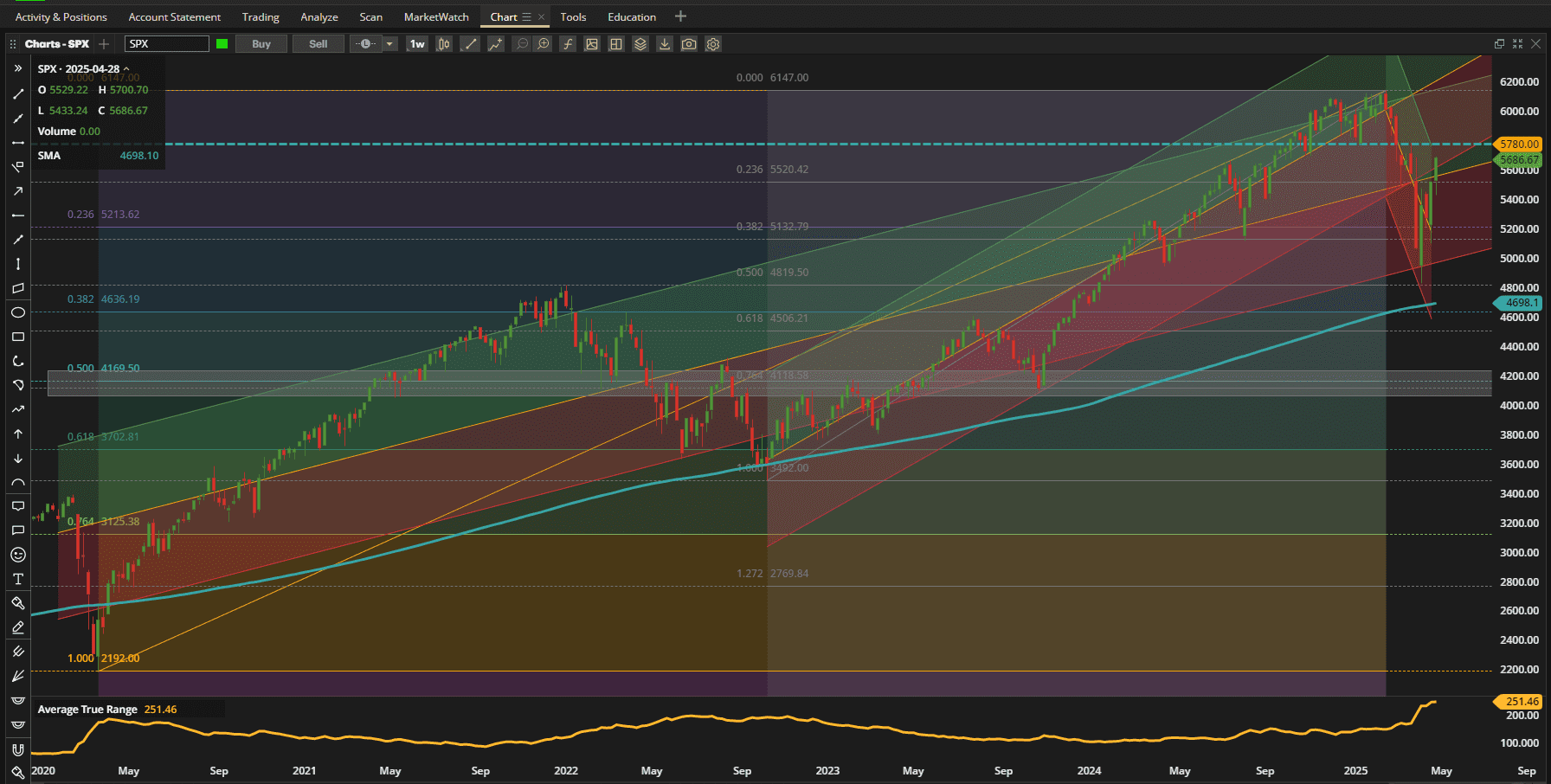
In last week’s review I stated that we were at an interesting level in the SPX (S&P 500 Index) as we were sitting at potential resistance and would have to wait to see whether this resistance held or whether we would see a push through it within the long term (March 2020 – February 2025) bullish trend channel. Well, we did breeze through this potential resistance level as we can see in the weekly chart:
 We are now in another interesting situation where we may see resistance at ~5780 that has previously provided both support and resistance as shown in the daily chart below (dashed blue horizontal line in both charts):
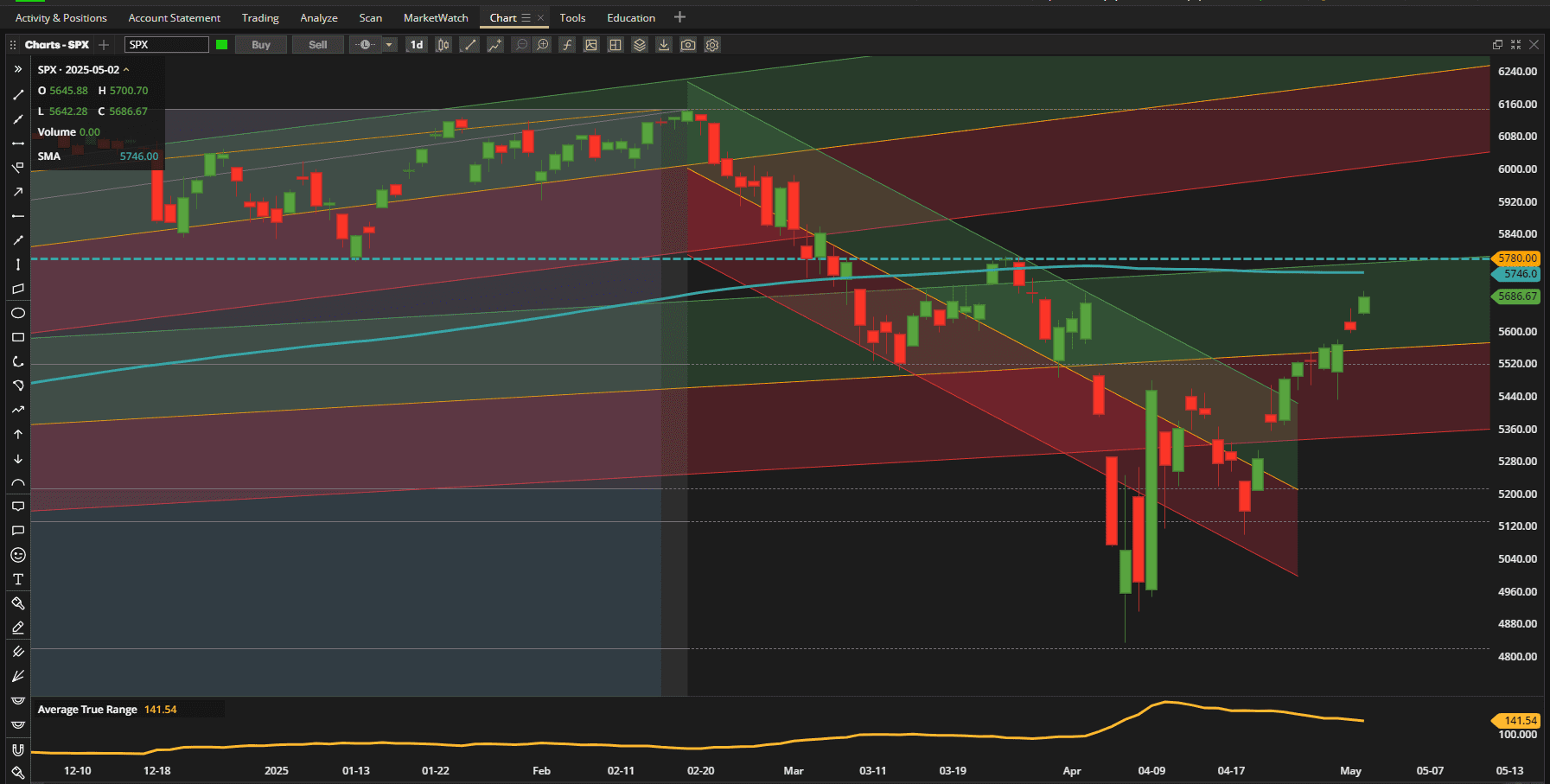 Whilst not in the vicinity of any significant Fibonacci retracement levels, this level does coincide with the 200-day Simple Moving Average (light blue line). Once again we are reminded of the unusually high volatility level that we are seeing as reflected in the elevated daily and weekly ranges of price movement – we are still moving ~2.5x the normal ranges. This is primarily a result of uncertainties caused by the tariff/trade wars that are raging.
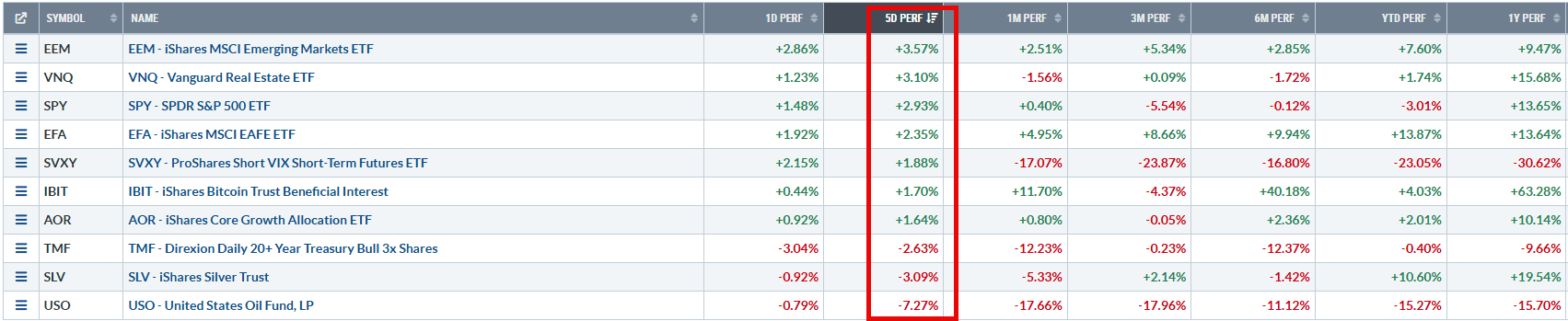
With US equities up ~3% from last week’s close this comes close to the top of the list – although international equities (EFA and EEM) have significatly outperformed over the past 3 months with US equities down ~5.5% over this period:
 The Rutherford-Darwin Portfolio is weathering the storm with the ~$50,000 invested in T-Bills contributing $734 to date. The $10,000 invested in 9 diversified ETFs in the “Buy-and-Hold” Darwin portion of the portfolio is now back to break-even:
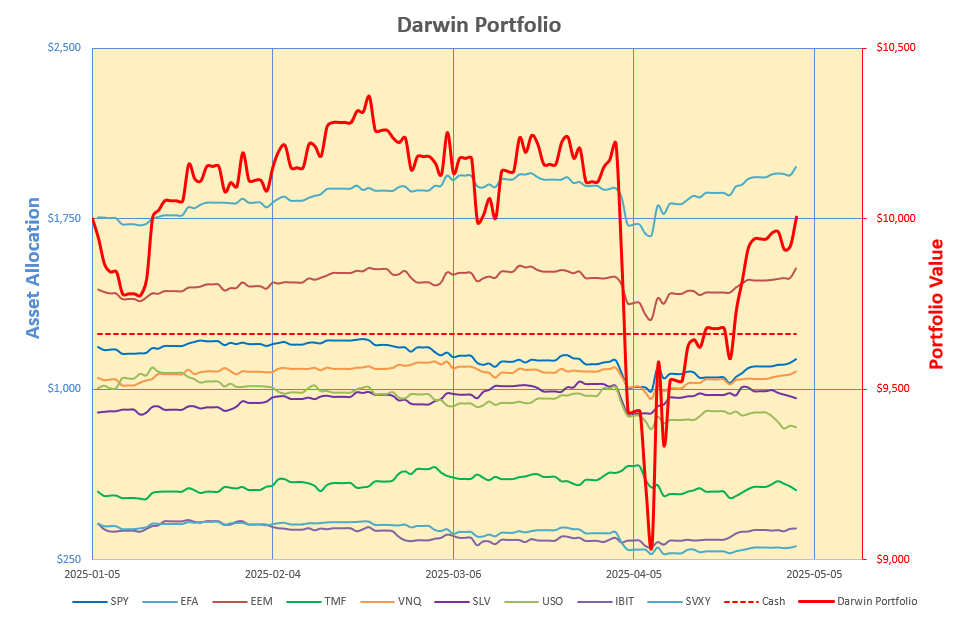 and this is encouraging with US equites losing ~5% over the same period. In addition, Draw-Down on this portfolio was only 13.5% compared with 21% for the SPX.
Only the Option trading portion of the portfolio has let me down here – I probabably couldn’t have picked a worst period of time to start this exercise and I’ve had to scramble more than I had anticipated to react to the high volatility environment.
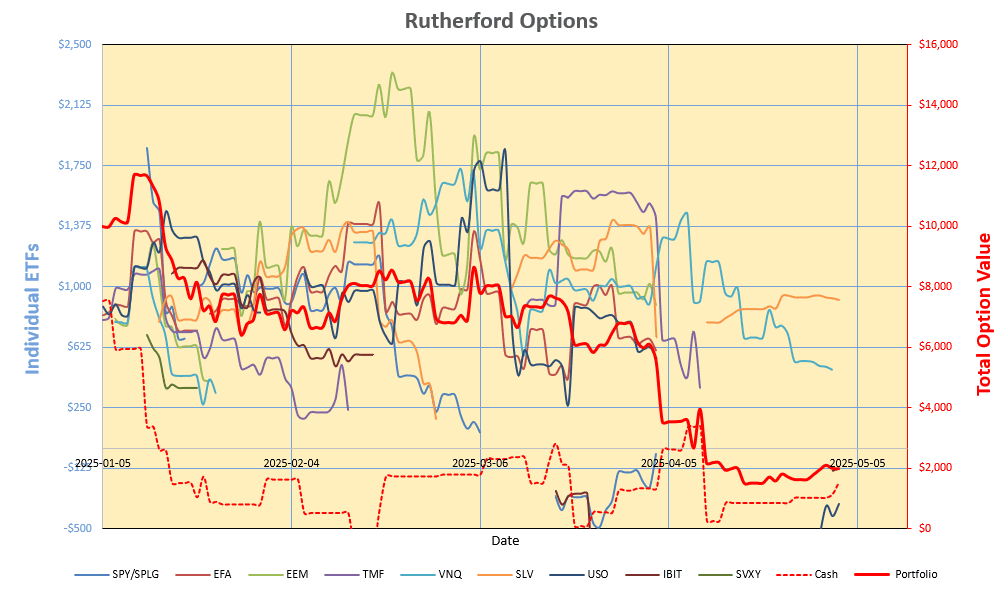 Although the volatility of my positions is now more under control, this was not before this portion of the portfolio lost ~80% of it’s value. Normally I have a rule to stop trading a strategy if/when I hit a 40% draw-down (that rarely happens) – I didn’t do that here – but probably should have done so – because I was changing strategies (at least 3 times) in a rapidly changing market environment. I would have been better off to stop trading and wait for markets to settle down.
Because of my initial constraints on allocations to the different portions of the portfolio the overall picture doesn’t look too bad:
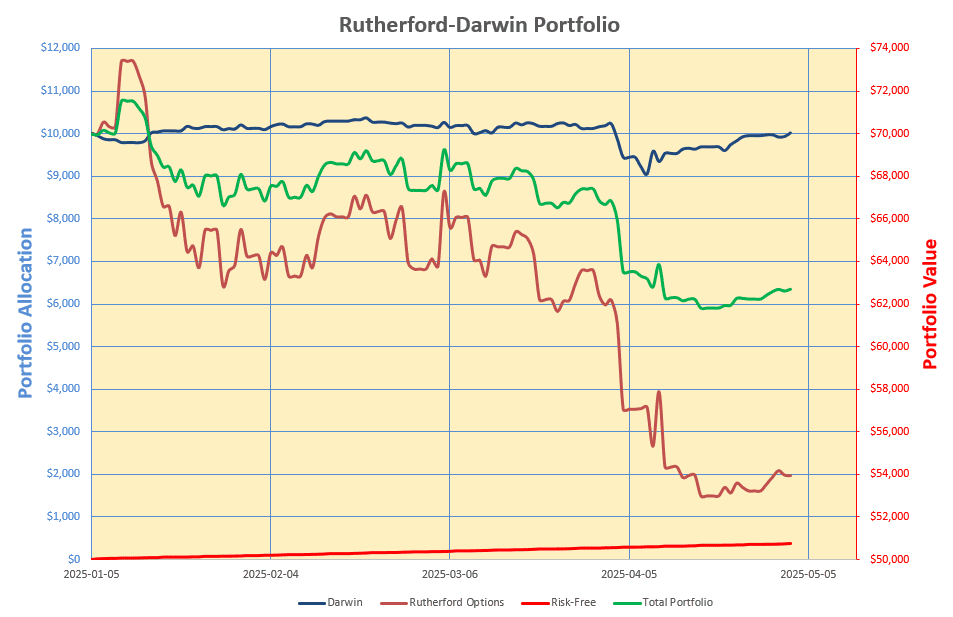 with the portfolio down ~10%, a maximum Draw-Down of ~14% and Volatility 13%.
I am considering increasing allocations to the “Buy-and-Hold” portion of the portfolio and cutting back on the Option trades to provide more hedging for the portfolio. I am still working on this idea and will probably make a decision within the next 2 months. I do feel strongly that it is prudent to be careful in the current environment and that hedging is an important consideration – even if this means leaning more towards cash/low-risk “income” instruments.
Discover more from ITA Wealth Management
Subscribe to get the latest posts sent to your email.
You must be logged in to post a comment.