
Lake District, Northern England
After pushing to new all-time highs earlier in the week, the SPX (S&P 500 Index) hit resistance at ~6450 and pulled back on Friday, closing the week down ~2.4% from last week’s close.
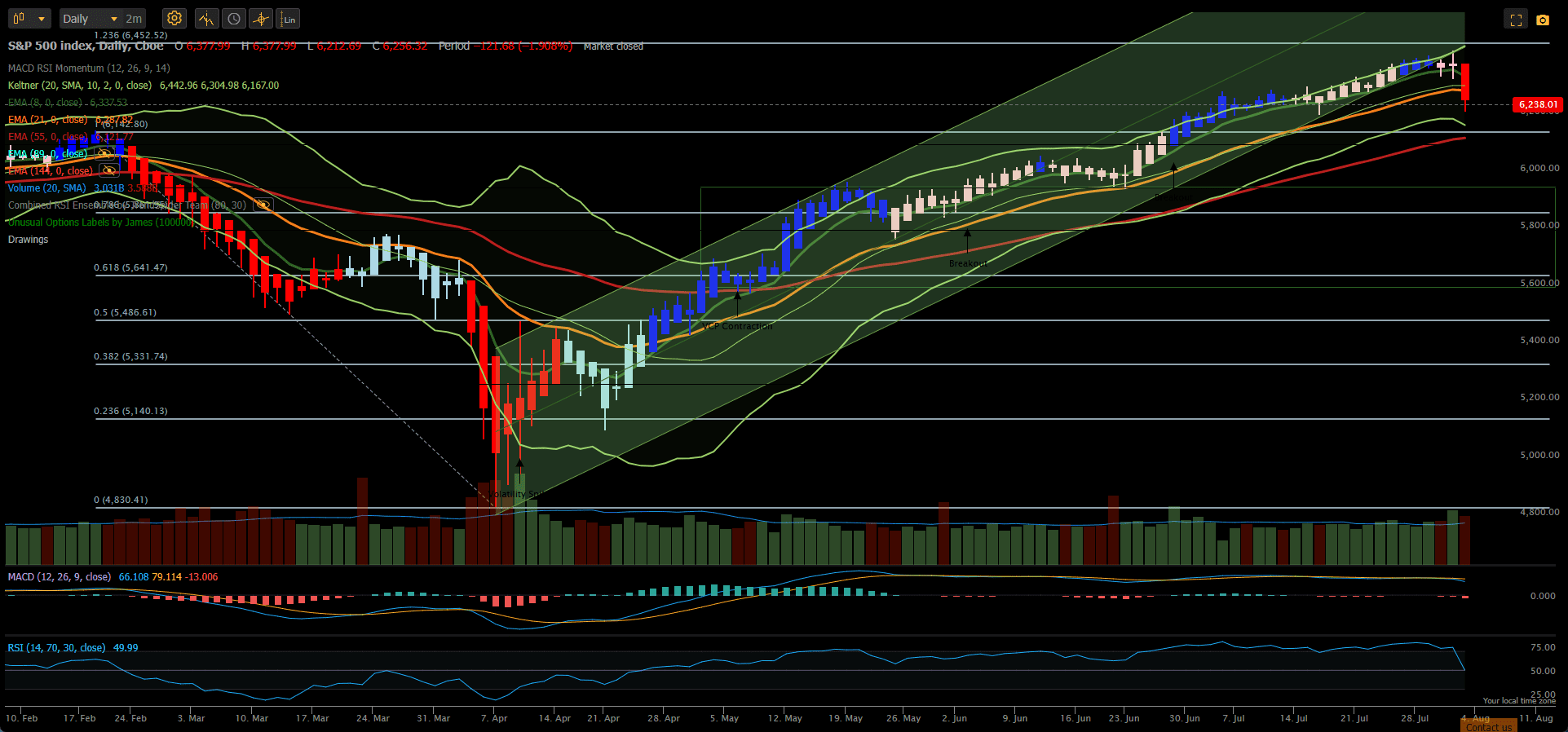 The MACD and RSI Indicators are both now sending bearish signals and we may be preparing to test support at ~6150 – the level of the February highs.
In terms of relative performance:
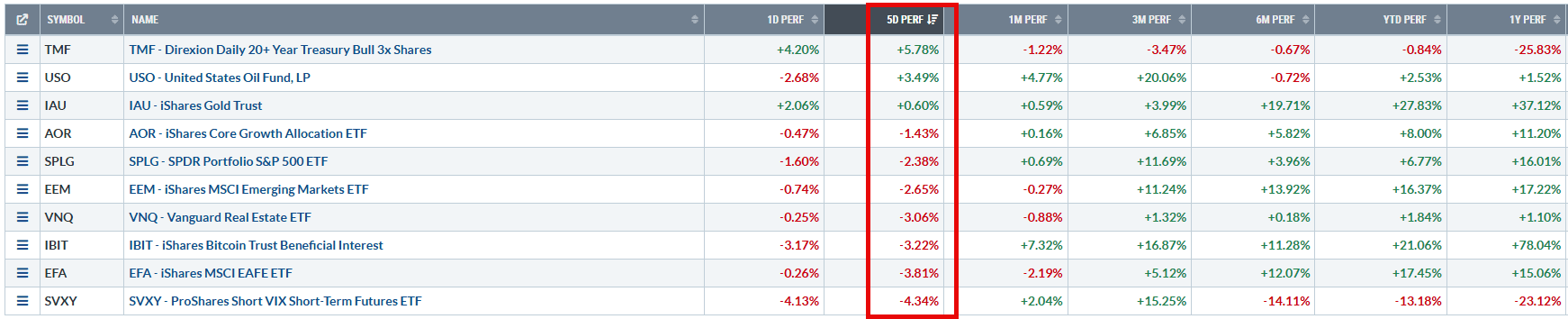 US equities again took a position in the center of the pack with defensive asset closes (Bonds, Commodities (Oil) and Gold) leading the way. US equities still outperformed other global equity markets however.
All this action resulted in me making a few adjustments to the portfolio:
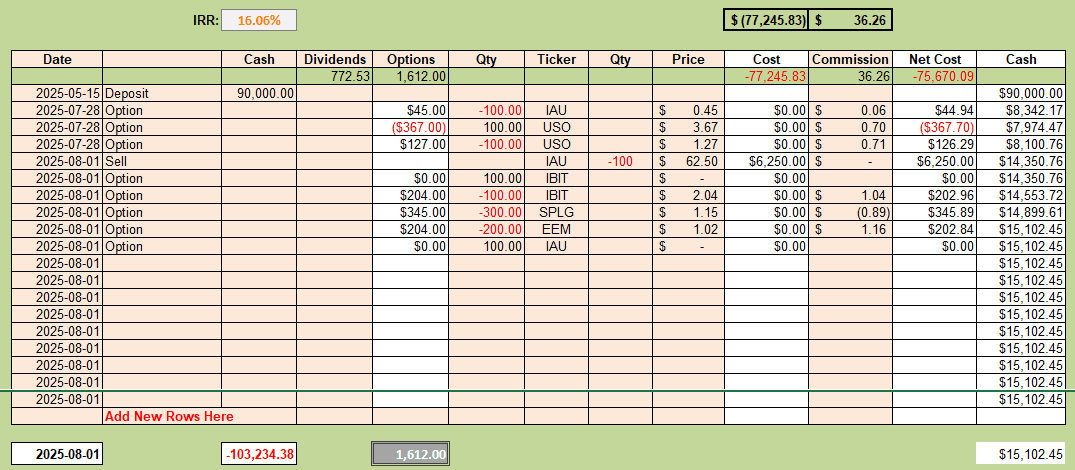
At the beginning of the week I sold a Call Option against my share holdings in IAU (Gold) since, although the charts were not looking particularly bearish, the Kipling workbook had been showing a Sell recommendation for a few weeks and I wanted to generate more credits for downside protection. Unfortunately, because volatility in IAU was low, premiums were not too high and I was only able to collect $45 on a 1 week Option. As it turned out (see performance comparison table above), IAU did close the week 0.6% higher and the Option closed In-The-Money (ITM) at expiration. Since IAU was still generating a Sell recommendation in the Kipling workbook (see below) I chose to take this opportunity to let my shares be taken away for $62.50 per share. Since I had sold the Call Option at 0.45, this was, effectively a sale at $62.95, so, with IAU closing at $63.38 this was essentially a break-even trade. IAU opened today – 4 Aug – slightly higher and I can always re-enter if I should choose to do so on seeing more bullish signals. I had also been holding a short Option position in USO (Oil) but, with USO showing strength, I rolled this position up in strikes to allow for more upside potential at the expense of giving up some of the credits received when I sold the Option. These Options expire on Wednesday (6 Aug).
On Friday (1 August) we saw a significant sell-off so I let short Options in IBIT (Crypto) expire worthless and replaced it with a short Call Option expiring 2 weeks later (15 Aug) collecting $204 in credits. I also sold Call Options against holdings in SPLG (US equities) and EEM (Emerging Market equities) to bring in an additional $549 in credits.
My hedge positions in this portfolio now look like this (as of 10:00 am 4 August):
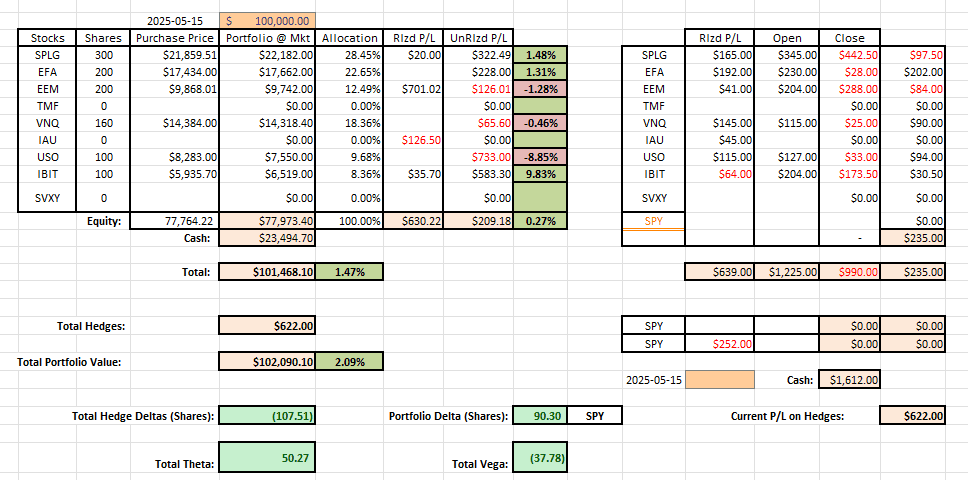 where I have generated $1,612 in credits from the sale of Call Options and only spent $252 on the purchase of deeper protection through the purchase of Put Options. If the markets look like showing further weakness I may consider buying this “insurance” in the coming days. At the moment (4 Aug) markets are bouncing a little higher – but we’ll wait and see – the portfolio is currently well hedged (~ Delta Neutral) for modest pullbacks – but not for “disaster” crashes. From the above screenshot we see that the stock portfolio is up 1.47% since inception 11 weeks ago but that, including profits from the sale of Call Options, total portfolio return is currently at 2.09%. This shows the direct benefit of selling Options (at least to date) and, as we shall see below, this also reduces portfolio volatility – and, hence, risk.
We should also note that the portfolio benefits by ~$50 per day from time decay (Theta) in the premiums received from Selling Options.
At this point we should check on rankings and recommendations from the Kipling workbook:
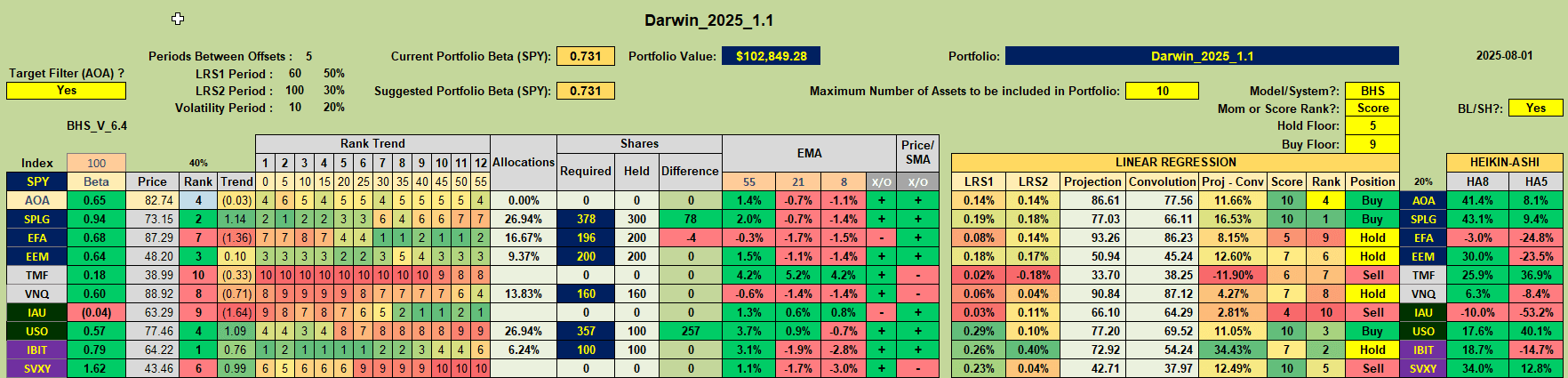 where we see little change from recent weeks other than that USO has moved from a Hold to a Buy recommendation and IBIT and EEM have moved from Buys to Holds. Since we are currently holding all these ETFs in the portfolio no direct action is required – although it might influence our hedging decisions. IAU still shows as a Sell and, as mentioned above, this holding was sold out of the portfolio on Friday (1 Aug) when the Call Option sold against the position expired ITM and was exercised.
For the sake of completeness the following screenshot shows the recommended share holdings for risk parity with a targeted 2% volatility per ETF:
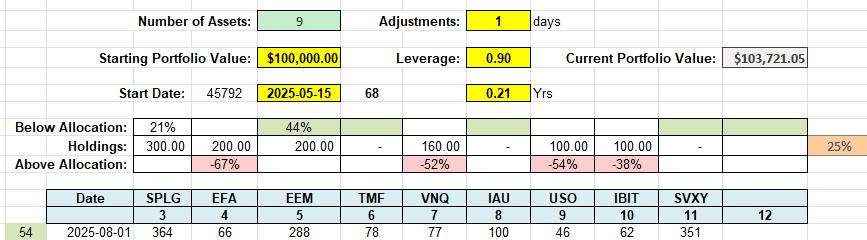
Although EFA, VNQ, USO and IBIT are showing over allocations, this is compensated for through the Sale of Call Options – so the position “Deltas”/equivalent share positions is less than the actual holdings. For example, VNQ is holding 160 shares with a calculated holding requirement of 77 shares – but the $92 strike Call Options held have a “Delta” of ~-24 – so the effective holding is closer to 136 shares – so I may sell 60 shares to bring this closer to 77 (100-24 = 76 shares) – especially with the MACD and RSI Indicators showing bearish signal agreement. I may also adjust my short Call Options position in EFA to bring allocations more into line.
What does all this look like graphically in terms of portfolio performance to date?:
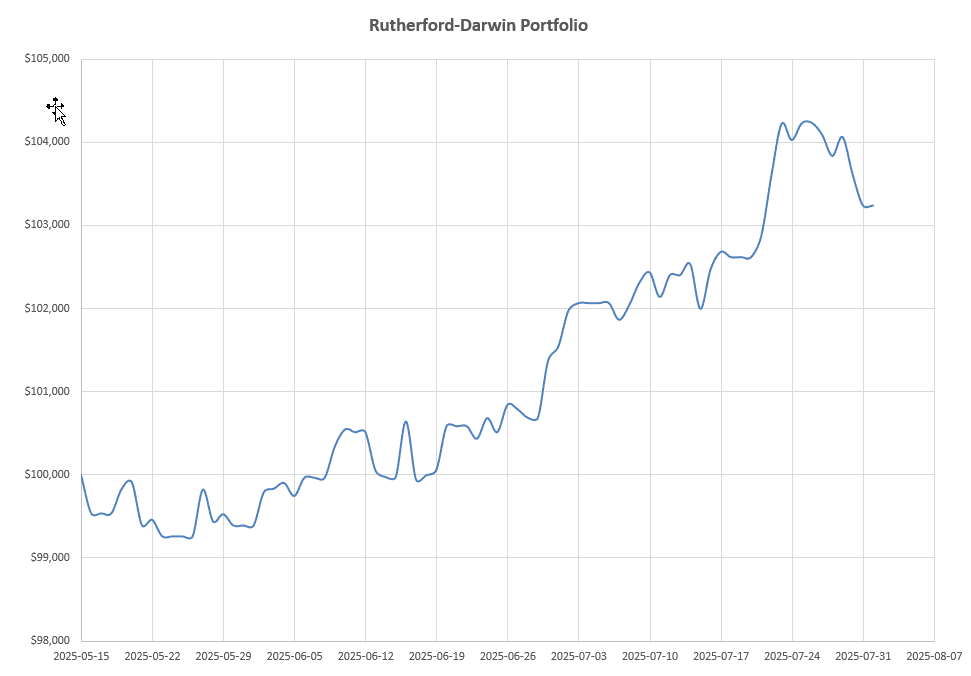 This is the equity picture – still with a low 4.4% volatility resulting from the Option hedging. Note also, although the portfolio is down from the highs, how the sale of the Call Options mitigated the significant pullback on Friday (the endpoint of this chart).
I have just (4 Aug 11:30 am) sold 60 shares of VNQ and may adjust my short Call Option position in EFA.
Discover more from ITA Wealth Management
Subscribe to get the latest posts sent to your email.
Leave a Comment or Question